Get Full Government Meeting Transcripts, Videos, & Alerts Forever!
Get email alerts on the Behavioral Health 988 topic
No spam. Unsubscribe anytime.
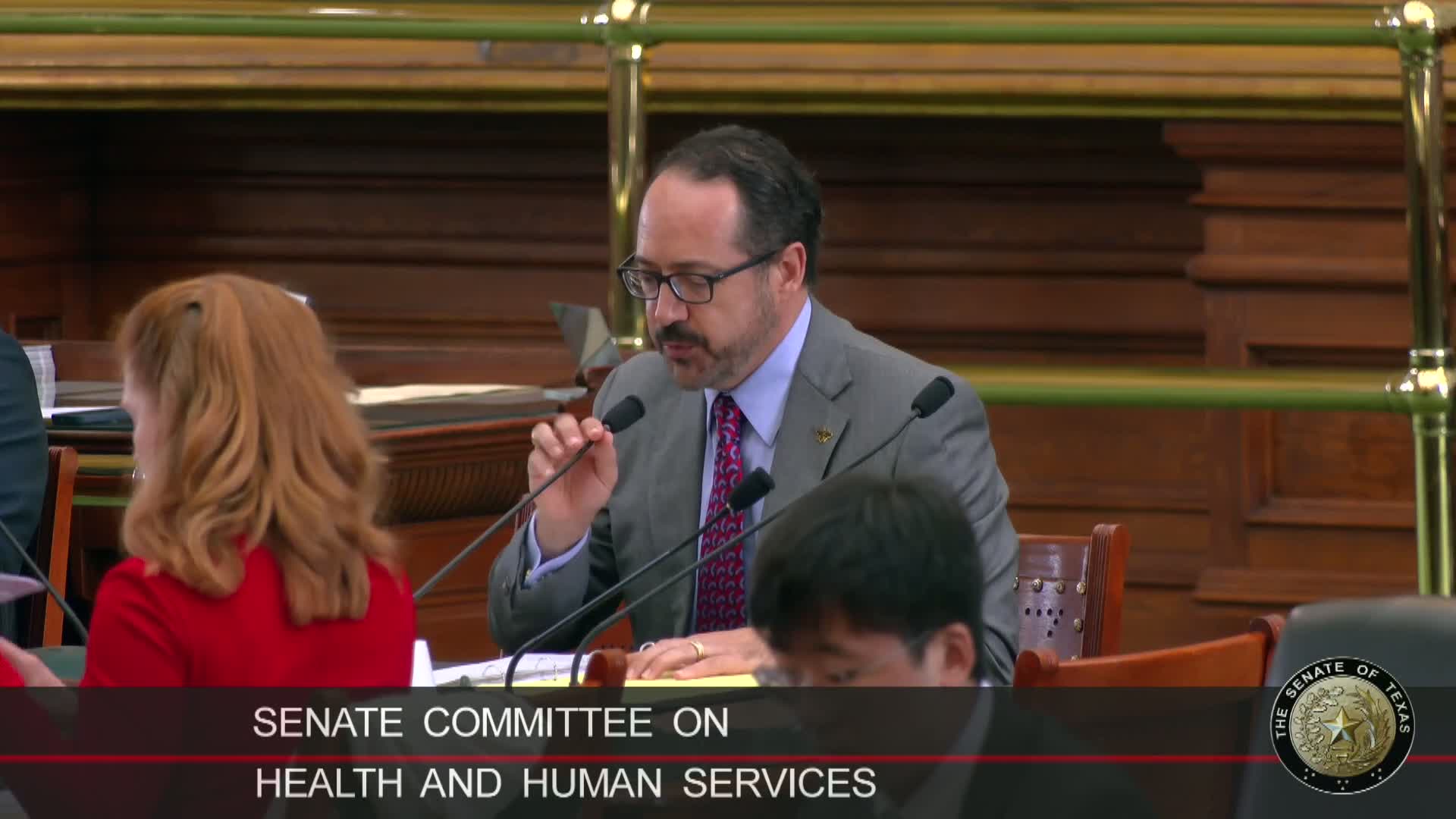
Senate committee hears bill to create Texas 988 trust fund for crisis lifeline
Summary
Lawmakers heard testimony for House Bill 53 42 to create a Texas 988 Suicide and Crisis Lifeline Trust Fund to pool donations, grants and other revenue and direct funding and study long‑term financing for the 988 system; supporters stressed high call volume, gaps in in‑state answering, and the need for durable funding.
House Bill 53 42 would create the Texas 988 Suicide and Crisis Lifeline Trust Fund to collect gifts, grants, donations and federal funds and require Health and Human Services (HHSC) to report annually on 988 usage and study long‑term funding options. The bill’s sponsor said Texas has a high 988 call rate and state centers lack dedicated state funding.
The bill matters because 988 call centers statewide answered more than 220,000 contacts in 2024 and the state’s in‑state answer rate fell short of the national target, creating a risk that Texas callers are routed out of state. Supporters told the committee federal grants alone may not sustain the system as demand grows and technology and staffing needs increase.
Senator José Menendez, laying out the bill, said Texas currently has “the second highest call rate in the nation with over 220,000 calls made within our state” and noted the national standard that someone should answer within 30 seconds. He told the committee the statewide in‑state answer rate was about 83% in March 2025 and “every 2 out of every 10 calls, texts, or chats went unanswered, falling short of the national 90% standard.”
Lisette Galvan, public policy director for NAMI Texas, testified in support and said some centers lack technology for text and chat and that interactions by text/chat can last three times longer than calls. “We must invest in technology and staffing, ensure everyone has access no matter how they reach out,” she said. Jennifer Battle of the Harris Center for Mental Health and IDD, which operates crisis centers that answer 988 contacts, told the committee the five Texas local mental health authorities that answer 988 cover all 254 counties but that federal funds currently allow centers to handle roughly 85% of incoming volume; the remaining contacts are served by responders in other states. “We need long term sustainable funding, which we don’t have yet,” she said.
The bill would: create the 988 trust fund; require HHSC to prepare an annual report on 988 usage and services; and direct HHSC, working with the Commission on State Emergency Communications, to study funding mechanisms (including a possible telecommunications fee) to sustain operations. Supporters said a funded, stable in‑state network could reduce emergency department visits and law enforcement involvement and save lives.
No formal vote was taken. The committee closed public testimony and left House Bill 53 42 pending.
Supporters: Lisette Galvan, NAMI Texas; Jennifer Battle, Harris Center for Mental Health and IDD. Sponsor: Senator José Menendez.