Get Full Government Meeting Transcripts, Videos, & Alerts Forever!
Get email alerts on the Baratry Digital Solicitation topic
No spam. Unsubscribe anytime.
Committee considers two bills to modernize baratry rules and increase penalties for illegal legal solicitation
Summary
House Bill 2733 would expand the definition of baratry to cover digital communications and AI; House Bill 4325 would raise civil penalties from $10,000 to $50,000 for solicitations that do not result in formal contracts. Trial lawyer groups supported stiffer penalties and modernization.
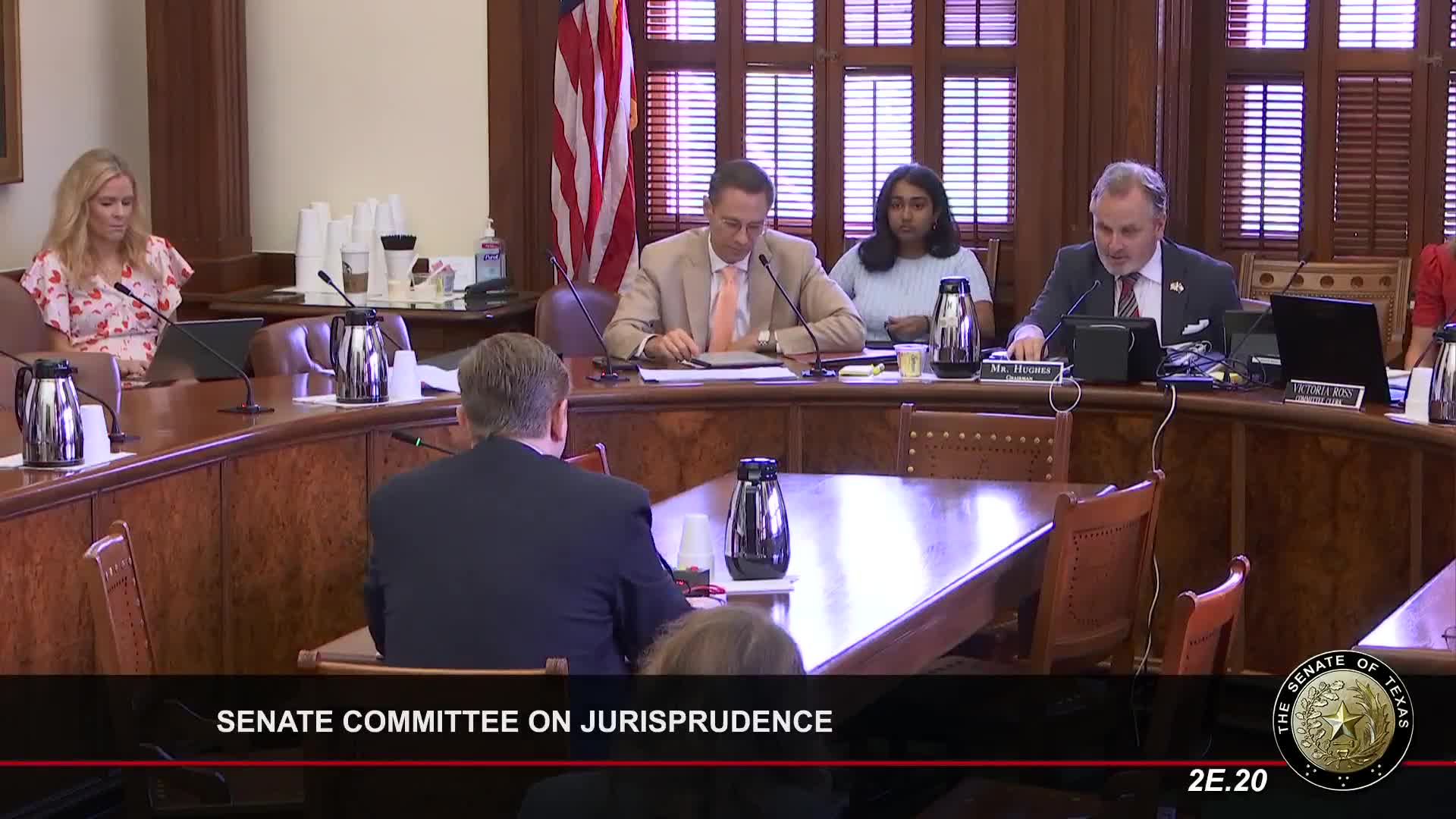
Senators heard two related measures addressing illegal client solicitation (baratry). Senator Parker explained House Bill 2733, a committee substitute that would modernize the statutory definition of baratry to include digital communications and artificial intelligence and add false, misleading, or deceptive electronic communications intended to recruit clients. The sponsor said the change would align the Texas Penal Code with State Bar guidance.
Separately, senators heard House Bill 4325, described by the committee vice chair as increasing the civil penalty for baratry from $10,000 to $50,000 in cases where a person was solicited but did not enter a formal contract. The dean of the senate explained HB 4325 was meant to keep penalties current with inflation and increase deterrence.
Witnesses from the Texas Trial Lawyers Association testified in favor of stiffer sanctions. ‘‘TTLA has always and will continue to oppose those who engage in baratry,’’ said Charlie Ginn, vice president for legislative affairs, supporting the penalty increase. Mike Gallagher, a longtime member of the TTLA executive committee, said stiffer penalties and potentially criminal sanctions were appropriate responses to what witnesses described as a persistent problem.
Both bills received brief committee discussion and public testimony was minimal; HB 4325 was reported to have passed the House previously by a 148–0 vote, according to the testimony.