Get Full Government Meeting Transcripts, Videos, & Alerts Forever!
Get email alerts on the Wildfire Prevention Inactive Wells topic
No spam. Unsubscribe anytime.
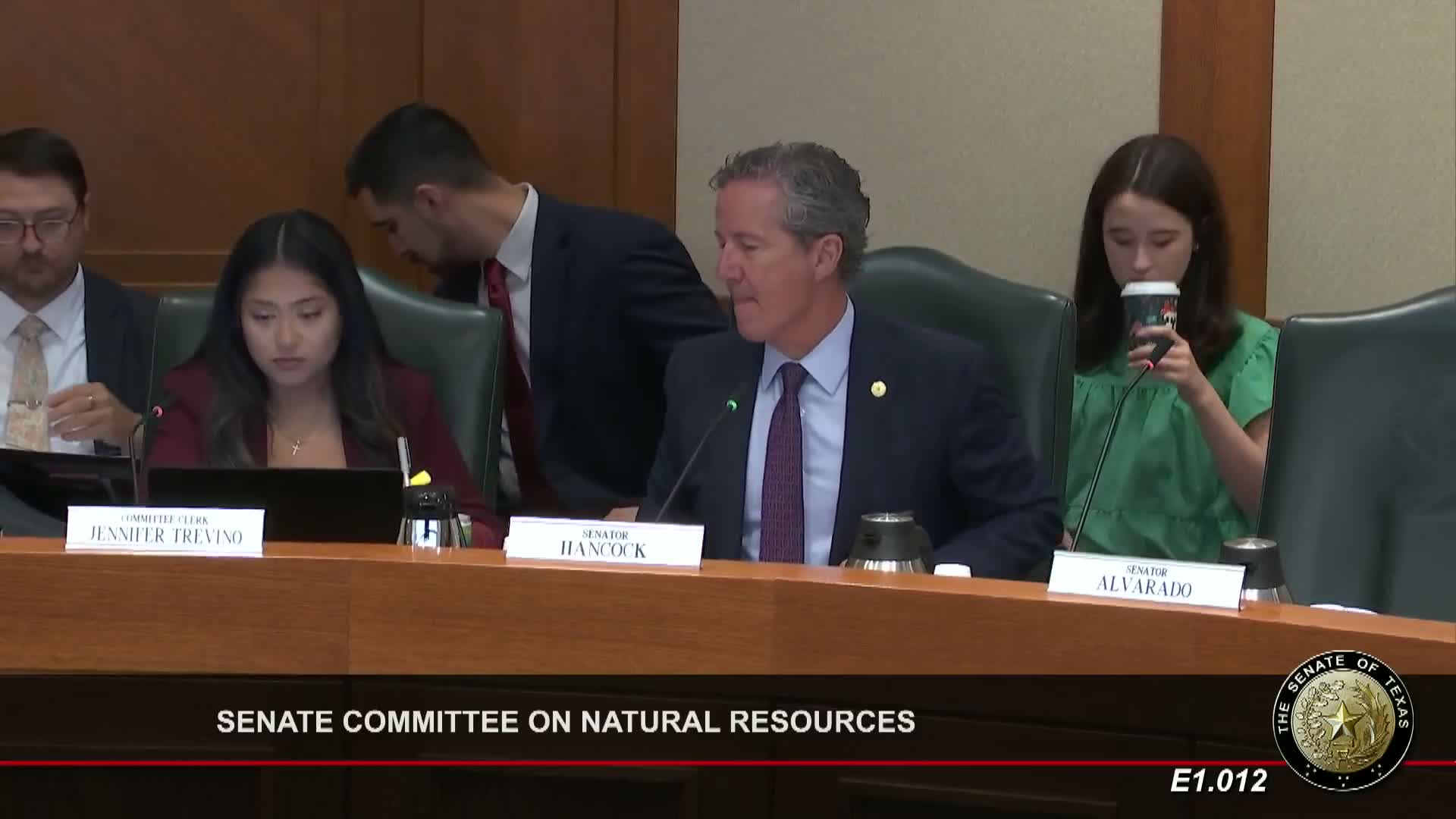
Senate committee hears testimony supporting bill to force removal or de-energizing of electrical equipment at long‑inactive oil wells
Summary
Lawmakers and Panhandle landowners told the Committee on Natural Resources & Economic Development that House Bill 26 63 would reduce wildfire risk by requiring operators to remove or de‑electrify electrical service equipment on wells inactive 10 years or more and authorizing Railroad Commission penalties for noncompliance.
House Bill 26 63 would require operators of oil and gas wells inactive for 10 or more years to affirm that electrical service equipment has been removed or de‑energized when applying for a plugging extension, and would authorize the Railroad Commission of Texas to levy administrative penalties of up to $25,000 for false affirmations or failed decommissioning.
Supporters told the Senate Committee on Natural Resources & Economic Development that the legislation responds to findings from a 2024 Panhandle wildfire investigation. "These fires burned over a million acres resulting in the death of over 20 to 30,000 head of cattle," said James Henderson, a landowner in Childress and Donley counties testifying for the Texas Southwestern Cattle Raisers Association. Henderson said neglected electrical equipment on oil sites contributed to the fires and that the bill would help hold operators accountable.
Curtis Smith, a cow‑calf operator and oil and gas investor, said many wells still use decades‑old electrical infrastructure and that enforcement by the Railroad Commission has been insufficient in some areas. "I want electric to be maintained properly," Smith said in support of the bill.
Cyrus Reed of the Lone Star Chapter of the Sierra Club also supported the bill, saying it addresses old electrical equipment found on inactive wells and noting the bill allows either removal or de‑energizing of equipment.
Sponsor remarks describe HB 26 63 as building on the existing 10‑year framework in section 89.029 of the Natural Resources Code for surface equipment removal, while adding an explicit requirement for electrical service equipment and penalties for noncompliance. The sponsor told the committee the bill would not change the ten‑year timeframe but would require operators to “affirm that all electrical service equipment has been removed” when seeking extensions.
Committee members asked technical questions about the scope of required actions (removal versus de‑electrification) and the practical effects on potential future reactivation of wells. Senator Sparks questioned whether direct‑burial cables and other components would have to be removed or could simply be de‑energized; sponsor and supporters said the bill language provides the alternative of de‑energizing.
No public opposition was recorded at the hearing and the bill was left pending for possible amendment. Committee staff and sponsors indicated they will work on a committee substitute to refine scope and avoid unintended precedent while retaining measures to reduce wildfire risk.
The testimony and discussion occurred during a public panel; no formal committee vote on HB 26 63 was taken at this hearing.