Get Full Government Meeting Transcripts, Videos, & Alerts Forever!
Get email alerts on the Youth Marijuana Use topic
No spam. Unsubscribe anytime.
Experts tell Oregon Senate committee youth face higher risks from stronger cannabis; speakers urge tighter prevention, labeling and marketing rules
Summary
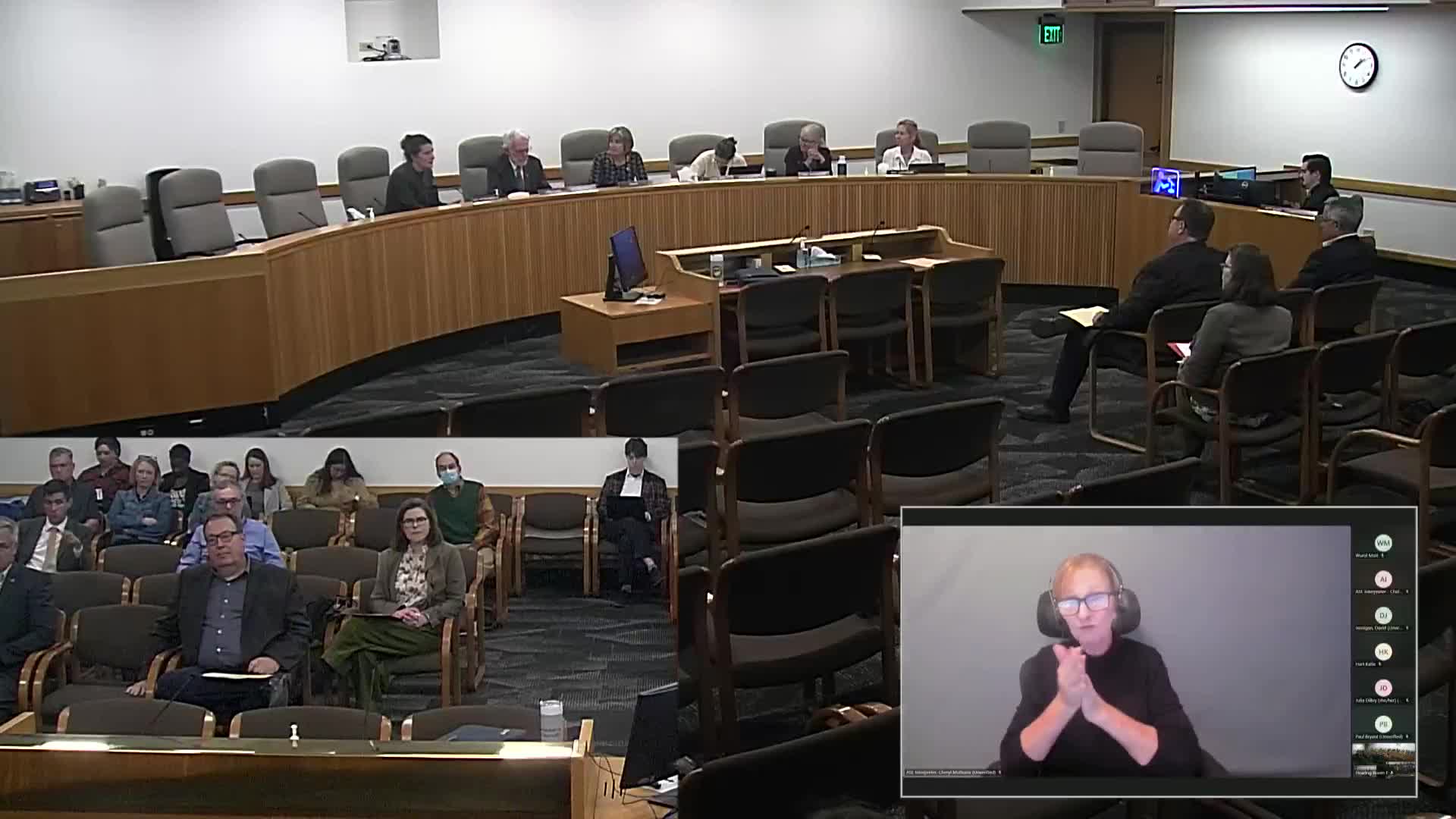
Chair Lisa Reynolds, a pediatrician and chair of the Senate Committee on Early Childhood and Behavioral Health, convened an informational hearing on youth marijuana use where public-health researchers, treatment providers and a parent described rising potency, low youth risk perception and increases in pediatric exposures and urged tighter labeling, marketing and prevention measures.
Chair Lisa Reynolds, a pediatrician and chair of the Senate Committee on Early Childhood and Behavioral Health, convened an informational hearing on youth marijuana use that drew public health researchers, treatment providers and parents to testify about mounting harms linked to higher-potency cannabis and gaps in prevention and treatment.
The witnesses said the cannabis products available today are far stronger and more varied than those used by previous generations, that youth perception of risk is low, and that changes in packaging and marketing are linked to more accidental pediatric exposures. They urged state agencies and the committee to pursue clearer product labeling, limits on potency and advertising, and investments in prevention and treatment capacity.
The hearing matters because speakers described trends that could widen existing public-health harms: higher-percent THC products and concentrates, evidence that retail exposure changes youth perceptions and behavior, and a documented increase in poison-center calls involving young children after Oregon raised the maximum THC per edible package.
"Youth access to marijuana has become alarmingly easy," Rep. Ed Deal told the committee, adding that "marijuana today is not the same as it was a generation ago. Potency has skyrocketed." David Retu, a child and adolescent psychiatrist and medical director of Lane County Behavioral Health, said there is "overwhelming evidence that cannabis use, particularly for young people, changes the brain." Julia Dilley, an epidemiologist with the Multnomah County Health Department, testified that her team's research links community retail exposure to worsened upstream risk factors for adolescents and that pediatric poison-center calls rose after a 2022 change in edible packaging rules.
Key findings and testimony
- Potency and product mix: Multiple speakers described an increase in THC potency and a shift to concentrated products. Parent advocate Lee Stewart said that whereas THC formerly averaged about 4 percent, "flower increased to 25 to 35 percent" and concentrates can exceed 90 percent. Stewart said concentrates—often vaped—are now "the most popular form used" among adolescents in some studies.
- Perception of risk and marketing: Wes Rivers, senior policy analyst for the Alcohol and Drug Policy Commission (ADPC), summarized an ADPC prevention-committee review showing low perceived harm among youth: "Almost half of eleventh graders perceive no or only slight risk" from regular cannabis use, and storefronts and product advertising are reaching young people.
- Prevention capacity shortfalls: Rivers said Oregon has 62 certified prevention specialists and that the committee's gap analysis estimated the state needs roughly 906 more trained prevention professionals to meet evidence-based prevention needs in schools and communities.
- Pediatric exposures and packaging: Julia Dilley described research comparing Oregon with other early-legalization states. "In April 2022, Oregon increased the maximum amount of THC allowed in edible packaging from 50 milligrams to 100 milligrams," she said, and Oregon Poison Center data showed a substantial and sustained rise in pediatric (ages 0–5) exposure calls after that policy change.
- Clinical and treatment observations: Paul Bryant, executive director of Madrona Recovery, described casework showing high rates of severe cannabis use disorder among youth his program treats: "Out of those 15 youth, 13 of them have a severe cannabis use disorder." He and other treatment providers described withdrawal symptoms, disrupted sleep and, in some cases, cannabis-associated psychosis that required transfer to longer-term mental-health care.
Recommendations and policy options discussed
Speakers recommended a mix of regulatory, prevention and treatment responses discussed during the hearing or by panelists' research: clearer and larger health warnings on packaging, child‑resistant packaging, limits on potency for retail products, restrictions on marketing and storefront appearance, local controls on retail density and proximity to schools, potency‑based taxation and use of cannabis revenue to fund prevention, treatment and counter‑marketing. David Jernigan, a professor at Boston University School of Public Health, summarized international lessons and urged policies to limit industry influence and vertical integration, and to require plain packaging and rotating health warnings.
Several witnesses also urged nonregulatory steps: more public-health education for parents, expansion of recovery high schools and better enforcement of existing laws that make sales to youth illegal. Rep. Deal and others emphasized the need for stronger outreach to parents and for an adequate treatment response when families seek help.
What the committee did and next steps
The session was informational; no motions or votes were taken. Committee members asked state agency staff to provide additional details about labeling and packaging requirements. Arnaud Simont, public-health policy analyst at the Oregon Liquor and Cannabis Commission (OLCC), confirmed that Oregon requires packages to indicate the amount of THC per product and said OLCC staff would provide further details. Chair Reynolds indicated the committee would consider the ADPC prevention work and other policy options going forward.
The hearing combined research evidence, clinical experience and parental testimony but did not produce formal legislation or committee action at this meeting. Committee members repeatedly framed the presentations as a foundation for possible follow-up work on prevention funding, labeling, advertising restrictions and enforcement of existing laws.
Ending
Committee members closed the informational hearing after asking agency staff for supplemental materials and stating interest in reviewing ADPC's statewide prevention plan and OLCC labeling details. No formal decisions were made; witnesses and members identified potential regulatory and programmatic avenues the committee could pursue in future meetings.
Direct quotations in this article are taken from the hearing transcript and attributed to the speakers listed in the article's speaker roster.