Get Full Government Meeting Transcripts, Videos, & Alerts Forever!
Get email alerts on the Public Defense Governance topic
No spam. Unsubscribe anytime.
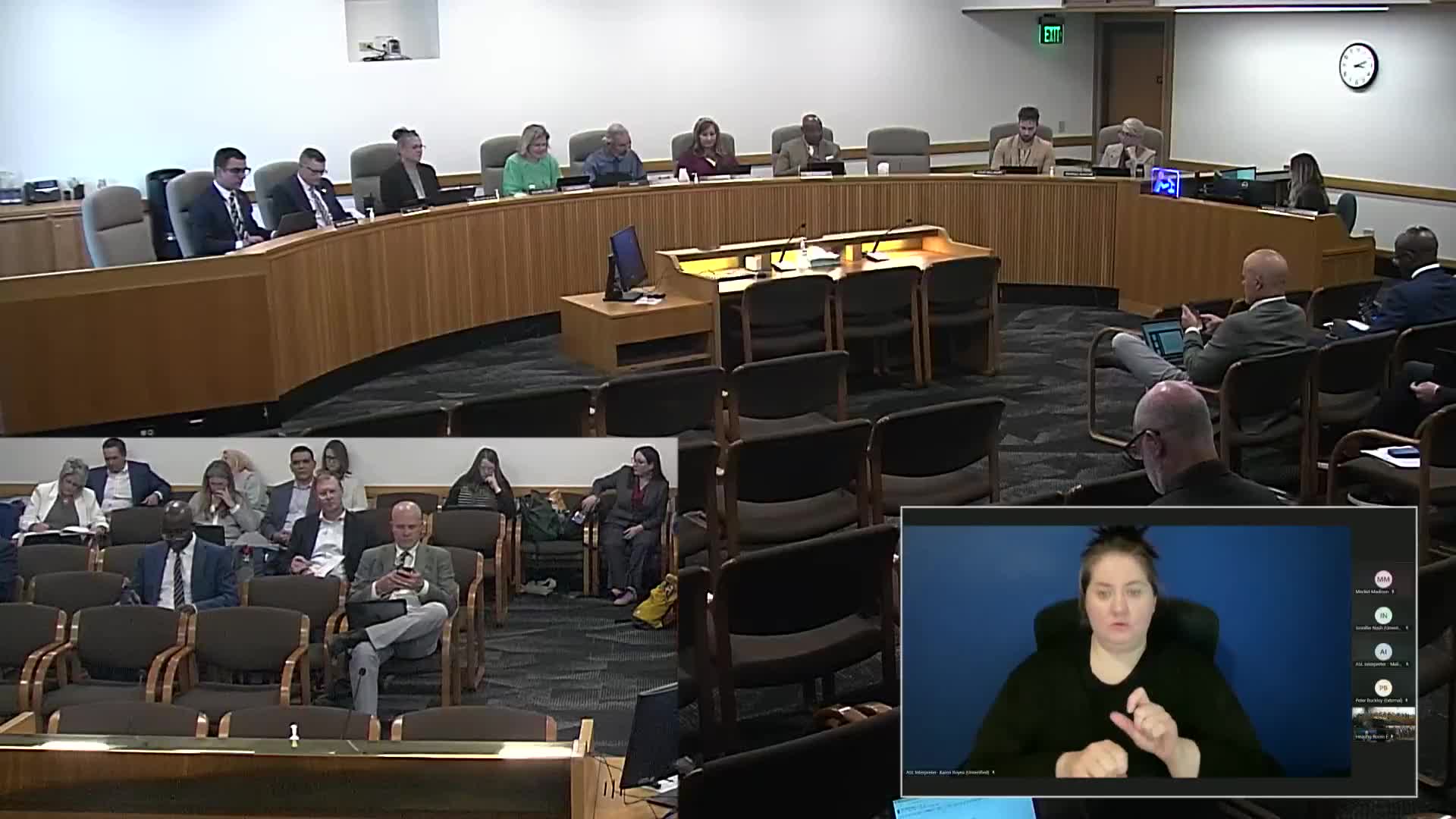
Senate Judiciary Hears Testimony on Bill to Reshape Oregon Public Defense Commission
Summary
The Senate Committee on Judiciary opened a public hearing on House Bill 2614A, which would change appointment and removal authority at the Oregon Public Defense Commission, adjust minimum qualifications for appointed defenders and modify contracting rules for private consortia amid a statewide backlog of unrepresented defendants.
The Senate Committee on Judiciary opened a public hearing on House Bill 2614A on Thursday, a bill that would change the appointment and removal authority for members of the Oregon Public Defense Commission (OPDC), adjust minimum qualifications for appointed public defenders and modify contracting rules for private consortia that provide public defense services.
Representative Jason Krupp, sponsor of HB 2614A, told the committee the bill has three parts: clarifying that OPDC’s statutory duty is to ensure constitutional representation rather than to adopt “national best practices,” strengthening governance and accountability for attorney consortiums that contract with the state, and altering the commission’s governance and executive-director appointment process. “We continue to have an unacceptable, unrepresented crisis that we need to solve,” Krupp said.
The bill would preserve a role for attorney consortiums and require additional internal governance for consortiums (for example, boards or governance structures for groups over certain sizes), while removing statutory language that the commission must adopt regional or national best practices when setting compensation or caseload guidance, proponents said. Krupp said those changes aim to focus the commission on meeting state and federal constitutional requirements and restrain agency budget requests that he said had been “double” what the Chief School List (CSL) budget allowed.
Marion County District Attorney Paige Clarkson said consortium and private-firm attorneys have helped keep counties functioning amid shortages, and she urged caution about rigid workload and compensation models. “We really do depend on it,” Clarkson said of effective defense representation, and said Marion County alone had nearly 900 out-of-custody unrepresented defendants.
Multiple speakers called for stronger accountability and transparency. Sal Peralta, executive director of the Oregon Defense Consortium, said consortium and private-firm attorneys handle roughly half the state’s defense workforce and more than 60% of the caseload and urged the legislature to remove any planned sunset for consortium contracting. Kevin Neely of the Oregon Criminal Justice Truth Project echoed the call for transparency and said, “as of this morning there were 3,800 still unrepresented.”
Nonprofit defense groups and public defender organizations supported preserving and strengthening consortiums but warned that removing references to national best practices and to compensation tied to the nature of the work could worsen recruitment and retention. Maylee Browning of the Oregon Criminal Defense Lawyers Association said language in HB 2614A that “removes national and regional best practices” may signal changed priorities and could disincentivize attorneys from entering public defense.
On governance, Representative Paul Evans and Constantine Severe, deputy general counsel to the governor, described the bill as a compromise that gives the governor authority to appoint and, for cause, remove the executive director while preserving opportunities for the commission to participate in recruitment and candidate review. Severe said the governor expects the new OPDC director to provide “a plan to end an unrepresented crisis by the end of this month.” Several witnesses urged stable, independent commission leadership and warned frequent turnover has hindered progress: Jennifer Nash, a nonlegislative commission member, said OPDC had five executive directors since 2021 and warned that “replacing the executive director will do nothing to solve this crisis without also addressing the ways others in the system contribute to the problem.”
Panelists and commission members repeatedly emphasized that governance changes alone will not fix the crisis. Former Representative and OPDC member Peter Buckley said the problem is a workforce and systems crisis that requires both investment and procedural reform in the courts to reduce unnecessary docket delays. Carl McPherson, executive director of Metropolitan Public Defender, pointed to rising filings and high attrition—he said the state lost roughly a quarter of the full-time public defense workforce in an 18-month period—and asked for targeted investments to retain felony-qualified attorneys who train new lawyers.
The committee chair announced the dash-8 amendments to HB 2614A were posted that afternoon and reminded witnesses the committee would accept written testimony through Thursday, May 15, at 3 p.m. The committee took no final action at the hearing; testimony was recorded and the matter remains under committee consideration.
The public hearing included testimony from government officials, county prosecutors, consortium and nonprofit defense leaders, advocacy organizations and former elected officials. Speakers consistently framed the immediate problems as a shortage of available lawyers, rising case filings in some counties and a backlog of unrepresented defendants, and they urged a combined strategy: short-term triage to reduce the backlog and longer-term investments in recruitment, compensation and court-process reforms.
The committee’s next steps include review of the dash-8 amendments and consideration of additional written testimony filed by the May 15 deadline.