Get AI Briefings, Transcripts & Alerts on Local & National Government Meetings — Forever.
House hearing backs ban on taxpayer‑funded painful dog and cat research as advocates press to include primates
Loading...
Summary
The committee heard broad public testimony supporting Senate Bill 181A, which would bar public funds for painful research on dogs and cats; many witnesses urged amending the bill to add a phased closure or prohibition covering primate research at OHSU’s Oregon National Primate Research Center, while union and center staff warned of scientific and
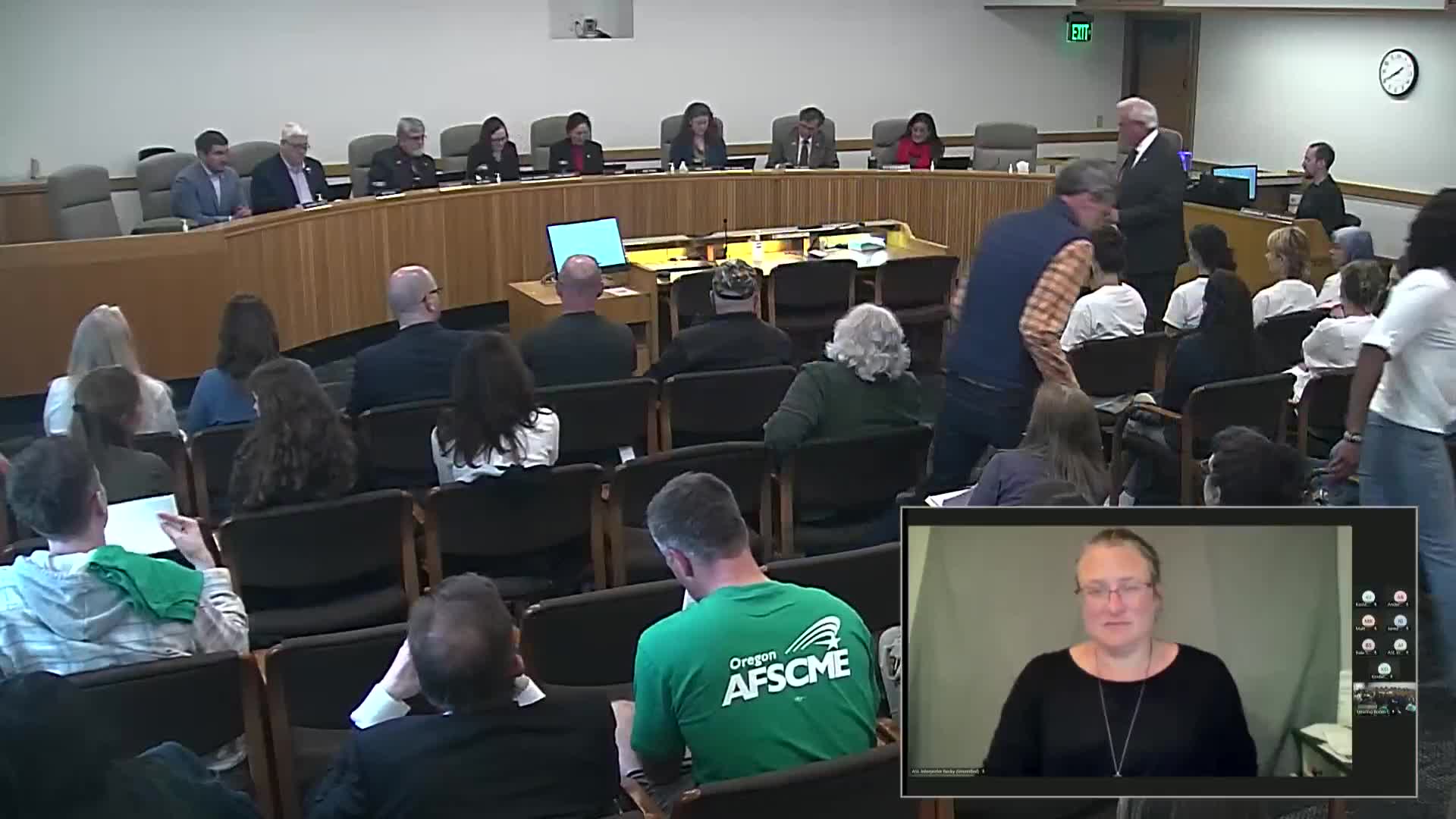
Senate Bill 181A, which would prohibit state funding for invasive or painful research on dogs and cats categorized as USDA pain and distress levels D or E, drew a lengthy public hearing before the House Committee on Emergency Management, General Government, and Veterans on May 13, 2025.
Representative David Gomberg, one of the bill’s proponents, told the committee the measure would bar use of public funds for the two highest USDA pain categories for dogs and cats and said the bill “is a simple bill” that does not prohibit privately funded research. He also raised concerns about the Oregon National Primate Research Center and said he would be willing to draft an amendment addressing the center’s future.
Witnesses supporting the bill included Jared Goodman of White Coat Waste, who urged the committee to keep taxpayer funds from supporting painful tests and said there was presently no state‑funded painful dog and cat research in Oregon. He said the narrow bill would "keep it that way." Scientists and animal‑welfare advocates urged a broader approach. Dr. Lisa Jones Engel and other scientists argued that modern human‑based research methods are increasingly preferred and questioned the scientific value of primate models.
Multiple speakers recounted alleged violations and animal welfare incidents at the Oregon National Primate Research Center. Amy Meyer (PETA), Ryan Merkley (Physicians Committee for Responsible Medicine) and others urged the legislature to amend SB 181A to include a timeline to close or transition the primate center, citing new federal priorities that emphasize human‑relevant methods and NIH announcements shifting funding away from animal models.
Union and center staff and supporters also testified. Joe Bessler, executive director of Oregon AFSCME, and employees of the center described the primate center’s contributions to medical research and said staff provide sustained animal care. Nathaniel Guard, a caregiver at the primate center, described outdoor social housing and said many animals are socially housed; center staff cautioned against abrupt closure plans without transition support for employees and animals.
Testimony spanned scientific, ethical, fiscal and workforce angles: supporters of wider action pointed to USDA citations at the primate center (testimony cited 35 violations since 2012) and argued new federal guidance and NIH funding changes make the center’s mission unsustainable; defenders stressed peer review of NIH grants, the center’s role in vaccine and disease research, and the human‑health benefits of primate research. Committee members did not take a floor vote on amendments during the hearing and closed public testimony after hearing from dozens of speakers.
The hearing underscored a clear split: strong public support for prohibiting taxpayer‑funded painful dog and cat research, and vigorous calls from many witnesses and some legislators to expand the bill to address primate research at OHSU; center staff and labor representatives urged careful transition planning before any closure or major funding changes.