Get Full Government Meeting Transcripts, Videos, & Alerts Forever!
Get email alerts on the Privacy Doxxing topic
No spam. Unsubscribe anytime.
Committee hears sharply divided views on making doxxing a crime, public broadcasters seek OCPA clarity
Summary
The House Judiciary Committee reopened public testimony on Senate Bill 11‑21, which would create a class B misdemeanor for knowingly disclosing another person’s personal information without consent with intent to stalk, harass or injure and where that disclosure results in harm, harassment or stalking.
The House Judiciary Committee reopened public testimony on Senate Bill 11‑21, which would create a class B misdemeanor for knowingly disclosing another person’s personal information without consent with intent to stalk, harass or injure and where that disclosure results in harm, harassment or stalking. The measure also would add an exemption to the 2023 Oregon Consumer Privacy Act (OCPA) for certain nonprofit public-media stations.
The bill’s backers told the committee the measure targets a narrow set of abusive disclosures; opponents said its broad language risks criminalizing protected speech. The hearing combined personal accounts from law-enforcement officers who said doxxing produced credible threats with legal and media testimony arguing the bill’s text needs tightening to avoid constitutional problems and to clarify the OCPA exemption.
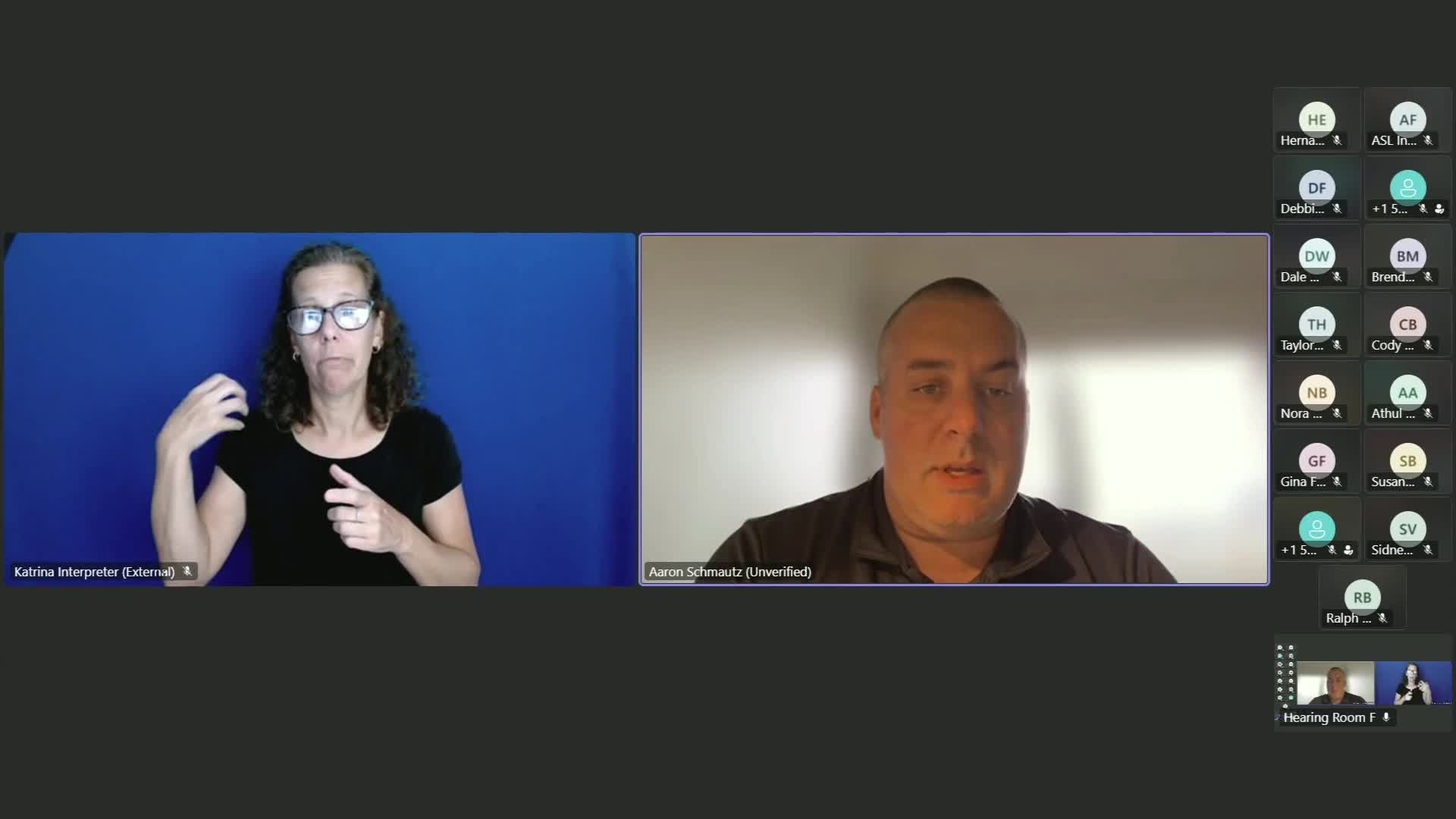
“Within an hour I had received about a hundred phone calls to my personal cell phone,” said Sergeant Aaron Schmaltz, a Portland police sergeant and president of the Oregon Coalition of Police and Sheriffs, describing a doxxing episode he said followed police action. “People threatening to **** and kill my wife and daughter… I had to have a panic alarm installed in my house.” Schmaltz urged lawmakers to move the bill forward as a criminal remedy.
Sergeant Trevor Morrison of the Salem Police Department gave a similar account of threats and household protection measures. “We had to have undercover officers in the neighborhood, regular patrol, drop cars,” Morrison said, describing what he called traumatic impacts on his children and family.
Rebecca Morris, general counsel for Oregon Public Broadcasting, told the committee OPB strongly supports SB 11‑21’s privacy protections but urged clarification of the OCPA exemption for nonprofit public-media entities. “The issue now is that the specific requirements were not drafted with organizations like ours in mind,” Morris said. She described OPB’s member‑driven outreach and emergency‑alert role and said the organization “doesn’t sell data” and needs explicit statutory language so community engagement and journalism are not unintentionally covered as commercial data processing.
Nora Broker, testifying remotely to supplement Morris, told legislators the bill before the committee already includes the exemption language OPB sought after a Senate amendment and asked the panel to pass the measure as amended in the Senate.
Athul Acharya, a member of the Lawyers Committee of the ACLU of Oregon, said the bill risks criminalizing truthful speech and cited U.S. Supreme Court precedent. “State action to punish the publication of truthful information… seldom can satisfy constitutional standards,” Acharya said, warning that broad definitions of “personal information” could sweep in public domain facts and chill protected expression.
Aaron Knott, director of government relations for the Oregon Judicial Department, said the bill borrows a civil‑law definition of harm (severe emotional distress) and inserts it into the criminal code, making interpretation and enforcement more complicated. Knott suggested focusing on established criminal harms such as stalking or physical injury if the committee wants a narrowly tailored criminal statute.
Committee members questioned whether the statute requires both intent to cause stalking/harassment and an actual resultant harm. A staff description offered to the panel said the element that “the disclosure results in harm, harassment, or stalking” is part of the bill. The bill sponsor’s office reported the measure passed the Senate with 29 yes votes and one excused.
No formal action was taken during the hearing. The committee closed public testimony on SB 11‑21 and proceeded to other items on the agenda.
Why it matters: supporters described repeated, targeted threats that followed public disclosure of personal data; civil‑liberties and media witnesses warned the law’s definitions and scope should be narrowed and clarified to avoid criminalizing lawful speech and to ensure nonprofit public‑media operations are protected under the Oregon Consumer Privacy Act exemption.