Get Full Government Meeting Transcripts, Videos, & Alerts Forever!
Get email alerts on the State Procurement Parks topic
No spam. Unsubscribe anytime.
Committee hears wide-ranging testimony as parks procurement exemption advances amid IT and local vendor concerns
Summary
Senate Bill 838A, which would exempt the Oregon Parks and Recreation Department from the state public contracting code except for surplus property, drew extended testimony on May 13, 2025.
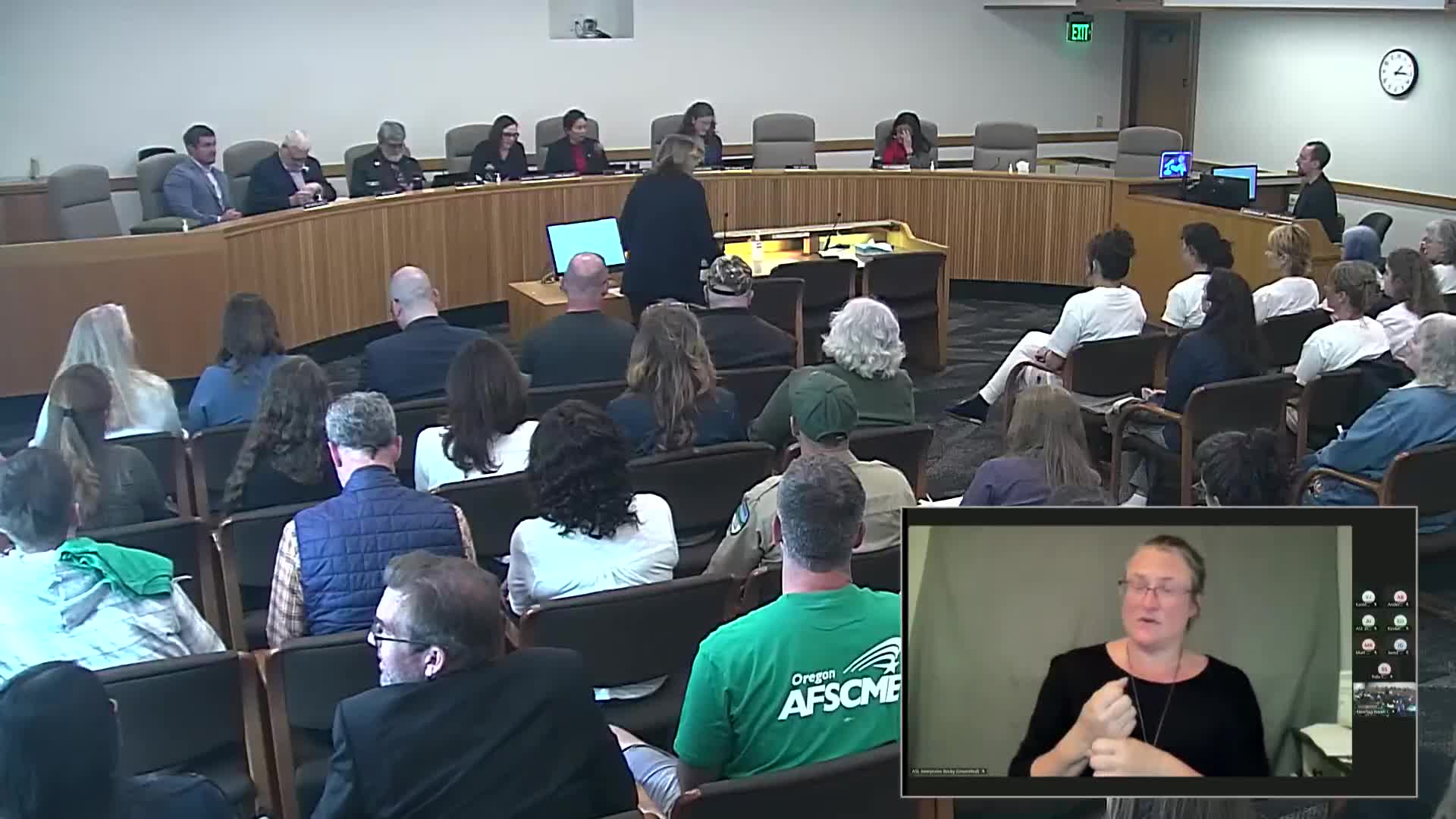
Senate Bill 838A, which would exempt the Oregon Parks and Recreation Department from the Oregon public contracting code except for surplus property, was the subject of a lengthy public hearing before the House Committee on Emergency Management, General Government, and Veterans on May 13, 2025.
Supporters, including Representative Emerson Levy and OPRD Director Lisa Assumption, said the exemption would let parks act more like hospitality or lottery operations and help avert an approaching budget “cliff.” Director Lisa Assumption said, "Our intent was never to be exempt from IT, and we didn't know that that is in the bill. So if that's the case, absolutely not." Park managers and a local vendor testified that current state contracting requirements had made routine services slower and more expensive.
The bill’s advocates told the committee that some parks procurements — for example, last-minute printing, emergency repairs, and local services such as septic pumping — do not fit the centralized procurement model and can cost substantially more under the current system. Park manager Steven Bufano described transitions after central contracts went to national firms and said local vendors were often faster and cheaper: he told the committee that on one date a national contractor charged $913 for a pump-out that a local vendor previously performed for $460.
Opponents and some legislators urged limits. Representative Nancy Nathanson, who chairs the joint committee on information management and technology, warned that the current draft would exempt OPRD from provisions related to information-technology procurement and could create confusion with statutes that assign IT authority to the state chief information officer (Chapter 276A). She said OPRD told her the bill as written would exempt the agency from procurement code, Oregon Administrative Rules and, in theory, model rules from the Department of Justice, which could allow purchases of IT products without the usual protections. She noted OPRD’s ongoing Recreation Hub IT project — recently estimated at about $6.7 million and rated by independent reviewers as high risk — as a reason not to remove IT safeguards now.
Operators and small-business witnesses described administrative barriers to participating in state contracts. Kimberly Dobbs of Bulldog Septic said additional insurance and bonding requirements pushed small firms out of the market: "We are licensed and bonded. We have to add additional to that. It's just too expensive for us." Park staff and vendors urged allowing parks to contract directly with local businesses in nonstandard situations and to use expedited contracting for emergency repairs.
Committee members asked whether a narrower amendment could preserve IT and other high‑risk procurement safeguards while giving parks flexibility for printing, emergency repairs, and other hospitality‑style services. Representative Nathanson and Director Assumption indicated an amendment excluding IT procurements was feasible. The committee took testimony from around 30 witnesses and closed the public hearing; no final committee vote on an amendment was recorded at the hearing.
The discussion left two clear themes: parks leaders and local vendors say current procurement rules raise costs and slow emergency response, while technology and accountability advocates warned that broad exemptions could increase cyber and operational risk. The committee will consider amendments and potential carve-outs before further action.