Get Full Government Meeting Transcripts, Videos, & Alerts Forever!
Get email alerts on the Consumer Protection topic
No spam. Unsubscribe anytime.
Oregon committee hears testimony on bill to require all‑in online prices, debates private right of action
Summary
Sen. Floyd Prozanski told the committee SB 430A would make sure online shoppers “actually know what they're gonna be paying when they actually confirm that they're ready to buy.”
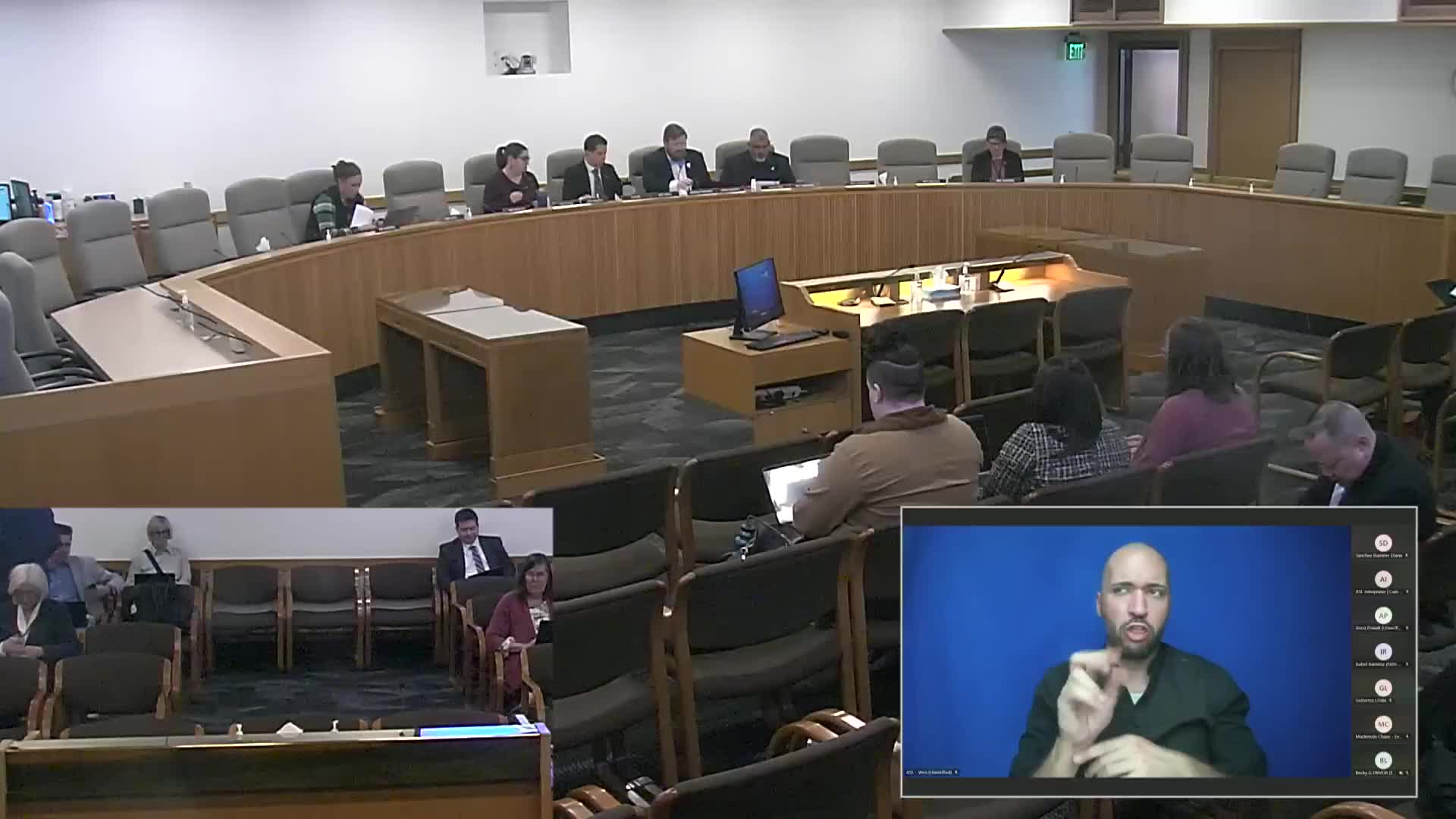
Sen. Floyd Prozanski, a state senator representing Senate District 4, told the House Committee on Commerce and Consumer Protection on May 13 that Senate Bill 430A would ensure online shoppers “actually know what they're gonna be paying when they actually confirm that they're ready to buy.”
The bill, as explained to the committee, would require a person who offers or sells goods or services online to an Oregon resident to include in advertised prices all fees or charges a purchaser must pay to complete a transaction, with narrow exceptions for taxes or fees a government body imposes and reasonable shipping or service charges a seller actually incurs. An A‑7 amendment would allow a service fee calculated by distance or purchaser selections to be disclosed later in the checkout process, but only if “the person must disclose the service fee prominently before the purchaser agrees to pay.”
The bill’s proponents told the committee the change is intended to stop the practice sometimes described as “drip charging” — where additional fees appear late in the checkout process — and to bring online advertising in line with what consumers actually pay. Sen. Prozanski recounted a personal example of buying tickets online, where fees added after confirmation raised the price from $8 to $18 for what had been advertised as a lower total. “They were doing that,” he said, “and I checked in with the Department of Justice; they told me that there was nothing prohibiting that under law.”
Leslie Wu, testifying for Oregon Attorney General Ellen Rosenblum's office, said the bill mirrors California’s price‑transparency language in key respects and preserves a seller’s ability to disclose taxes and certain service fees after a consumer provides location data. Wu noted federal action as well: “At the federal level, the Federal Trade Commission's price transparency rule did go into effect,” she said, but added that the FTC rule governs a narrower set of industries — live event ticketing and transient lodging — and “this legislation does not conflict with the FTC's price transparency rule.” She also cited prior DOJ enforcement work, saying the agency had obtained a settlement with Choice Hotels for failing to “clearly and conspicuously disclose an upfront total room price.”
Consumer advocates and civil‑society witnesses supported the bill. Rebecca Gladstone of the League of Women Voters of Oregon told the committee the measure advances “truth in advertising with actual costs for Oregon residents” and urged support for the bill’s transparency goals.
Business and trade groups raised several concerns. Derek Sangston of Oregon Business & Industry said OBI remained opposed because the bill would “enact a broad regulatory scheme” and risk creating a patchwork of state rules that impose operational burdens on online retailers. Several witnesses urged a longer implementation timeline, broader carveouts for fees that cannot practically be disclosed upfront, and enforcement by the Attorney General rather than a private right of action.
Fawn Berry, representing the Oregon Liability Reform Coalition, said she opposed the bill solely because of the private right of action provision and warned of potential statutory damages under the Unlawful Trade Practices Act: “There are minimum statutory damages of $200 per instance that can be amassed into a class action lawsuit,” she said, and she asked the committee to reconsider that enforcement mechanism.
Automobile dealers told the committee the bill, as written, could disadvantage Oregon dealers in interstate online shopping. Greg Remensberger, executive vice president of the Oregon Auto Dealers Association, explained that dealers routinely collect a negotiable document‑processing fee tied to state motor vehicle transaction work and that fee is not a government‑imposed tax. Remensberger said that fee is already required to be disclosed at the time of sale but that forcing its inclusion in online advertising could disadvantage Oregon dealers versus out‑of‑state competitors. “This is certainly not a junk fee,” he said.
Platform and travel companies said they support transparent pricing but asked for technical clarifications. Anna Powell of DoorDash said the company already shows consumers “what you pay, including any and all fees before you ever check out.” Mackenzie Chase of Expedia Group asked the committee to add two words to the bill’s first paragraph so that advertisers as well as sellers must follow the same transparency standard, noting that metasearch ads and intermediaries could otherwise continue to show different prices.
Committee members asked about real‑world examples and implementation. Representative Kate (member of the committee) asked how small vendors or farmers should provide exact freight or freight‑sourcing costs in advance; proponents and DOJ staff responded that shipping or freight costs the seller actually incurs are carved out of the upfront advertising requirement. Representative Osborne and others pressed witnesses about the short implementation timeline and the interaction with other pending bills that target event ticketing and fan‑fairness; witnesses said they had coordinated across bills but that outstanding questions remained.
The public hearing on SB 430A closed after several panels of testimony. No committee vote on the bill was recorded during the May 13 meeting.
Why it matters: The bill would change how online pricing is disclosed to Oregon residents, affecting retailers, platforms, ticketing and delivery services, and potentially creating new litigation pathways if the private right of action remains in the final text. The measure’s scope and enforcement mechanism were the primary fault lines during testimony.