Get Full Government Meeting Transcripts, Videos, & Alerts Forever!
Get email alerts on the Confirmation Hearing Energy topic
No spam. Unsubscribe anytime.
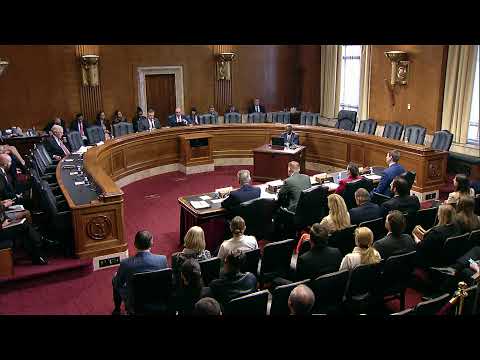
Senate energy committee hears nominees on NEPA, ARPA‑E priorities and USGS data funding
Summary
Four presidential nominees testified before the Senate Energy and Natural Resources Committee. Senators questioned the nominees about NEPA litigation, ARPA‑E's portfolio and proposed budget cuts, and potential USGS reductions to scientific data and mapping programs.
The Senate Energy and Natural Resources Committee heard testimony from four presidential nominees — Jonathan Brightbill for general counsel at the Department of Energy, Tina Pierce for chief financial officer at DOE, Connor Prochaska for director of ARPA‑E, and Dr. Ned Mamula for director of the U.S. Geological Survey — and pressed them on NEPA implementation, ARPA‑E priorities and the future of USGS data programs.
The nominees delivered opening statements summarizing their backgrounds: Brightbill described prior DOJ Environment and Natural Resources Division leadership and private-practice experience; Pierce recounted federal financial-management roles including as deputy DOD CFO; Prochaska described prior roles at DOE and ARPA‑E and his work on commercialization; Mamula emphasized a career in energy and mineral exploration and the USGS mission of geologic mapping.
NEPA and litigation risk: Chairman Lee asked Brightbill about the National Environmental Policy Act and whether litigation — rather than pre-decisional review — is the primary source of permitting delay. Brightbill said litigation risk created by judicial review is the central problem and that reform should target NEPA litigation, not merely permitting steps. He told the committee he had litigated NEPA matters extensively and would review the department's legal positions if confirmed.
ARPA‑E priorities and cuts: Several senators pressed Connor Prochaska about ARPA‑E's role and recent budget proposals. Prochaska said ARPA‑E selects projects through competition run by program managers and that the agency seeks high‑risk, high‑reward investments without "picking winners and losers," adding that program management and active portfolio oversight help move technologies toward commercialization. Senators repeatedly raised the president's FY2026 budget proposal to cut ARPA‑E by 57 percent; Prochaska said he would "maximize the resources" available and review the portfolio if confirmed.
USGS data and mission concerns: Senators cited recent reports of proposed cuts to USGS programs — including biological research and dozens of water science centers — and asked Dr. Mamula whether he would prioritize maintaining long‑term data and mapping programs. Mamula responded that geologic mapping and dataset integrity must be priorities and pledged to review the budget and program content closely if confirmed. He told the committee, "USGS is a data factory," and said data preservation and mapping support mineral security and resource assessment.
Other oversight lines: Senator Heinrich asked Brightbill whether DOE's announced rollbacks of energy‑efficiency standards complied with judicial orders; Brightbill responded that, as a nominee not yet serving at DOE, he had not advised on those actions but would review legal analyses and advise the secretary and program officials if confirmed. Senators also asked Pierce to commit to timely, accurate financial reporting and to working with Congress to enable oversight; Pierce pledged to apply "the highest standards of fiduciary responsibility" and to support congressional oversight.
Why it matters: The nominees would occupy offices that influence legal strategy at DOE, financial stewardship of multibillion‑dollar programs, investments in transformational energy technologies, and federal geologic mapping and data. Senators framed questions around whether the nominees would defend existing science and data programs, support transparency with Congress, and manage resources in ways that promote U.S. technical and mineral competitiveness.
The committee left the record open for follow‑up questions and set a Thursday, May 15 deadline for additional statements; questions for the record were due by 6 p.m. on the day of the hearing.