Get Full Government Meeting Transcripts, Videos, & Alerts Forever!
Get email alerts on the Paid Sick Leave topic
No spam. Unsubscribe anytime.
Nebraska senators debate changes to paid sick-leave measure; compromise amendment adopted
Summary
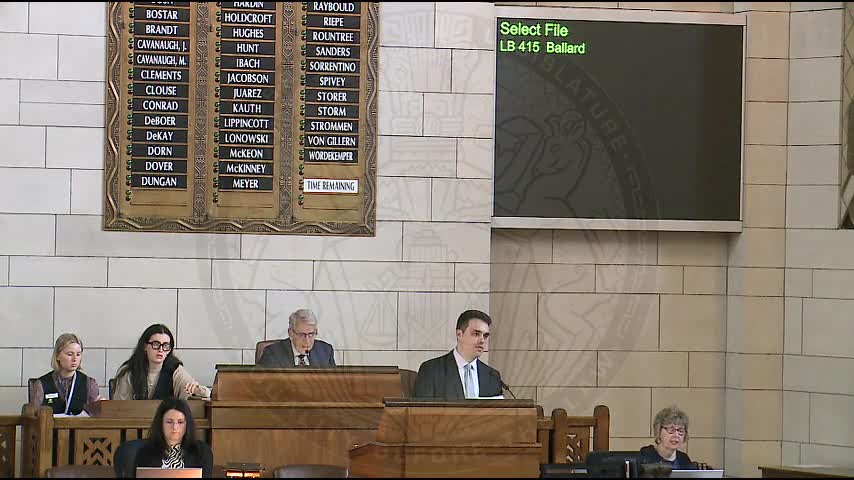
Nebraska senators spent the morning debating LB415, a bill that clarifies and modifies the paid sick-leave measure approved by voters as Initiative 4-36 and makes other changes to implementation and employer obligations.
Nebraska senators spent the morning debating LB415, a bill that clarifies and modifies the paid sick-leave measure approved by voters as Initiative 4-36 and makes other changes to implementation and employer obligations. After extended debate the body adopted AM13-37, a negotiated compromise that exempts some very small employers and clarifies several implementation details.
The amendment and the underlying bill drew sharply divided floor remarks from lawmakers across the political spectrum and advocacy allies. Senator Stroman summarized the amendment on the floor, saying, “This amendment ... would exempt, employees with 5 or fewer from paid sick leave level requirements, as opposed to 10, and would exclude individuals 16 years old only if they are emancipated minors.” Stroman also described additional provisions intended to limit employer exposure and clarify accrual and payout rules.
Why it matters: the changes respond to implementation questions raised after voters approved Initiative 4-36. Supporters of the ballot initiative and many senators said walking back broad coverage undermines voters’ will; opponents said clarifications and narrow exemptions are necessary to make the law administrable for small employers. The debate combined technical questions—how to treat contractors, owner-operators, seasonal agriculture workers, accrual caps and payout rules—with political arguments about whether the Legislature should alter a citizen-passed initiative so soon after the election.
Most prominent changes in AM13-37, as described on the floor, included reducing the employer-size carve-out to firms with five or fewer employees (down from language proposed earlier that would have exempted larger numbers), explicitly excluding owner-operators and certain independent contractors, clarifying that paid sick leave need not be paid out on termination, and shortening the civil statute-of-limitations for enforcement actions from four years to one year. Senator Ballard, sponsor of LB415, told colleagues the bill “fixes and adds definition clarifications of independent contractors, owner operators, and employees who work less than 80 do not fall under the initiative language,” and said the bill also preserves qualifying employer PTO programs that meet the initiative’s minimums.
Supporters of the amendment argued it mitigates harm caused when an earlier version would have excluded many workers the voters intended to cover. Senator Duncan called AM13-37 “a harm reduction,” and several senators who opposed broader rollbacks said the amendment brought additional workers under the initiative’s protections compared with earlier committee amendments. Senator John Kavanaugh, speaking in favor of the amendment but opposed to the larger bill, said it “is a harm mitigation” and noted that AM13-37 would extend benefits to more workers than the prior draft.
Opponents warned the mandate would weigh heavily on very small businesses. Senators representing rural districts and many small employers described tight margins and staffing limits and argued that even modest leave requirements can drive automation or closures in some businesses. Senator Storer and others said they supported the compromise amendment as a responsible way to implement the initiative while protecting small firms.
Process and votes: senators debated several motions during the floor session. A motion to bracket (postpone) the bill failed; later, after extended debate, the Legislature adopted AM13-37 on a recorded vote (clerk report: 36 ayes, 4 nays). Several members said they would still oppose the underlying LB415 as amended, arguing the changes did not go far enough to preserve the electorate’s original intent or, conversely, went too far in changing the initiative.
What remains unresolved: adoption of AM13-37 did not end disagreement over whether the Legislature should alter a citizen-passed ballot measure and how to balance administrative clarity with broad coverage. Multiple senators urged any substantial further changes be returned to voters via another ballot measure rather than being rewritten in the Legislature. Lawmakers also flagged implementation mechanics—recordkeeping, interaction with existing PTO plans, and enforcement—that will require rulemaking and agency guidance if the bill advances.
The debate included frequent references to broader state budget and policy fights, including funding decisions for North Omaha projects and other items discussed earlier in the session. Those budget conversations shaped senators’ tone on whether to substitute legislative judgment for the will expressed at the ballot box. The Legislature paused for a midday recess after the morning’s work; further votes on LB415 and related measures were expected as the session continued.