Get Full Government Meeting Transcripts, Videos, & Alerts Forever!
Get email alerts on the Apprenticeship Public Construction topic
No spam. Unsubscribe anytime.
Debate over mandatory apprenticeship on public projects highlights ratio limits for small contractors
Summary
Contractors and building trades disagreed over proposed requirements to use registered apprenticeship programs on public construction. ABC argued strict journeyperson-to-apprentice ratios and graduation timelines limit small firms; building-trades witnesses said apprenticeship mandates expand training capacity and public-value safeguards.
The Joint Committee on Labor and Workforce Development heard sharply contrasting testimony about bills that would require registered-apprenticeship participation on public construction projects.
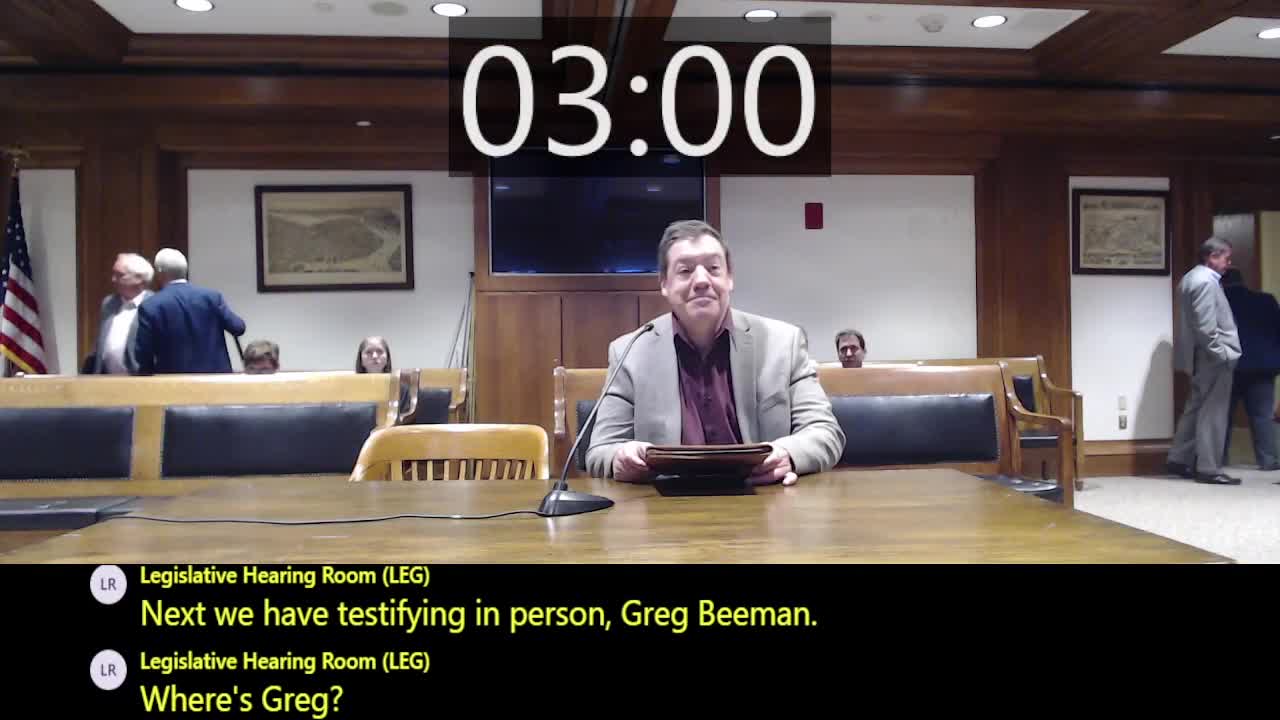
Greg Beeman of Associated Builders and Contractors of Massachusetts said ABC supports apprenticeship training but opposed the current drafts of H.2099/H.2165/S.1358 as written because Massachusetts’ existing journeyperson-to-apprentice ratios, set in state law, can prevent smaller firms from hiring apprentices. He said some trades require as many as five journeypersons per apprentice and that a requirement to graduate apprentices to journeyman in three of the last five years would be burdensome for company-specific programs and small contractors.
"As many as five or more journey persons must be employed for each apprentice employed," Beeman told the committee, and he urged the Legislature to consider amending ratio rules if the panel advances apprenticeship mandates for public projects.
By contrast, Rich Marlin of the Massachusetts Building Trades and other union-affiliated witnesses supported mandatory apprenticeship on public work to expand training pipelines. Building-trades testimony noted that apprenticeship and safety training already exist in joint programs and said apprenticeship requirements help ensure public funds support workforce development and safety.
Warren Kramer of the Building Trades Employers Association supported H.1265 and H.207 (OSHA training) and said many responsible contractors already provide training through apprenticeship committees. Kramer said H.1265, which requires registered-apprenticeship participation, would reinforce long-term workforce readiness and prevent a "race to the bottom." The committee did not vote; witnesses asked lawmakers to reconcile apprenticeship access with ratio rules so mandates do not unintentionally block small firms from public work.