Get Full Government Meeting Transcripts, Videos, & Alerts Forever!
Get email alerts on the Bereavement Leave topic
No spam. Unsubscribe anytime.
Joint committee hears broad support for state bereavement-leave bills
Summary
Advocates, victim-service providers and lawmakers urged the Joint Committee on Labor and Workforce Development to report H.2189/S.1354 favorably, saying the bills would guarantee up to 10 days of bereavement leave and address gaps faced by families after sudden deaths, including homicide victims.
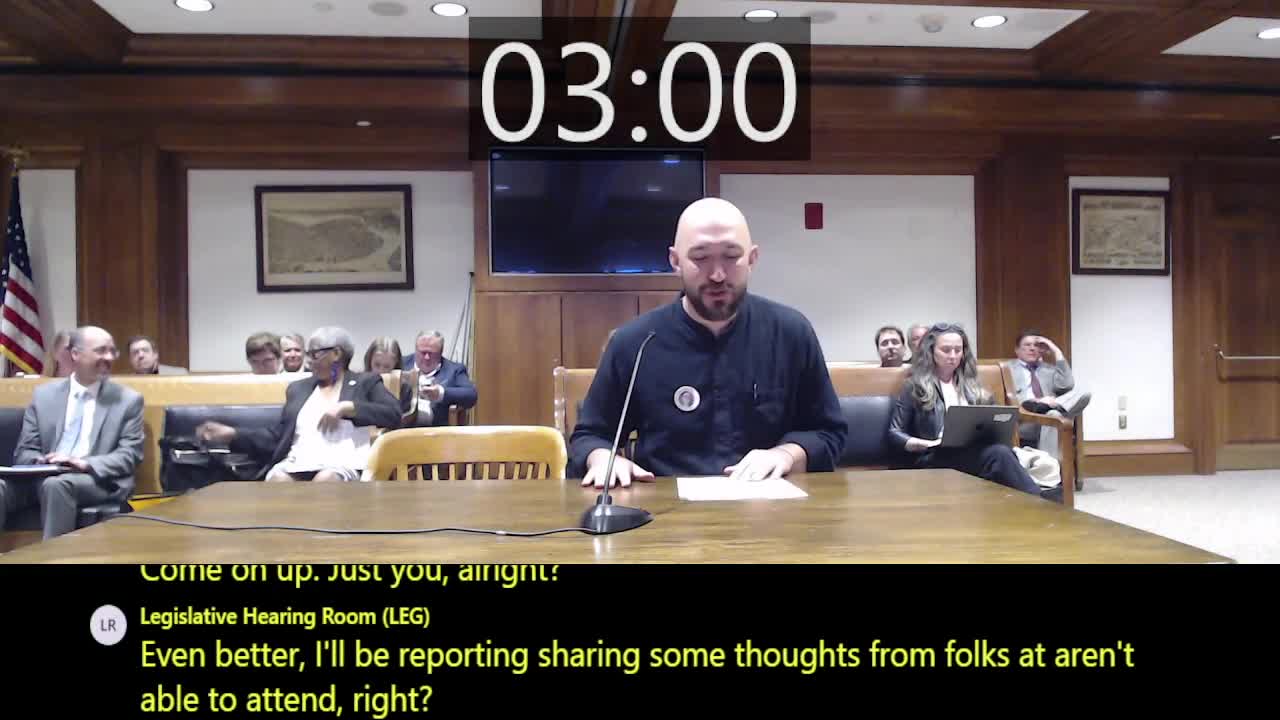
Supporters of proposed Massachusetts bereavement-leave legislation told the Joint Committee on Labor and Workforce Development on Tuesday that the bills would give grieving workers short, guaranteed time off without jeopardizing their jobs.
Pace McConkie Jr., policy manager for the Louis D. Brown Peace Institute, told the committee H.2189/S.1354 "aims to provide bereavement leave for employees recognizing the profound impact of losing a loved 1 and the necessary time to grieve and make arrangements." He described clients who lose jobs after a homicide and the cascading harms that followed.
The bills on the docket would establish a right to up to 10 days of bereavement leave, usable consecutively or nonconsecutively within 12 months of a family member’s death, with employers retaining discretion over whether the leave is paid and firms with fewer than 25 employees exempted, witnesses and sponsors said.
Chaplain Clementina Sherry, president and CEO of the Louis D. Brown Peace Institute, said the Institute helps families in the first 24 to 72 hours following a homicide and that Massachusetts currently leaves bereavement protections to individual employers. "This bill ensured that all workers, regardless of income or job type, have the right to take the time they need to grieve," she said.
State Representative Chris Worrell, a sponsor of the House bill, said the measure recognizes varied modern family structures by defining family to include immediate relatives and residents of the employee’s household and allows leave for funeral arrangements, services, legal matters or grieving. "Whether someone is navigating the sudden death of loved ones or the passing of aging parents, they deserve dignity and a time to heal," he told the panel.
Susan Shaw, executive director of Williams Be Yourself Challenge, and other family advocates described personal losses and economic consequences when employers do not provide leave. Shaw said her husband’s unpaid six-month leave after their child’s death helped the family survive but noted that many workers lack that option.
Liam Lowney, executive director of the Massachusetts Office for Victim Assistance (MOVA), said the agency’s programs assisted more than 5,400 families affected by homicide in fiscal 2024 and supported the bills because survivors of violent crime often need immediate time to grieve and to manage legal and funeral obligations.
Committee members did not take a vote at the hearing. Sponsors and advocates asked the committee to report the measures favorably for further legislative action.
The hearing included related testimony about other bereavement proposals (including bills proposing paid leave for certain losses and special provisions for the death of a child). Witnesses asked the committee to balance employer clarity with survivors’ needs; Representative Worrell noted the bill includes guidance on optional documentation to reduce employer uncertainty.
Supporters asked the committee to move the bills forward so workers who suffer sudden losses — including victims’ families and those affected by public-health disparities — would have a statutory right to take short bereavement leave without automatically losing employment or facing untenable economic hardship.
The committee did not adopt any amendments during the hearing and no formal committee action was recorded on these bills at the hearing’s close.