Get Full Government Meeting Transcripts, Videos, & Alerts Forever!
Get email alerts on the First Responders Benefits topic
No spam. Unsubscribe anytime.
Lawmakers debate expanding benefits for injured or fallen first responders; Appropriations committee asks sponsor to refine proposals
Summary
Two bills addressing extraordinary medical expenses and survivor insurance for law enforcement and firefighters were discussed in depth and ultimately voluntarily deferred. Committee members praised the intent but warned the changes could create unfunded liabilities and asked the sponsor to limit retroactivity and return with fiscal data.
Two companion bills addressing benefits for injured or fallen law‑enforcement officers and firefighters drew extensive committee discussion but were voluntarily deferred so sponsors can work the details with Appropriations staff and local governments.
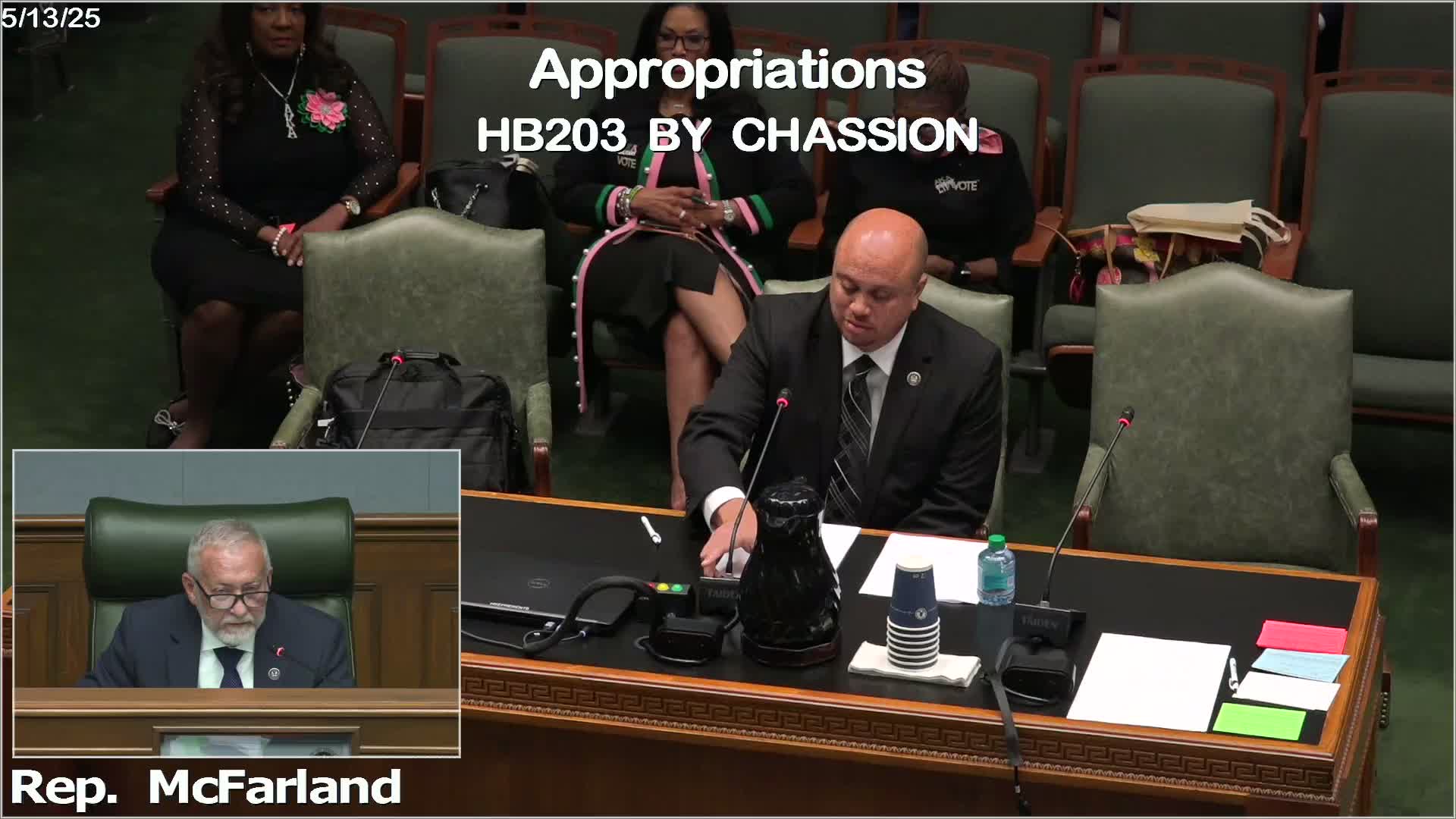
House Bill 203 would add authority for the Law Enforcement and Fireman Survivor Benefit Review Board to consider extraordinary medical and dental expenses for injured first responders who exhausted insurance coverage. Sponsor Representative Chasson said the change is intended to give injured officers a peer review process and a possible avenue for assistance after insurances deny unconventional treatments; she described a local officer who pursued alternative treatments out of pocket.
House Bill 231 would extend health insurance coverage for families of officers and firefighters killed in the line of duty beyond the two‑year extension enacted in prior sessions, potentially making survivor coverage indefinite for spouses and continuing coverage for dependent children while enrolled in school.
Committee members uniformly praised the bills’ intent to help first responders but raised fiscal concerns. Appropriations members noted the existing Officer Risk Management self‑insured fund has defined purposes and current commitments for fallen officers; expanding eligibility or making benefits retroactive could trigger an indeterminable fiscal exposure. Members urged the sponsor to limit retroactivity and to work with local governments and the Louisiana Municipal Association because municipalities currently pay two years of survivor benefits in many cases.
Vice‑Chair Hughes and other members asked the sponsor to “park” the bills and return with an HCR or task force to quantify the number of eligible cases and the fiscal consequences before advancing. Representative Chasson agreed to voluntarily defer both bills and to work with stakeholders to craft amendments that preserve the bills’ intent while protecting existing funds.