Get Full Government Meeting Transcripts, Videos, & Alerts Forever!
Get email alerts on the Agricultural Equity topic
No spam. Unsubscribe anytime.
Advocates push for agriculture equity commission as farmland shrinks and BIPOC farmers remain underrepresented
Summary
At a joint hearing, advocates for H11/S53 and related bills urged the Joint Committee on Agriculture to create a commission to collect data and recommend policy to address farmland loss, economic strain on farmers and systemic barriers faced by BIPOC and immigrant growers.
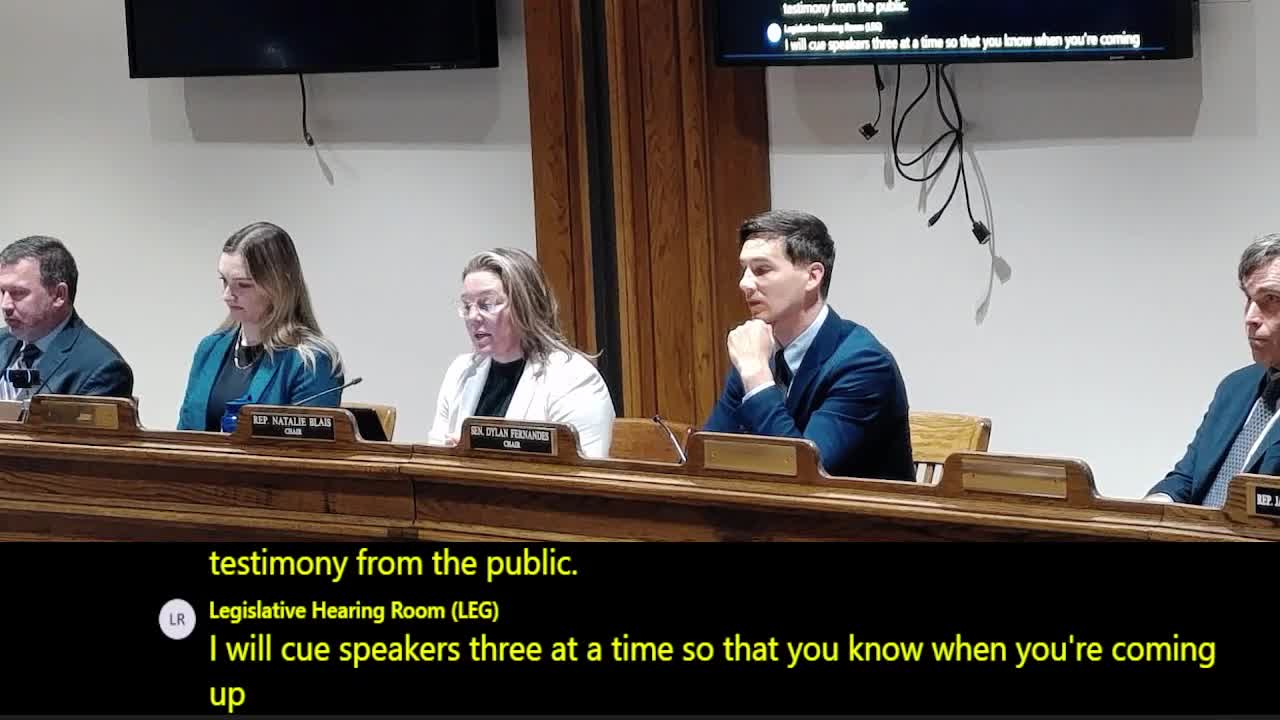
Joint committee leaders and more than a dozen witnesses told the Joint Committee on Agriculture on Wednesday that a new state commission and related policies are needed to address farmland loss, rising costs and persistent racial and immigrant‑status barriers in Massachusetts agriculture.
The hearing focused on H11/S53, a resolve promoting equity in agriculture, alongside companion and related bills including H130/S52 (membership updates to the Massachusetts Food Policy Council) and bills to address climate impacts on farms. Advocates said these measures would create the data, representation and targeted investments needed to support underserved farmers.
The issue matters because farmland is shrinking and remaining acreage is expensive: "In a period roughly spanning the twentieth century, 80% of Massachusetts consisted of farmland. Today, we’re about 9% farmland," said Becca Miller, policy director for the Massachusetts Food System Collaborative. "Between 2012 and 2022, we converted an average of 16 acres of farmland per day — totaling 59,000 acres." Miller added that Massachusetts farmland averages about $15,000 per acre with an 11% increase in price between 2021 and 2022, and that "Massachusetts farmers earn 96¢ for every $1 they spend on producing food." She also urged adding a Department of Fish and Game designee to the Mass. Food Policy Council via H130/S52 so the seafood sector has formal representation.
Witnesses described concrete obstacles BIPOC and immigrant farmers face in accessing land and capital. "He kept his phone on him at all times while working, afraid the landlord might call the police on him simply for farming while Black," said Susan Murray, executive director of the Southeastern Massachusetts Agricultural Partnership, recounting a farmer's experience. Murray and others testified that existing loan and grant processes are difficult to navigate for immigrant farmers and are not tracked in a way that would let policymakers measure disparities.
Norris Gascott of the Massachusetts Food System Collaborative’s Ag Equity Network detailed network priorities: improved data collection, qualitative and quantitative reviews of existing programs, and recommendations to reallocate investments equitably. "This bill does more than just create a commission," Gascott said. "It proposes a qualitative and quantitative evaluation of existing programs and successes and development of a plan to build upon those efforts."
Urban and small‑scale farmers also testified. Amber Dickerson, deputy executive director of the Urban Farming Institute, said her organization farms roughly two acres but could do more if they had better access to land and resources in neighborhoods such as Mattapan, Dorchester and Roxbury. Iru Kayun Niambi and Jor Herr, immigrant and small‑scale farmers, described trouble securing affordable land and capital and urged policy that addresses urban farming needs and leasing support for small operations.
Committee cochairs — House Chair Natalie Blaine and Senate Cochair Dylan Fernandez — took questions and thanked witnesses; no committee votes on the bills were held at the hearing. Several members signaled interest in the bill’s data collection provisions and the proposed seat on the Food Policy Council.
The advocates asked the committee to report H11/S53 favorably and to support the companion measures (including H130/S52). The committee invited written testimony and follow‑up materials.
Looking ahead, witnesses said the next steps are drafting the commission’s charge, specifying data to be collected (loans, grants, land tenure, program access) and identifying funding sources to support implementation and outreach to BIPOC, immigrant and urban farmers.