Get Full Government Meeting Transcripts, Videos, & Alerts Forever!
Get email alerts on the Child Representation topic
No spam. Unsubscribe anytime.
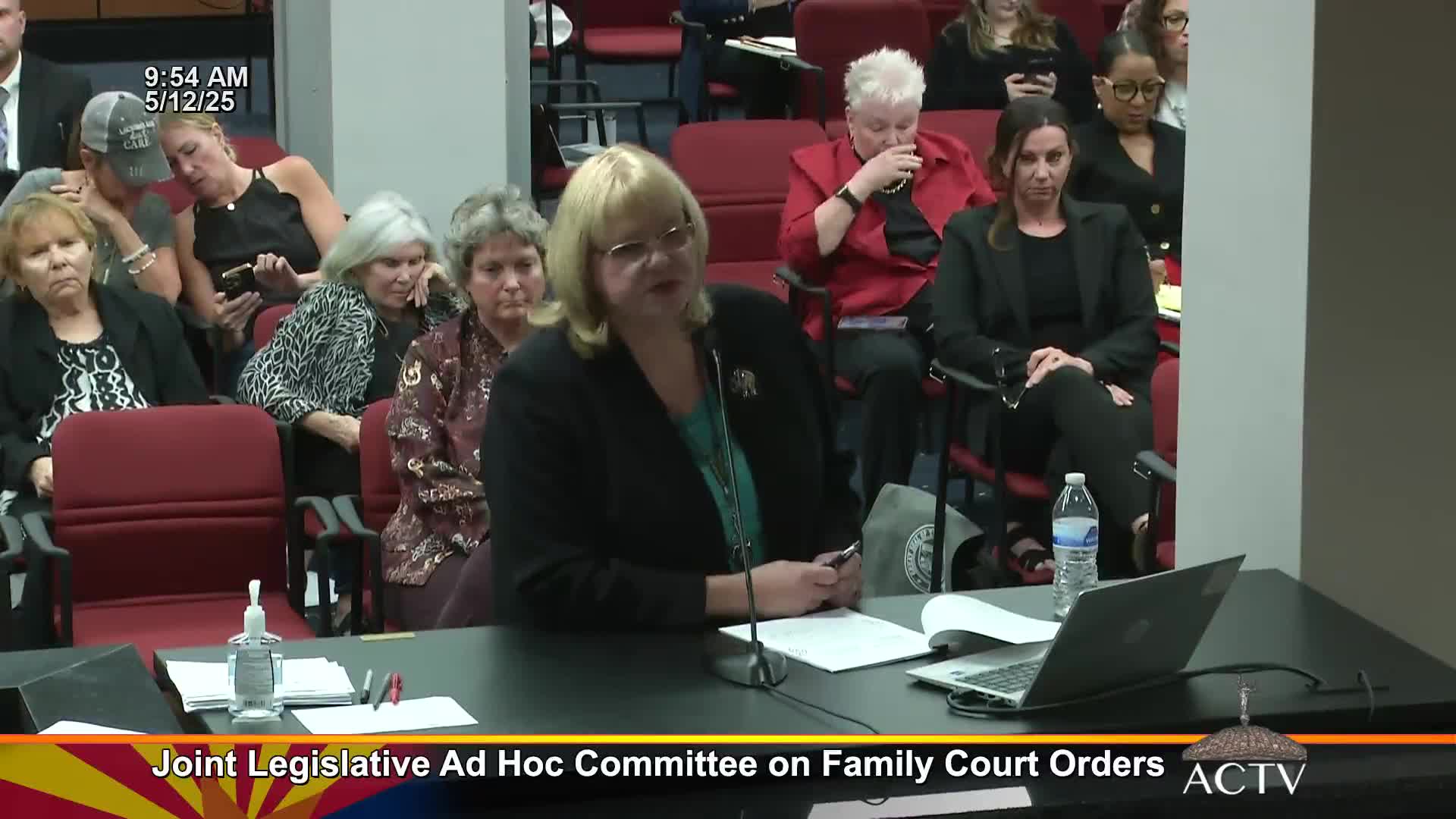
Teen and child witnesses tell committee their voices were ignored in family court
Summary
Multiple minors and young people testified that judges, court advocates and service providers failed to protect or meaningfully consider their wishes; witnesses urged the legislature to create stronger, direct representation and advocate roles for children in family proceedings.
Several minors, and young adults who had grown up in custody cases, told the Joint Legislative Ad Hoc Committee that their wishes were discounted by judges and by the systems designed to protect them.
A 16‑year‑old, Atalia Durfield, testified she told the court she had been physically and emotionally abused and that she repeatedly told judges she did not want to return to her father’s care. “I begged the court not to make me go back because I was and am terrified,” Durfield told the committee. She said court‑appointed professionals met with her briefly and that the judge ultimately gave unsupervised contact to the parent she feared.
A 15‑year‑old, who asked to be identified in testimony as Maggie, told the committee she is an Arizona native involved in school and community leadership and that, despite being old enough to speak publicly and lead in other settings, courts denied her statements about her safety. “When we speak out, all it does is make our living arrangements worse…We are still carrying the consequences,” Maggie said, urging lawmakers to consider a “children’s choice” law and better mechanisms to protect children who speak up.
Other witnesses described similar experiences: a young woman said a judge told her the family court did not require the same due‑process standards as criminal court and that her infant was taken into foster care despite evidence of a metabolic bone condition later confirmed by medical specialists. Several parents and minors urged lawmakers to require appointment of truly independent child advocates able to interview children in a neutral environment and to ensure interview protocols capture first‑hand testimony from minors in age‑appropriate ways.
What lawmakers heard: Children’s testimony in the hearing represented vivid, first‑person accounts of fear, alleged abuse and the consequences of court orders. Commission and board witnesses earlier in the day told the committee they do not routinely interview children for professional licensing reviews; several speakers suggested the legislature examine statutory options for appointing guardian ad litem or child‑advocate roles that include direct, child‑centered interviewing and reporting.