Get Full Government Meeting Transcripts, Videos, & Alerts Forever!
Get email alerts on the Judicial Conduct topic
No spam. Unsubscribe anytime.
Arizona Commission on Judicial Conduct urges limits on its role; explains complaint volume and confidentiality rules
Summary
The Arizona Commission on Judicial Conduct described its role as an investigator of judicial misconduct — not an appellate court — and told the legislature it receives hundreds of complaints yearly but is constrained by constitutional confidentiality rules and limited investigation staffing.
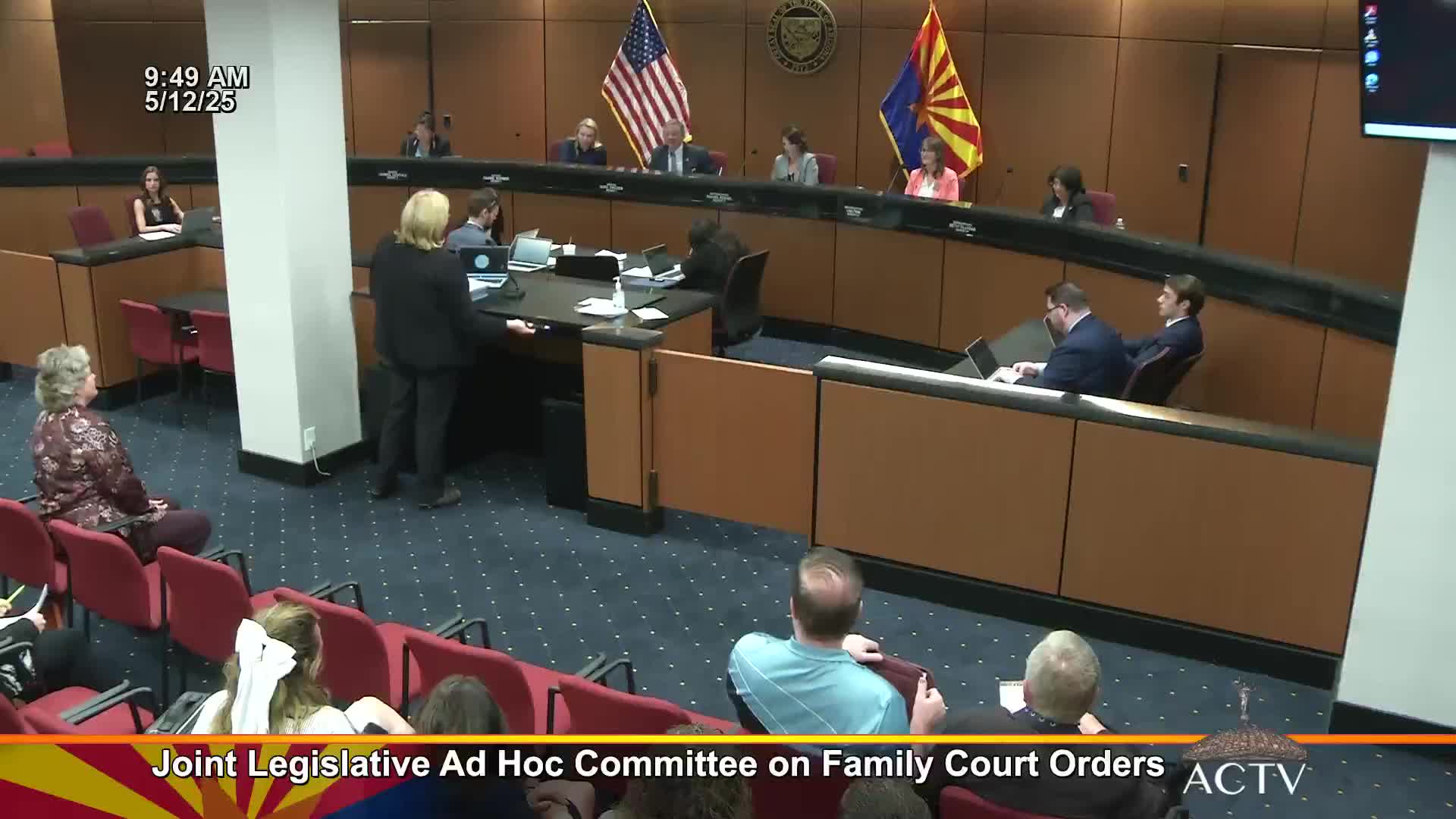
The Arizona Commission on Judicial Conduct told the Joint Legislative Ad Hoc Committee that it investigates allegations that judges violated the Code of Judicial Conduct but cannot change a judge’s legal rulings or reassign cases.
Executive Director April Elliott told lawmakers the commission was created by Article 6.1 of the Arizona Constitution and investigates judicial officers at all levels of state court. “We are limited to investigating allegations of judicial misconduct in violation of the Code of Judicial Conduct, and if warranted … imposing informal sanctions or recommending the imposition of formal sanctions to the Arizona Supreme Court,” Elliott said.
Elliott said the commission receives hundreds of complaints each year (463 in a recent July–April reporting period), and roughly 23% of those complaints involved family law issues during the latest fiscal slice she cited. She described high dismissal rates nationwide and locally — often because complaints ask the commission to act as an appellate court when the underlying issue is an alleged incorrect legal ruling. “A mistake in a ruling does not automatically mean the judicial officer has engaged in judicial misconduct,” Elliott said, summarizing the commission’s standard that violations must be proven by clear and convincing evidence.
The commission also explained confidentiality and public‑record rules under the Constitution and commission regulations: dismissed complaints are largely redacted before publication while public sanctions are made public. Elliott said the commission lacked resources for broad public outreach but has done “Coffee with the Commission” to educate legislators. She added that their office currently funds one permanent disciplinary counsel investigator and for two years has temporarily funded a second position with grant assistance; the grant expires in mid‑2026 and the commission’s request to permanently fund a second investigator remains pending with the legislature.
Commission member Colleen Concannon told the panel that the commission does investigate allegations such as threats to witnesses and would interview parties and witnesses where appropriate. Elliott and Concannon both stressed the commission’s inability to change judicial decisions and said complainants who are really seeking reversal of a legal ruling should pursue appellate review. The commission encouraged complainants to use its process for misconduct claims and said it will investigate allegations of improper behavior or ex parte communications and, if misconduct is found, recommend sanctions to the Arizona Supreme Court.
Why it matters: Lawmakers heard the limits of a constitutionally formed, independent agency that disciplines judges for proven misconduct but cannot act as an appellate court. Committee members pressed the commission on complaint outcomes, staffing and evidence standards; the commission said its dismissal rate is high because many complaints are essentially legal appeals, and it lacks permanent funding for a second investigator.