Get Full Government Meeting Transcripts, Videos, & Alerts Forever!
Get email alerts on the Economic Development topic
No spam. Unsubscribe anytime.
Senate approves New Markets Jobs Act to back $150 million in investment funds for underserved businesses
Summary
The Senate passed SB186 to reauthorize a state New Markets program that pairs a $150 million investment fund with multi‑year premium tax credits; the bill includes new reporting requirements and removes a proposed exception for larger employers.
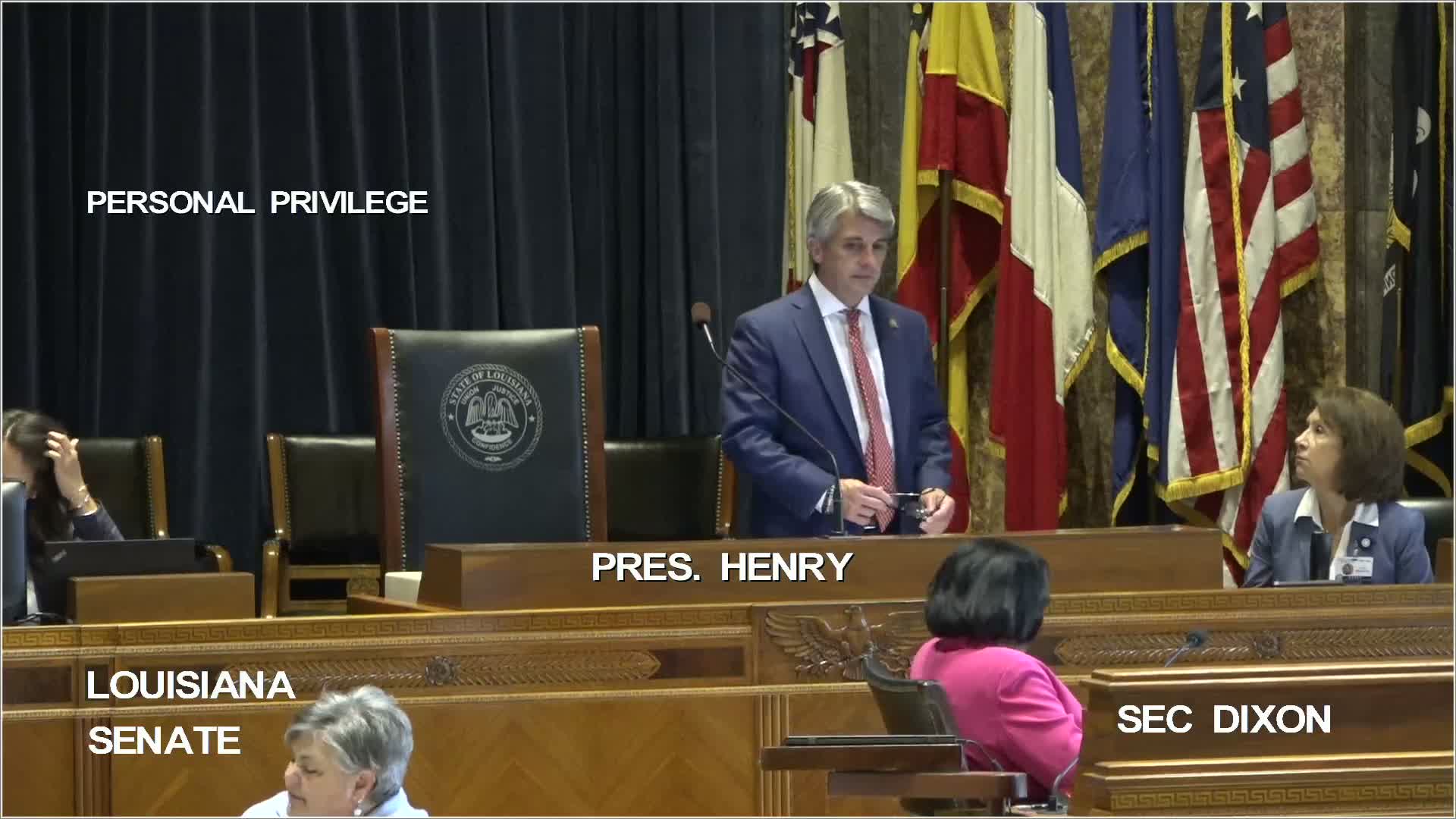
The Louisiana Senate on May 13 passed Senate Bill 186, a New Markets Jobs Act measure to create a $150,000,000 investment fund to attract capital into businesses and projects that lack conventional financing, Senate author Reese said.
The bill aims to use state premium tax credits to leverage private investment in businesses across Louisiana, with the state credit paid out over several years in exchange for the initial investment, Reese said. "We create, it creates an investment fund of a hundred and $50,000,000," Reese told the Senate on the floor.
Supporters described the program as a tool to channel capital into rural, minority‑owned, veteran‑owned and small businesses that otherwise struggle to obtain financing. Reese told colleagues the program will be paired with federal tax incentives and that the state credit is structured to be paid over a multi‑year schedule. On the Senate floor he described the mechanics: the fund is invested in year one and the state credits are distributed over the following years.
Senate amendments adopted during floor debate removed language that would have allowed Louisiana Economic Development (LED) to approve exceptions for employers with more than 250 workers; Senator Reese said those exceptions were removed after committee feedback. The final amendment also requires LED to calculate returns on investment and to collect standardized outcome data from recipient businesses so the state can evaluate program effectiveness.
Senate passage came without recorded dissent on the floor: the clerk reported "37 yeas and 0 nays," and the bill was declared passed.
What this means going forward is that, if enacted into law and paired with required administrative rules and federal participation, the state will provide a financing vehicle intended to spur business growth in underserved markets and require LED to report on outcomes. Implementation steps include LED rulemaking, recipient reporting, and coordination with insurers that commonly claim the premium tax credits.
The Senate vote followed a committee process in which members debated caps, accountability measures and the role of LED. Reese said the program's oversight language was added to "make sure that we're creating accountability" and to provide a uniform way to measure effectiveness across projects. The bill now moves to the House for consideration.