Get Full Government Meeting Transcripts, Videos, & Alerts Forever!
Get email alerts on the Professional Discipline topic
No spam. Unsubscribe anytime.
Arizona psychology board explains special review process for court-ordered clinicians
Summary
The Arizona State Board of Psychologist Examiners outlined its statutory “claims” review—created in 2015—for allegations arising from court‑ordered services and said it cannot remove clinicians from active court cases or overturn opinions judges receive in court.
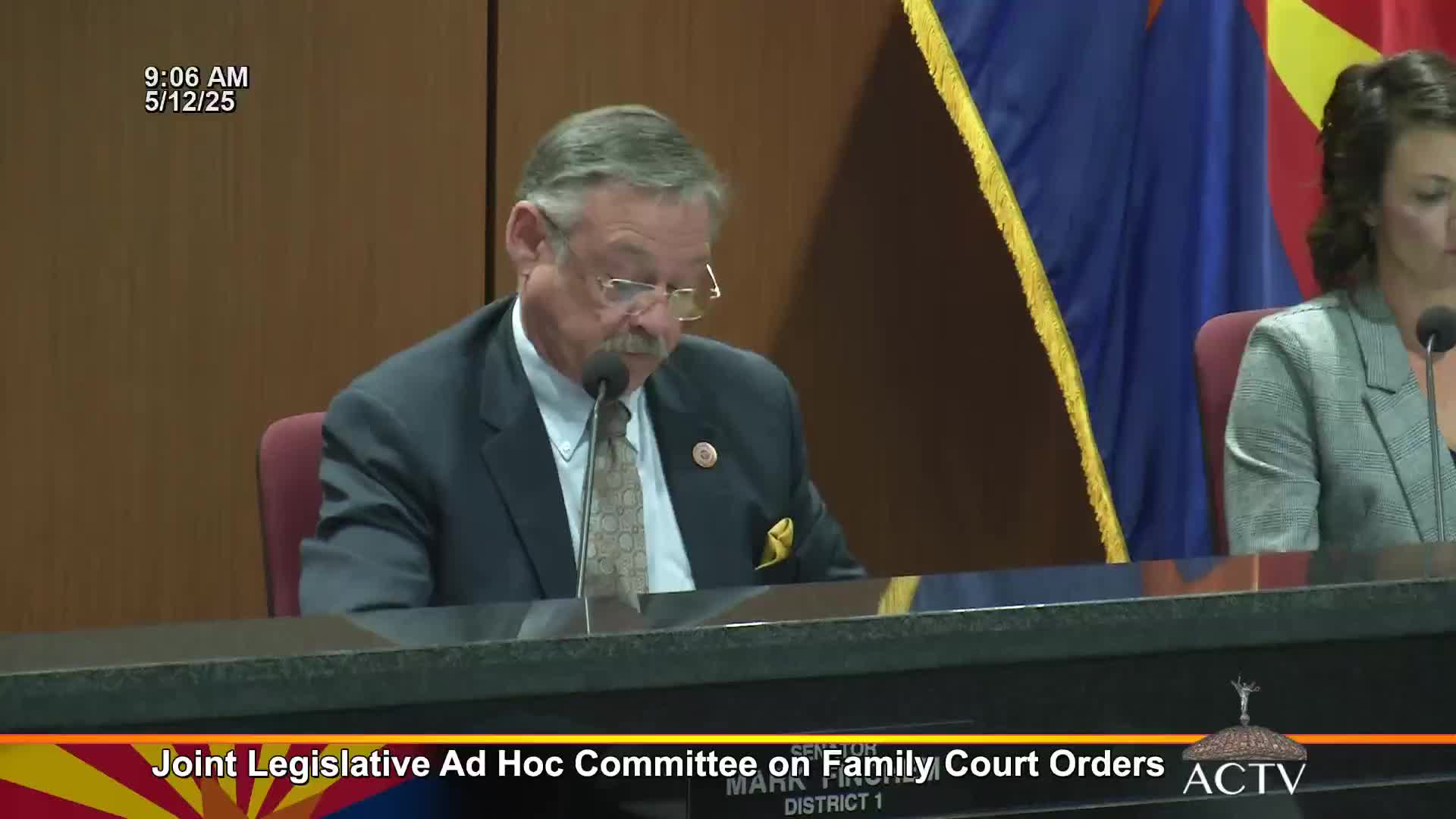
The Arizona State Board of Psychologist Examiners told a Joint Legislative Ad Hoc Committee that a statute enacted in 2015 requires three board members — including a public member — to independently review claims of unprofessional conduct that arise from court‑ordered services and recommend whether an investigation should open.
The board’s deputy director, Jennifer Michaelson, said the board’s “mission is to protect the public by licensing only those who meet the statutory qualifications” and to investigate violations, but she emphasized limits on the board’s authority. “The statute that was created does not grant the Board any authority to remove a psychologist from a particular court case, or overturn any opinions or decisions made by the psychologists or influence a court of law or judge to disregard that opinion,” Michaelson told the committee.
Michaelson said the board receives relatively few claims tied to court‑ordered services — roughly nine per year on average from 2019–2024 — and that about 40% of those reviewer‑screened claims proceed to the board’s complaint process. She explained why the statute originally kept the process confidential at the review stage: to avoid interrupting ongoing delivery of court‑ordered services. Michaelson also said that when a claim becomes a complaint the psychologist is notified and “afforded their due process rights throughout the complaint adjudication process.”
Psychologist board member Joe Stewart and board vice chair Diana Medina joined Michaelson at the hearing and fielded lawmakers’ questions about how the board evaluates whether a clinician acted within the scope the court ordered. Stewart said the answer usually turns on the language in the court order: “That’s usually spelled out in the order of the court,” he told the panel. Medina described educational and training pathways for psychologists and said cultural competency and continuing education are part of licensure and renewal requirements.
Committee leaders asked the board for additional complaint‑level information (with appropriate redactions) about whether complaints cluster against a small number of clinicians; Michaelson said she would research that request and follow up with the committee. The committee chair also asked the board to provide complaint content and to confirm staff availability; Michaelson said she would inform the board’s executive director of the request.
Why it matters: The board’s explanation clarified an existing statutory process and its limits — notably that the board can investigate violations of professional standards but cannot reverse court decisions or remove clinicians from active court appointments. Lawmakers pressed the board on transparency, clustering of complaints, and whether first‑person testimony from minors is collected; board members said the board does not currently interview children directly and suggested a statutory child‑advocate role might be needed if the legislature wishes that evidence gathered for review.