Get Full Government Meeting Transcripts, Videos, & Alerts Forever!
Get email alerts on the Naturopathy Prescriptive Authority topic
No spam. Unsubscribe anytime.
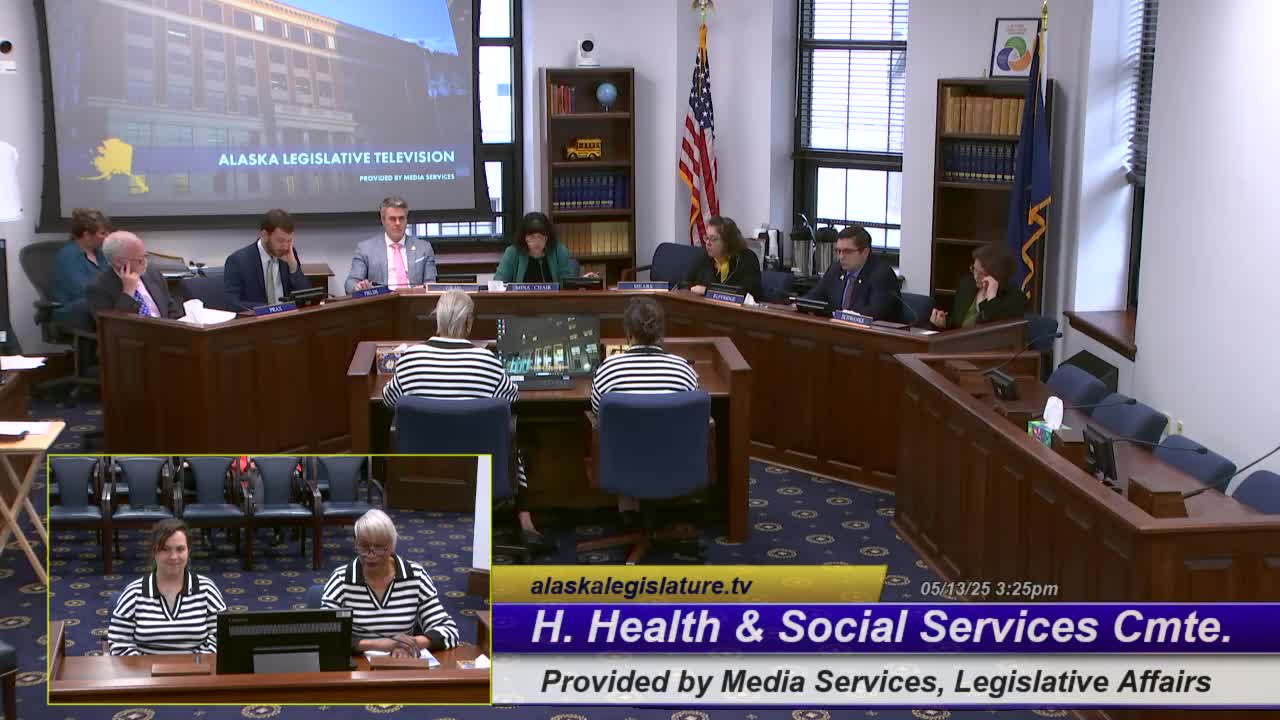
Panel hears wide-ranging testimony on expanding prescriptive authority for naturopathic doctors; committee holds bill
Summary
House Bill 147 drew testimony from physicians, naturopathic doctors and state licensing officials about prescriptive authority, training comparability and oversight. The committee held the bill for a future hearing and asked for additional information on complaint history and oversight processes.
Public testimony on House Bill 147, a measure to expand prescriptive authority and update practice rules for naturopathic doctors, drew sharply different personal accounts and state licensing clarifications before the committee decided to hold the bill for a future hearing.
Why it matters: Supporters say expanded authority would add primary-care capacity in Alaska; opponents and some medical witnesses warned of risks when patients receive primary-care services outside of conventional systems. The committee paused action to gather more information about oversight and complaint history.
Testimony and key claims: Amber Figueroa, a family practice physician in Fairbanks who said she works at Tanana Valley Clinic, recounted a family tragedy: “My younger sister died last year of colon cancer at the age of 42, leaving behind 3 young children.” Figueroa said the sister had seen a naturopath for years who attributed anemia to a heavy period and did not navigate her into Western medical diagnostics, with metastatic disease discovered only after emergency care.
By contrast, the committee received a written statement read into the record by Gene Theriault on behalf of Dr. Sean Higgins, an ER physician at Alaska Regional Hospital. The statement said that in jurisdictions where naturopathic doctors practice with prescribing authority, those clinicians relieved primary care demand: “I estimate that around 30 percent of the patients I see in the ER are for primary care related medical concerns, not emergencies,” and allowing naturopathic doctors broader practice “will give patients more access to primary care, thus relieving the pressure on emergency rooms.”
Two naturopathic doctors testified about their training and oversight models in other states. Dr. Courtney Bowers, a licensed naturopathic doctor in Vermont, described Vermont’s oversight via the Office of Professional Regulation and an initial supervised prescribing-review process: after passing an additional pharmacology exam, early prescriptions are reviewed by a supervising physician for the first year or first 100 prescriptions. Dr. Natalie Wiggins, a naturopathic doctor, emphasized the distinction between licensed naturopathic doctors and unregulated practitioners and said licensed naturopathic doctors receive primary-care training that includes pharmacology.
State oversight questions: The committee questioned how Alaska would regulate expanded prescriptive authority because naturopathic practice in Alaska currently is regulated by the Division of Corporations, Business and Professional Licensing (CBPL), which does not operate a standalone naturopathic board. Sylvain Rob, director of CBPL, said the division “is the governing entity” for naturopaths and explained that discipline begins with certified investigators; where specialized expertise is required, CBPL “can engage professionals to weigh in.” Rob also said CBPL does not keep a standing file of external consultants and that experts would be identified as needed while avoiding conflicts of interest.
Requests for data and next steps: Representatives asked CBPL to provide complaint counts for naturopaths for the most recent fiscal years; Rob said the division could supply several years of complaint history. The bill sponsor and committee members also discussed whether a separate naturopathic board could be feasible in future if provider numbers increased.
Committee action: The chair announced: “I am currently holding House Bill 4,147 over for a future hearing.” No committee amendments were moved during this session; an amendment had been filed by the sponsor but was not advanced at this hearing.
What the transcript does not show: No committee vote to advance or reject the bill occurred; the committee explicitly postponed further action to gather additional information.