Get Full Government Meeting Transcripts, Videos, & Alerts Forever!
Get email alerts on the Childcare Tax Credit topic
No spam. Unsubscribe anytime.
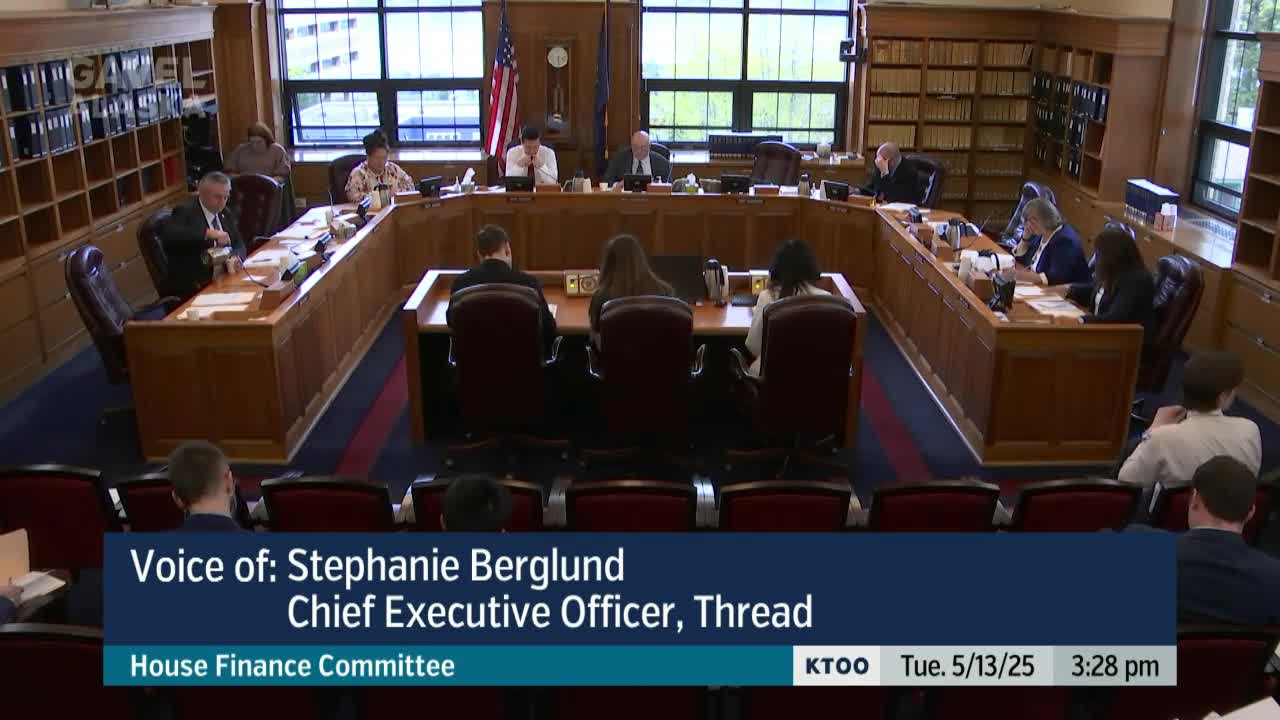
House Finance pauses SB 96 after fiscal and sunset concerns; members debate short sunset vs. curing litigation
Summary
Committee discussed SB 96, a childcare employer tax credit expansion carried in SB 189; lawmakers debated whether to shorten the bill's sunset to limit fiscal exposure, but many members favored leaving reenactment intact to cure the pending single‑subject litigation.
Senator Bill Wielekowski introduced Senate Bill 96 to the House Finance Committee as a provision that expands an employer‑oriented child care tax credit and was carried as part of SB 189 last session. "This bill expands the current education tax credit ... by creating a child tax credit for employers who incur child care expenditures," Wielekowski said, and he cautioned the program could be costly if many large employers claimed the credit.
Committee members and counsel discussed whether shortening the bill's sunset would mitigate fiscal risk or, conversely, undermine the bill's purpose as a curative reenactment of SB 189. Sonia Kawasaki, Senate majority legal counsel, noted the bill as drafted makes the tax credits retroactive to July 23, 2024, and that the enacted language in SB 189 used a 2028 sunset; drafting choices reflected an attempt to recreate SB 189's text.
Legal counsel advised caution. Megan Wallace reiterated that if the legislature's principal goal is to have courts find the new measures curative, "the less they are amended, the more likely, in my opinion, the court is to find them to be curative and potentially, able to moot the pending litigation." At the same time, Emily Nauman of Legislative Legal Services explained that practical tax‑administration realities mean a full fiscal year is usually needed to assess credit usage because corporations have varying tax years and many file on extension.
Several members expressed fiscal concern. Senator Wielekowski and Representative(s) voiced that the credit could allow affiliated taxpayers to claim up to a $3 million cap per affiliated group and that if a small number of large employers claimed maximum credits the revenue impact could be substantial. Department of Revenue staff (Deputy Director Brandon Spanos) explained that initial returns had just become due (April 15) and that most corporate filings are on extension until October 15, so the department would not have a full picture of credit uptake until later in the year.
Committee members offered three policy options in the discussion: (1) reenact the tax credits exactly to maximize curative effect, (2) shorten the sunset to limit state fiscal exposure while accepting some legal risk, or (3) hold the bill and gather more fiscal data before acting. Representative Ben Josephson and others favored minimal amendment to preserve curative posture; Representative(s) worried that the state's current budget deficit made an open‑ended tax credit risky. No final motion was adopted; the committee recessed and later returned and set SB 96 aside for further consideration, with members indicating they wanted more time to consult and possibly to consider amendments.