Get Full Government Meeting Transcripts, Videos, & Alerts Forever!
Get email alerts on the Single Subject Litigation topic
No spam. Unsubscribe anytime.
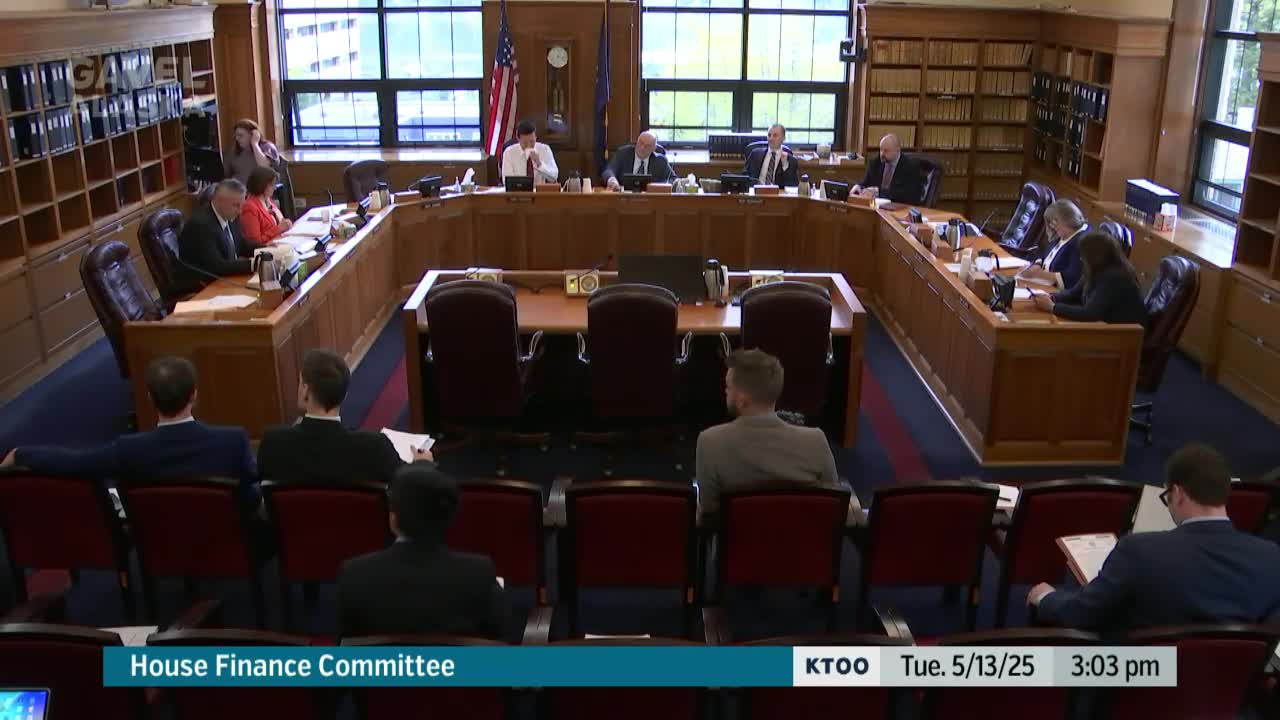
House Finance hears legal briefing on single‑subject challenge to SB 189 and legislative strategy to reenact provisions
Summary
Legal counsel told the House Finance Committee a lawsuit alleges SB 189 violated the single‑subject rule; lawmakers are considering reenacting portions as separate bills to ‘cure’ the challenge and possibly moot the litigation.
Megan Wallace, chief counsel with Legal Services, told the Alaska House Finance Committee on May 13 that a lawsuit filed last fall by former Representative David Eastman alleges SB 189 violated the single‑subject rule in Article 2, Section 13 of the Alaska Constitution. "The lawsuit alleges that passage of SB 189 violated the single subject rule under Article 2, Section 13 of the Alaska Constitution," Wallace said on the record.
Wallace said the Alaska Supreme Court has generally required that matters in a bill fall under some general idea and be "germane to 1 single subject," and that the litigation argues the contents of SB 189 do not meet that standard. She explained the legislature is considering passage of separate bills that would re‑enact provisions from SB 189 so those measures would remain law if the court invalidates SB 189.
"The passage of these bills also may have the possibility of being construed ... as curative legislation," Wallace said, adding that curative legislation has been upheld by the Alaska Supreme Court in other contexts. She described two possible outcomes if the legislature reenacts the provisions: first, reenactment could prevent a lapse in law if the court strikes down SB 189; second, reenactment might allow the state to argue the lawsuit is moot and ask the court to dismiss the case.
Committee members pressed Wallace on how much the legislature can amend reenactments without risking that courts treat the new measures as "new" rather than curative. Representative Ben Josephson asked whether changes could undermine the cure; Wallace answered the question by explaining there is no definitive Alaska Supreme Court guidance on the precise line. "If the legislature's goal ... is to hopefully get a ruling that the lawsuit is moot because we've simply reenacted and cured the alleged violation, then my advice would be that the bills largely go unamended and true to the provisions that were in SB 189," Wallace said.
Lawmakers also asked about collateral consequences if the court were to invalidate SB 189. Wallace said the immediate legal consequence would be invalidation of the act's provisions, and she noted potential additional effects including the possibility of attorney's fees under court rules if plaintiffs prevail.
Committee members discussed practical responses. Some members urged minimal amendments to the reenactment bills to maximize the chance a court would treat them as curative; others said the legislature retains authority to make policy changes and could choose to change provisions as a political matter even if it carries some legal risk.
The committee proceeded to hear three separate bills described as partial reenactments of SB 189 (SB 95, SB 96, SB 97). Counsel and staff repeatedly framed those bills as both substantive policy measures (already reflected in budgets or other statutes) and as a legal strategy to protect the underlying policies in the event the court strikes SB 189.