Get Full Government Meeting Transcripts, Videos, & Alerts Forever!
Get email alerts on the Assessment And Taxation Budget topic
No spam. Unsubscribe anytime.
Assessor outlines tax roll, proposed staffing cuts and support push for CAFA funding bill
Summary
Lane County assessor presented the assessment and taxation office’s FY 2025–26 proposal, warned of staff reductions and slower service, and described local advocacy for House Bill 3518 to increase the County Assessment Function Assistance (CAFA) fund.
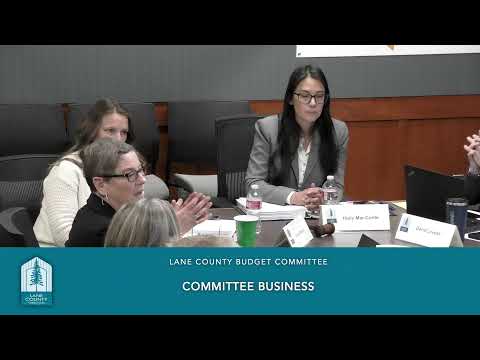
Mary Hooksett Schaffer, Lane County assessor and tax collector, presented the Assessment & Taxation proposed budget to the budget committee on May 13, reporting a certified tax roll and urging legislative attention to CAFA funding.
Hooksett Schaffer told the committee her office certified a 2024–25 tax roll with roughly $101 billion in real market value and about $43.1 billion in taxable value, and noted the office will be operating below the Department of Revenue’s recommended staffing levels. “We will be at 46.8 FTE, which is 61% of [the recommended] FTE,” Hooksett Schaffer said, presenting the Department of Revenue comparator analysis.
Nut graf: The assessor urged support for state legislation that would boost county assistance funding (CAFA) for assessment functions and described how current revenues have not kept pace with staffing and operating costs, producing service‑level impacts such as delayed refunds and reduced direct support for veterans, seniors and taxpayers seeking exemptions.
Hooksett Schaffer summarized the department’s budget pressures: recording fees and delinquent interest (CAFA) were designed to fund 30–40 percent of assessment and taxation costs but have not been indexed to inflation; state general‑fund contributions were eliminated in 2009; and personnel costs are rising due to contract negotiations and market adjustments. The proposed budget reduces one vacant assessment and taxation specialist position and trims materials and services; she warned those cuts will slow some customer services.
On legislation, Hooksett Schaffer described House Bill 3518, a bill under consideration in the Legislature that would increase recording fees and change how CAFA is funded. She described the bill’s main components as drafted for committee review: doubling the recording fee in part, a 0.3 percent holdback on imposed taxes to support CAFA, and a $10 million biennial state general‑fund contribution to the CAFA pool. Hooksett Schaffer said local districts, school boards and cities have had briefings and that the county has met with multiple local education and city representatives to explain the proposal and model its likely fiscal impact at the district level.
Hooksett Schaffer said her office supports legislation that would stabilize CAFA. “Initially, the CAFA grant was created to fund 30 to 40% of A and T costs,” she said, “Expenses have grown higher than revenue.”
Ending: The assessor urged continued local coordination and legislative outreach while the bill remains live; she said the budget committee would be updated as amendments and fiscal estimates are refined.