Get Full Government Meeting Transcripts, Videos, & Alerts Forever!
Get email alerts on the Assessment And Instruction topic
No spam. Unsubscribe anytime.
ALIEF ISD midyear iReady data shows usage‑linked gains; administrators flag seventh‑grade concerns
Summary
District leaders presented midyear iReady diagnostics showing higher usage correlates with stronger growth, but administrators flagged engagement and performance concerns in intermediate and middle school grade bands — particularly seventh grade — and outlined professional learning and incentive steps to increase fidelity.
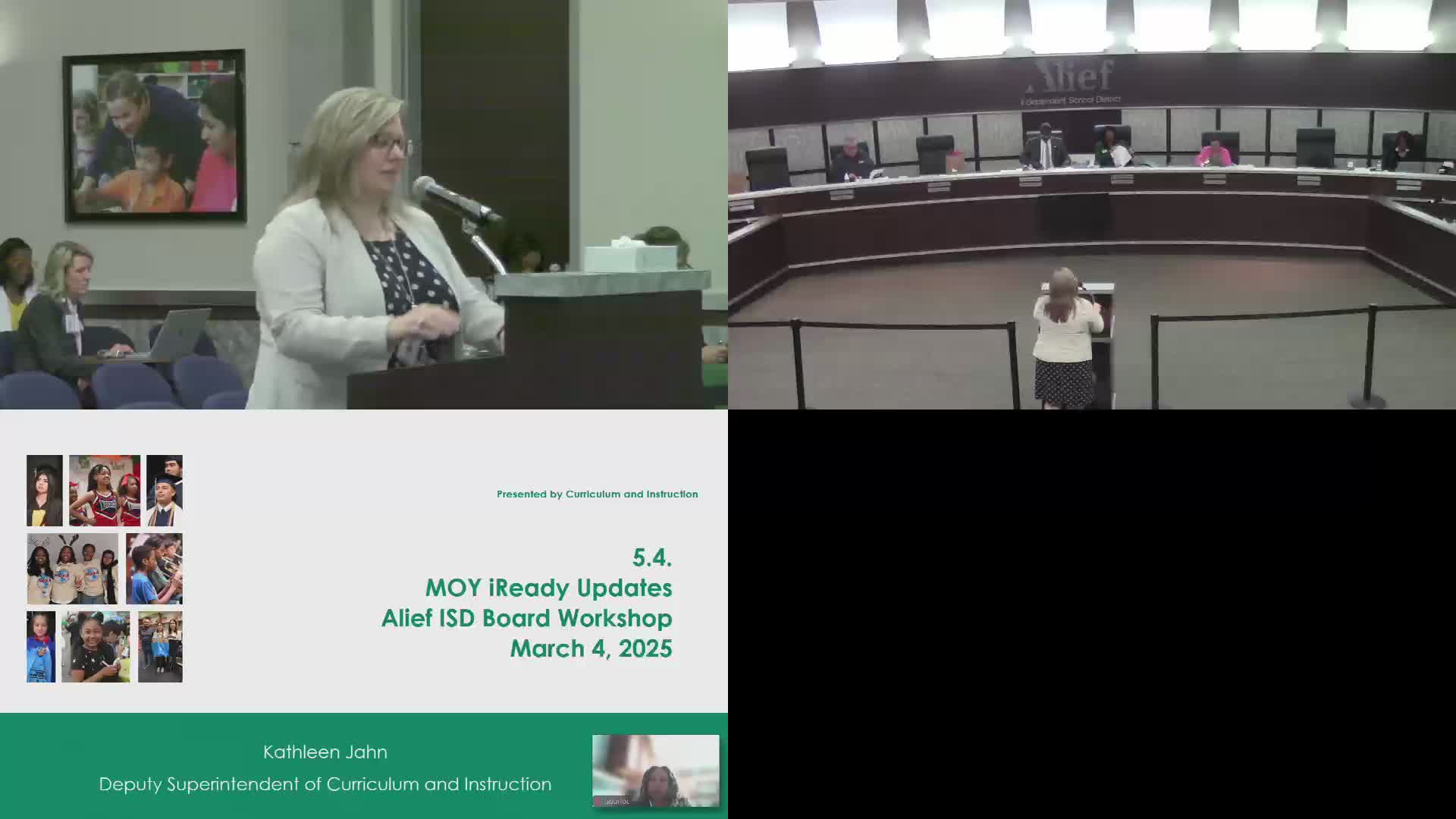
ALIEF ISD leaders presented midyear results for the district’s iReady diagnostic and instructional platform on March 4, reporting that student usage is correlated with accelerated growth but identifying intermediate and middle school grade bands, especially seventh grade, as areas that need targeted attention.
"I Ready is a tool that we use in ALIEF as part of our instructional programming in grades K through 8," Kathy On, deputy superintendent of curriculum and instruction, said at the workshop. She and her team described iReady as both a diagnostic assessment and a personalized instructional platform; district staff presented correlations showing students who use iReady with "fidelity" (administration defined fidelity as roughly 45 minutes per week) show larger gains on internal growth measures and have higher probabilities of meeting STAAR (state assessment) standards.
District math data showed students who used iReady more than 30 minutes per week achieved stretch growth at higher rates (administration cited roughly 44% meeting stretch growth on math for students with >30 minutes per week). For reading, administrators reported similar but slightly lower correlations: students using the platform more than 30 minutes per week showed higher stretch‑growth percentages and stronger likelihood to meet grade‑level expectations on STAR/STAAR correlations.
But administrators flagged a consistent concern in middle grades, with seventh grade a focal point. On described system flags that identify when students "rush" through assessments and said the district is investigating whether students understood assessment purpose or were disengaged. "Since we saw it, particularly in seventh grade and a little bit in fifth grade, we want to make sure that we write that before the end of the school year," On said, describing steps to investigate engagement and teacher guidance when administering the platform.
To address gaps, district staff described multiple actions: principal and campus professional learning on iReady reporting features; monthly usage challenges and incentives including traveling trophies for top campuses; a planned spring‑break usage incentive with random prizes for students and campuses; and summer professional development focused on middle‑school engagement and teacher practices. Administrators said central leaders are sharing out campus practices from high‑growth schools so peers can replicate scheduling and student‑engagement strategies.
Board members asked about barriers to fidelity. On and others said elementary rotations and center models make embedding iReady straightforward, while middle schools face schedule constraints and reduced RLA (reading/language arts) block times that complicate daily usage. The district said some middle schools have used advisory periods or after‑school partnerships to provide additional iReady time.
Ending: Administration said it will continue to monitor usage, run principal‑level training and deploy incentives to improve student engagement in intermediate and middle grades, reporting progress to the board as the year continues.