Get Full Government Meeting Transcripts, Videos, & Alerts Forever!
Get email alerts on the Code Recodification topic
No spam. Unsubscribe anytime.
Hastings City staff outline large recodification to align city code with state and federal law
Summary
City staff presented a draft recodification of Hastings City code aimed at removing outdated language, resolving conflicts with state and federal statutes and updating job titles; the item was previously tabled and will return to the council agenda next week.
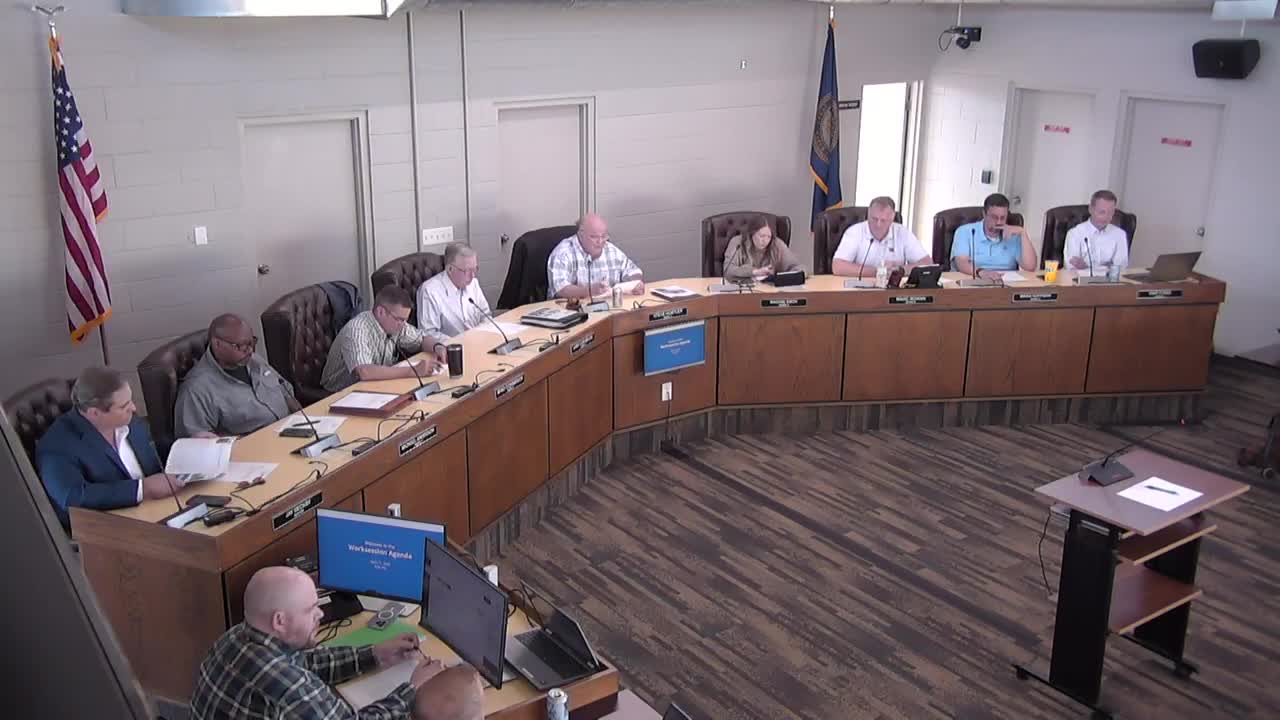
Jesse, a city staff member, told the Hastings City Council at a work session that the city has begun a large-scale recodification of the Hastings City Code to bring it into alignment with state and federal law and to remove outdated or conflicting provisions.
The update is intended to reduce internal conflicts in the code, update obsolete references and improve clarity for both city employees and residents, Jesse said. "It's just simply getting us mostly in compliance is really the goal of this," he said.
Jesse said the work was done in partnership with a third-party codification service (Municode) and that the full code runs more than 600 pages when compiled. He walked the council through a handful of representative examples rather than a page-by-page review: changes to the definition of "motor vehicle" to match state law, removal of archaic references to possession of "fire engine" keys, deletion of a reference to a now-defunct "Board of Public Works," and replacement of an obsolete job title ("deputy treasurer") with the current title in use.
Council members and others asked questions about scope and timing. One speaker, Oswald, asked whether some provisions—such as rules that once said fire personnel could not resign without a chief's permission—are enforceable; Jesse replied that state or federal law would supersede any unenforceable local provisions and that enforcing those old clauses would not be practical. Jesse also said the city attorney, now a full-time position, will help monitor statutes going forward so the city does not wait decades between updates.
On narrower policy items, Jesse said that the current grass-height ordinance remains at 6 inches and that changes to such operational standards would be a separate policy discussion rather than part of the compliance-driven recodification. He noted that some questions—such as whether one-wheeled personal devices fall under the motor-vehicle definition—would require further review.
The council was told that the recodification work had been tabled at the previous regular meeting; Jesse confirmed the item will return to the council's next regular meeting for further consideration. No ordinance vote was taken at the work session.
The staff presentation emphasized that the recodification is an initial, large step in a longer process and not a comprehensive rewrite of all local policy. Jesse said the effort aims to make the municipal code easier for staff and the public to read and rely on.
The council did not take formal action on the recodification at the work session; staff will return the draft for formal council consideration on the next meeting agenda.