Get Full Government Meeting Transcripts, Videos, & Alerts Forever!
Get email alerts on the Community Enhancement And Blight Remediation topic
No spam. Unsubscribe anytime.
City proposes new Division of Community Enhancement to consolidate code, cleanup and volunteer programs
Summary
The administration proposed a new Division of Community Enhancement that would combine neighborhood improvement, environmental enforcement, ground services, Memphis City Beautiful and public‑services‑core functions into a single division to coordinate blight remediation, dumping cleanups and volunteer programs.
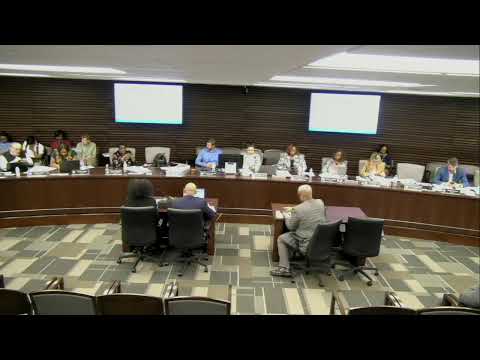
Senior administrators Melanie Neal and Marticus Muhammad presented the proposed Division of Community Enhancement to the Budget Committee on May 13, explaining that the consolidation would bring code enforcement, environmental enforcement, ground‑services mitigation, Memphis City Beautiful programs and the public‑services‑core litter‑cleanup crew under one organizational umbrella.
Neal and Muhammad told council members the new division would increase focus and efficiency by coordinating personnel and field operations so crews clearing vacant lots, removing illegal dumping and enforcing code are deployed to the same neighborhoods at the same time. “All of our services will be deployed in the same area at the same time,” Neal said, describing an approach intended to reduce repetitive, reactive visits and to allow a targeted corridor or neighborhood to be addressed comprehensively.
The proposed complement is 183 positions (up from neighborhood improvement’s current 159): 17 administration, 83 code enforcement, 22 ground services (about half part‑time), 4 Memphis City Beautiful positions and 54 environmental enforcement officers. The FY26 proposed operating total for the new division is $14,721,814; that figure reflects existing neighborhood improvement funding plus positions moving from solid waste and public‑services‑core funds that will be carried into the new division’s budget.
Neal highlighted program outputs and recent activity: roughly 200 property demolitions year‑to‑date, about 17,000 vacant lot cuts, 1,900 cleared dump sites, and collection of approximately 102,000 tires through the city’s mitigation work. The division also runs volunteer programs: so far this year, 62 parks adopted, 85 trash cans adopted, 2,300 litter and beautification projects completed and more than 1,300 volunteers engaged.
New initiatives and policy tools include a corridor revitalization pilot (Lamar corridor was discussed as an early target), a broader administrative hearing process to move appropriate cases out of Shelby County environmental court, and implementation of the International Property Maintenance Code (IPMC) fee schedule so enforcement can assess and collect fees for code violations and recovery of mitigation costs.
Neal said adopting an administrative hearing process and the IPMC fee schedule should reduce the number of long‑running court cases and improve collections for mitigation work; council members asked for itemized historic cost and output data (lots cut, demolitions, tire removal) and for a year‑over‑year breakdown of expenditures tied to those outputs. Neal said staff will supply those tables and noted that any budget reductions to the newly consolidated division would undercut the comprehensive deployment model and make the operation reactive again.