Senator presses DOE nominee on status of $1 billion Puerto Rico resiliency projects
Get AI-powered insights, summaries, and transcripts
SubscribeSummary
At a Senate Energy and Natural Resources Committee hearing, a senator asked a Department of Energy nominee whether congressionally appropriated funds and recent DOE awards for resilient electricity projects in Puerto Rico would be implemented after the department issued new requirements that may put the projects at risk.
At a Senate Energy and Natural Resources Committee hearing, a senator asked a Department of Energy nominee whether federally funded projects to provide resilient electricity to medically vulnerable residents in Puerto Rico would be carried out after recent administrative changes.
The senator noted that "In 2022, Congress appropriated $1,000,000,000 to the Department of Energy for resilient energy infrastructure in Puerto Rico," and that the department announced "$365,000,000 in awards for energy supply projects at community health care centers" last December. The senator added that the department issued a letter in March specifying requirements to advance those projects and asked whether the nominee could be counted on to implement projects that "will provide life sustaining electricity to medically vulnerable Puerto Rican Americans." (Speaker identified in the transcript only as "Senator".)
The nominee said the efforts are being led by DOE's deployment office and that, "if confirmed, what I will do is I will assess the those projects and look at how does this impact not just those that are in need, but also the entire grid." The nominee also invoked the administration's stated priorities, saying "Secretary Wright and President Trump have made it clear that we need to look at what we can do to to improve the security of The United States." (Speaker identified in the transcript only as "Nominee for a Department of Energy position." )
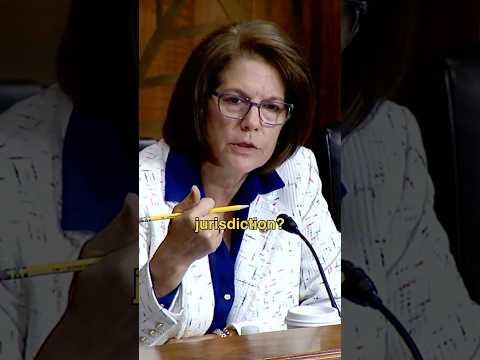
The senator pressed a second point about congressional authority, asking how the administration could redirect funds that were appropriated by Congress. He framed the question as a rule-of-law issue: "This goes into back to the rule of law. This is appropriate Congress for certain for a specific reason. So how does the administration have the authority now to redirect those funds when that really wasn't within their jurisdiction?" The nominee replied, "I very much appreciate the rule of law. And, if confirmed, I will comply with the law. And, and we will work I I look forward to looking into this to assess the the situation."
No formal action or vote on the projects occurred during the exchange; the nominees' remarks were framed as commitments to assess and review the projects if confirmed rather than as a binding decision or directive. Committee discussion thus remained at the question-and-answer and assurance level, with the senator seeking clarity on statutory appropriations and the nominee offering to investigate and report back if confirmed.
The exchange left the immediate implementation status unresolved: the senator explicitly raised concern that the projects "now appear to be at risk," and the nominee said only that he would assess the situation if confirmed. The hearing transcript does not record a staff report, a formal commitment with a timeline, or a vote that would change the projects' authorization or funding.