Get Full Government Meeting Transcripts, Videos, & Alerts Forever!
Get email alerts on the State Legislation topic
No spam. Unsubscribe anytime.
Polk County staff warns state bills could limit local subdivision rules, urges monitoring
Summary
Polk County staff told commissioners on May 13 that multiple bills at the Texas Legislature could reduce county and municipal subdivision authority or let developers use private reviewers to bypass local approvals.
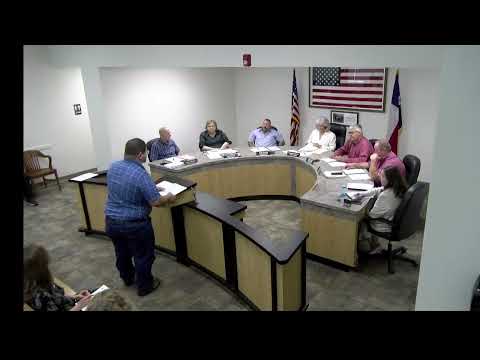
Polk County staff presented an update on state legislation on May 13 and said several bills under consideration at the Texas Legislature could reduce counties' authority over subdivision standards and development review.
A staff presenter (county staff member) listed measures the county opposes, including SB 3016 (described as preemption of local regulation), HB 3892 (limits on county subdivision regulation), SB 2522 (restrictions on extraterritorial jurisdiction planning) and HB/SB companion bills on third‑party reviewers (referenced as HB 232? and SB 2354 in the presentation). The presenter said those measures would narrow counties' ability to regulate lot sizes, setbacks and subdivision design except in limited flood-zone cases and could let developers use private reviewers to bypass local approvals.
County staff said the administration supports bills that would preserve or restore local planning authority and provide infrastructure funding tools. The court's staff identified HB 2233 and its companion SB 253 as an "infrastructure cost recovery" tool the county supports because it would allow fees tied to infrastructure needs for developments. Staff also identified SB 325 and its companion HB 2384 as measures that clarify or reinforce local planning authority related to public safety and infrastructure.
Staff signaled continued monitoring of related measures, and noted several bills had stalled or died in committee, citing Senate Bill 819 on renewable energy facility regulation as an example. The presenter emphasized that these bills are important to how Polk County and its municipalities and property-owner associations coordinate on road widths, turnarounds for emergency vehicles, septic and water planning.
This was an informational report; the court did not take a formal vote on positions during the meeting. County staff said it will continue to track progress and inform the court of any developments that would affect local subdivision regulation or infrastructure planning.