Get Full Government Meeting Transcripts, Videos, & Alerts Forever!
Get email alerts on the Utilities Water Rates topic
No spam. Unsubscribe anytime.
Iowa City holds public hearing on FY26 utility rates; council asks for further work on low‑income water discounts and conservation options
Summary
Council held a public hearing and took second consideration on FY26 utility rates. Councilors asked staff to schedule a work session to study low‑income water discounts, surcharge options for high-volume users and conservation measures; no ordinance changes were made at the meeting.
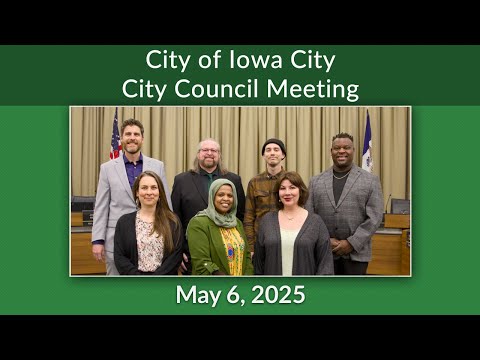
The City Council held a public hearing May 6 on proposed utility rates for fiscal year 2026 and took second consideration of an ordinance updating the city’s schedule of fees and rates. The council did not amend the ordinance at the meeting but used the hearing to ask staff for follow-up work on equity and conservation measures.
Council discussion focused on two themes: equity for low‑income households and ways to encourage conservation. Councilor Sala asked staff to return with a detailed proposal for modifying the existing basic-use discount so that the benefit better targets low‑income users. Councilor Oliver (spoken as "Oliver" in meeting text) suggested the council examine a surcharge for exceptionally high nonresidential water users — a progressive surcharge applied above a threshold to encourage conservation among large users — and asked staff to research how other jurisdictions use such surcharges for climate goals.
Staff confirmed there is an existing discount program covering a portion of basic use for qualifying households (previously described in staff memos) and that more detailed data on enrollments, disconnections for nonpayment and the program’s fiscal impact could be prepared for a work session. Councilors asked staff to schedule a work session to review: the number of households currently receiving discounts, the budgetary impacts of modifying the discount, options for conservation incentives and whether a high‑volume surcharge for nonresidential users would be legally and administratively feasible.
Council voted unanimously (7–0) on the ordinance at second consideration; staff and councilors agreed to follow up with a dedicated work session on equity and conservation options.