Get Full Government Meeting Transcripts, Videos, & Alerts Forever!
Get email alerts on the Housing Policy topic
No spam. Unsubscribe anytime.
Council adopts Elevate Housing policies, enabling residential TIFs and targeted infill incentives
Summary
The Waterloo City Council adopted the Elevate Housing Policies 2025, a package that creates a framework for residential tax‑increment financing and per‑unit incentives to spur infill and new home construction.
The Waterloo City Council on Tuesday adopted the Elevate Housing Policies 2025, a package intended to increase housing supply by encouraging infill redevelopment and new construction. The policy set a framework that includes residential tax‑increment financing (TIF) and per‑unit incentives for qualifying infill projects.
Under the adopted framework, new residential TIFs would typically allocate 50% of incremental property taxes to the developer for a 10‑year period, with the remaining revenue available to the city and for low‑ and moderate‑income housing set‑asides. The policy also formalized a $5,000 per‑unit incentive for eligible infill rehabilitation or new construction, increasing to $7,500 in council‑designated targeted areas.
Noel Anderson, community planning and development director, told the council the policy is meant to keep Waterloo competitive with nearby communities that use residential TIFs to attract developers and to create more housing stock. “The housing policies basically…we are keeping everything the same for sale of property policies, and what we’re expanding upon for the housing policies is the TIF District,” Anderson said.
The policy generated extended debate. Councilmember Bozen said he opposed residential TIFs and remained concerned about long‑term impacts on property tax levies. “Residential TIF is not the way to go,” Bozen said, noting the city’s fiscal constraints and the potential for TIF to lock up tax revenue that otherwise would flow to schools and other taxing authorities. Other council members argued the city is competing with neighboring jurisdictions and needs tools to attract larger builders and projects.
Councilmembers also debated targeted areas for enhanced incentives; staff proposed several neighborhoods (Walnut Historic, Church Row, West Central, We Care, City View, and Maywood) as candidates for the higher per‑unit incentive, but council reserved final designation authority. The policies also identify ARPA funds, nuisance‑abatement bonds and other sources as potential financing tools for acquisitions and public infrastructure connected to infill development.
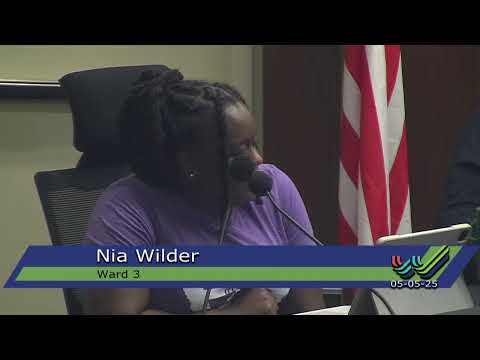
The council approved the Elevate Housing Policies by roll call; votes recorded on the adoption showed split views but a majority in favor (Bozen: no; Nichols: yes; Creighton Smith: yes; Chiles: yes; Simon: no; Wilder: yes; Foyce: yes). Supporters said the policy is targeted to new or previously non‑taxable sites and includes provisions to release funds back to the city; critics cautioned about fiscal impacts and urged time limits on incentives tied to the ARPA funding horizon.
What happens next: the city will use the policy as a framework when reviewing future residential TIF requests, targeted infill incentives and acquisition opportunities. Council retains approval authority on any TIF district or financial incentive package brought forward.