East Point presents balanced FY26 budget without tax increases; adopts infrastructure and public-safety investments
Loading...
Summary
City Manager Wayne Jones presented a balanced fiscal 2026 budget that avoids new taxes or use of reserves to balance the general fund while proposing major capital investments in public safety, parks and utilities; council and staff flagged reserve levels, enterprise fund stresses and scheduled follow-ups.
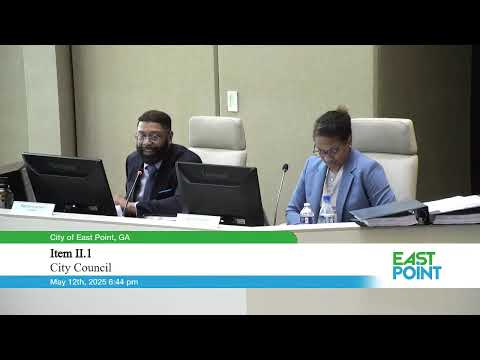
City Manager Wayne Jones presented a balanced fiscal 2026 budget to the East Point City Council on May 12, laying out more than $247 million in all-funds spending and a $70 million general fund without a proposed tax or millage increase.
The recommended budget keeps the general fund structurally balanced, Jones said, and “does not go into our reserves to balance.” It funds public-safety equipment including police vehicles and fire apparatus, proposes a multi-year public-safety drone program, and increases planned spending for parks, water and electric infrastructure.
Why it matters: The draft budget directs investments in services and capital projects that city leaders have prioritized—public safety, infrastructure maintenance, neighborhood revitalization and employee compensation—while emphasizing a commitment not to raise property taxes. At the same time several enterprise funds, notably water/sewer and solid waste, are running structural deficits that council members said will require policy decisions or subsidies.
Most important facts: Jones and interim finance staff presented a budget that totals about $247,000,000 across all funds, with the general fund at approximately $70,000,000. Major capital figures included about $15.5 million for sidewalks and street improvements, $14.9 million for water and sewer, $10.4 million for electric infrastructure, and a parks-and-recreation program that staff now estimates at roughly $33 million for a proposed multiplex and related projects. Public-safety investments include 13 police vehicles (finance over five years: $1.5 million), fire apparatus financed via a lease-purchase ($820,000 shown this year) and a proposed five-year, $250,000 drone program beginning in FY26.
Staff said the budget was developed from more than 20 department meetings, nine mayor-and-council meetings and multiple community sessions. Interim Finance Director Mr. Golden and Interim Budget Manager Ms. Cartwright joined Jones in presenting the numbers and the city’s policy on reserves. Jones said the general-fund reserve policy requires a minimum equal to three months of expenditures or $12 million, and noted the city’s other enterprise funds carry their own reserve minimums.
Council members and staff pressed staff for more detail on several risk areas. City Manager Jones and finance staff walked councillors through multi-year reserve projections that show the general fund appearing healthy at present but water/sewer reserves declining because of recent emergency repairs. Jones warned the council that emergency repairs have driven much of the water/sewer deficit and said the city may need to use general-fund support for enterprise stabilization if the trend continues.
Solid waste, recycling and illegal dumping are persistent challenges. Staff said the recycling program is running a roughly $400,000 annual deficit and the solid-waste enterprise has long subsidized fees to keep resident collections low; Director Moore told council the department regularly absorbs hard disposal costs (tipping fees, special bulk pickups, cleanup of illegal dumps) that are not offset by current customer charges. Jones said options include consolidating commercial haulers under a franchise, charging departments for disposal they generate, or raising rates.
Multiple council members asked for follow-up materials and implementation steps: an implementation timetable for the proposed parks multiplex and the compensation/classification study; a dollar accounting of recurring solid-waste costs (illegal dumping, bulk amnesty, internal city disposals) for council consideration before final budget adoption; and the electric-rate study (ECG) that was delayed and now is expected in June.
Quotes: “This is a balanced budget that does not go into our reserves to balance,” City Manager Wayne Jones said during the presentation. Interim Finance Director Mr. Golden added staff had “worked with finance and budgeting” and proposes the FY26 plan without new taxes. Director of Police operations, Chief Buchanan, described the planned drone program as an operational enhancement that will “put eyes on troubled areas in 90 seconds,” a capability staff said other nearby cities have deployed.
Next steps and scheduling: Council scheduled remaining public hearings and asked staff to return with requested supporting materials. Councilmembers asked that: (1) the electric-rate study be presented as soon as ECG makes it available (staff expects a June presentation); (2) staff provide line-item data on the solid-waste deficit and options for rate, franchise or subsidy changes before final adoption (charter deadline June 2); and (3) parks staff present the multiplex community-feedback summary at an upcoming meeting. Jones said some projects rely on external grants or bond decisions and those outcomes could affect future budgets.
Ending: The presentation framed FY26 as a status-quo budget with targeted enhancements and a conservative posture on reserves. Council members signaled they will weigh enterprise-fund choices and capital priorities in the weeks before final adoption.