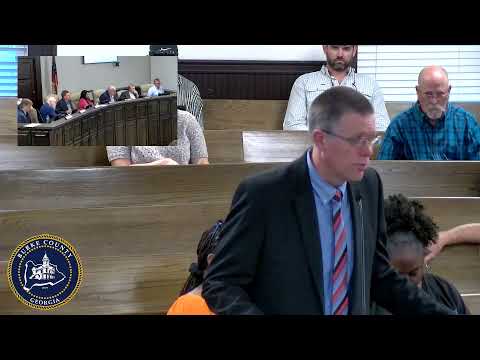
Burke County Commissioners Vote to End Participation in UGA Archway Partnership
Loading...
Summary
After multi‑year debate about local benefits and staffing, the Burke County Board of Commissioners voted 3–2 to graduate from the University of Georgia Archway Partnership, ending the county's paid participation in the program.
The Burke County Board of Commissioners voted to graduate from the University of Georgia Archway Partnership after extended public comment and a divided commission debate over return on investment and local staffing.
Supporters of continued participation, including local stakeholder Steve Blackburn, told commissioners the program had helped form local committees, develop workforce‑pipeline ideas and bring University of Georgia resources to community projects. Blackburn and other proponents said Archway provides a structure for stakeholder engagement and cited examples of marketing, alumni outreach and downtown improvement planning.
Opponents, including a public speaker who had worked with Archway staff locally, argued the county had not seen sufficient tangible results and cited problems retaining a locally based Archway staffer who, they said, was not sufficiently embedded in the community. Opponents framed the $30,000‑per‑year county share (part of a roughly $80,000 total program cost reported in the meeting) as an area where county funds could be conserved.
Commissioner Lively moved to 'graduate' — i.e., withdraw — Burke County from the Archway Partnership; Commissioner Bridal seconded the motion. The transcript records the motion carried, 3–2. The meeting record shows commissioners discussed earlier commitments (a five‑year initial term and the county’s $30,000 annual contribution) and noted that other partners (the school board, the city of Waynesboro and possibly the chamber) contributed funding.
The board and local participants also discussed options if the county instead had chosen to continue: a multiyear recommitment, restructured governance, a more embedded staff presence and clearer milestones. The UGA staff reportedly told the county that either outcome — continued participation with modifications or graduation — would be permitted without hard feelings and that communities sometimes 'reset' after initial years.