Get Full Government Meeting Transcripts, Videos, & Alerts Forever!
Get email alerts on the School Finance topic
No spam. Unsubscribe anytime.
Three Rivers Local board hears improved five-year forecast as TIF and property values rise; power-plant future remains key
Summary
District finance staff presented a five-year forecast showing modest improvements driven by higher TIF receipts and a reappraisal-driven real estate increase, but uncertainty about the local power plant's operation and state funding changes could materially alter results.
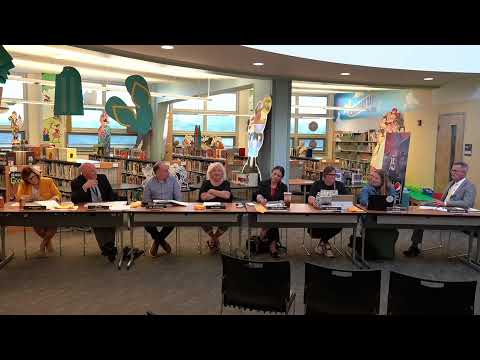
Terry, a district finance presenter, told the Three Rivers Local School District Board of Education that the district's five-year forecast shows modest improvement driven mainly by higher tax increment financing (TIF) receipts and a recent reappraisal that raised regular real-estate valuation.
The presentation said regular real-estate revenue is up about $376,000 (roughly 4.4%) year over year and this year's TIF distribution to the district totaled $189,002.99 (4.73% growth). Terry also reported that a legislative change temporarily returned districts to FY2020 guaranteed amounts, producing small increases for fiscal years 2025–26 and 2026–27 compared with an earlier governor proposal that would have trimmed guarantees by roughly 5% then an additional 10% in a later year.
Why it matters: the forecast shows the district moving from an expected multi‑million dollar deficit toward a smaller exposure over five years if current assumptions hold. But board members and staff repeatedly said the single largest variable is the outcome for the nearby power plant; if the plant remains operating, the forecast improves substantially.
Most important facts: Terry walked the board through revenue and expenditure line items, noting that most other revenue sources are flat, the general fund remains heavily local (including TIF), and that personnel and purchase-service adjustments implemented by the district reduced projected expenditures. The five-year projection showed roughly $620,000 in one-year savings amounting to approximately $3,000,000 over five years from reductions the finance team modeled, though some negotiated items (athletic trainers, certain contracts) were not yet finalized and were omitted from the presented forecast.
Board members pressed on the TIF and the power plant. Board member Mister McDonald and Missus Miller both framed the improved outlook as stemming from “watching every purchase” and deferred items previously budgeted. Terry clarified the district used conservative 4% escalation assumptions for some revenue lines and retained a contingency for a possible plant valuation decline.
On the power plant, Terry said district staff and the plant’s land manager, Joe Lynn, had discussed several scenarios. Terry noted the plant had explored conversion to natural gas and that industry timelines to convert could range from 18 months to 2–3 years. The presentation included a scenario that assumed the plant stayed open in its current form; that scenario produced a materially healthier cash balance in the five‑year view. Terry also said an outside energy attorney (David Spassie) monitors appeals and valuation petitions statewide; as of the meeting the attorney had not seen any filings against the district’s plant.
Board members asked for follow-up: Terry said he would update the forecast midyear if the plant's status became clearer and anticipated submitting an interim forecast before the routine November update if conditions changed. He also told the board that despite the improved forecast the district still expects to finish the fiscal year in deficit spending, but much smaller than earlier projections.
The board did not take a final vote on the five-year forecast during the public portion of the recorded meeting; the forecast was presented for approval as part of the finance agenda.