Get Full Government Meeting Transcripts, Videos, & Alerts Forever!
Get email alerts on the Land Use And Development topic
No spam. Unsubscribe anytime.
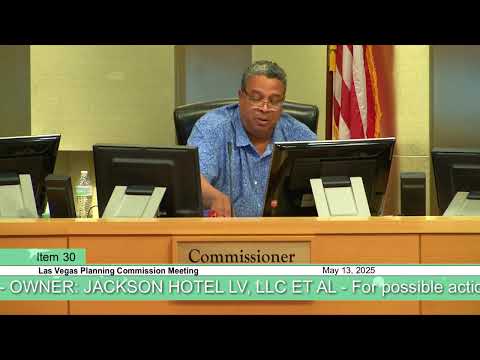
Planning commission denies two proposed Jackson Street mixed‑use projects after heated public debate
Summary
The Las Vegas Planning Commission on Tuesday voted to deny two linked, high‑rise mixed‑use proposals for Jackson Avenue after extended public testimony and staff findings that the applications conflicted with the city’s form‑based code and the West Side “Hundred Plan.”
The Las Vegas Planning Commission on Tuesday voted to deny two separate entitlement packages for a proposed mixed‑use development on Jackson Avenue and adjacent blocks — a hotel/casino project and a linked residential/hotel proposal — after extended public comment and discussion.
Supporters, including the project team and several community leaders, urged the commission to allow a taller, denser project they said could catalyze long‑stalled West Side redevelopment. “This project is the only one on the table anywhere with the scale and substance to truly transform the West Side,” project manager Brianna Lucier said. The developers offered a package of community commitments, including a proposed covenant to dedicate 10 percent of net operating income to an on‑going community fund.
Staff recommended denial. Planning staff concluded the requests — which included rezonings, variances to exceed the airport overlay and waivers of the form‑based code — would produce “spot zoning,” exceed policy limits in the Vision 2045 Downtown plan and the West Side Hundred Plan, and were therefore inconsistent with the city’s adopted land‑use framework. Several commissioners agreed. “We are stuck with the code,” Commissioner Jeffrey Rogan said, summarizing his view that the applications did not meet current zoning and policy standards.
The public record showed sharply divided neighborhood input. Dozens of residents and civic leaders spoke both for and against the proposals. Supporters emphasized job creation, affordable housing commitments and a community advisory structure; opponents described long‑standing distrust after years of unfulfilled promises and questioned the project’s financing and potential neighborhood impacts, including traffic and privacy. “I oppose the Harlem Knights project because it will adversely impact the value of my home,” said resident Cordelia Wallace Freeman, who lives on Van Buren Avenue.
After deliberation the planning commission voted to deny both sets of requests and the items will move to City Council on June 18, 2025. Commissioners who stated votes during the hearing included Jeffrey Rogan and Serena Kasama voting in favor of denial; the record lists a motion to deny by Commissioner Steven Munford that carried. The denial leaves the applicants the option to revise entitlements and resubmit, or to seek relief at the council level.
The applicants told the commission they would continue refining the proposal and noted they have interest from lenders conditional on approvals. They also said they would pursue additional neighborhood outreach and detailed financing and tenant commitments if they proceed to the City Council stage.
What happens next: the denials send both applications to City Council on June 18, where council members will review the same entitlements and the accompanying community benefit materials. The developers said they will provide additional documentation about financing, tenant commitments and the proposed community fund prior to the council hearing.
Why it matters: the two projects targeted one of the West Side’s largest underused parcels and included a grandfathered small‑casino footprint unique to Jackson Avenue. Supporters argued that the scale was necessary to deliver 200‑plus hotel rooms, theater space and the recurring community reinvestment fund; opponents and planning staff said the proposals conflicted with the form‑based code that governs height and street‑level design in the area.
The commission’s denials do not prohibit future proposals on the sites, but they set a higher hurdle for developers seeking taller buildings or code waivers in this part of the city; applicants aiming to revive similar proposals will need to address the planning department’s technical concerns and neighborhood requests for clearer, enforceable community benefits.