Get Full Government Meeting Transcripts, Videos, & Alerts Forever!
Get email alerts on the Traffic Safety topic
No spam. Unsubscribe anytime.
Titusville adopts automated school‑zone speed enforcement program amid debate over hours and scope
Summary
After heated debate, City Council approved an ordinance authorizing automated speed detection systems in designated school zones; the program imposes civil citations for vehicles exceeding the posted limit by 11 mph or more and includes a statutorily required public‑awareness/warning period.
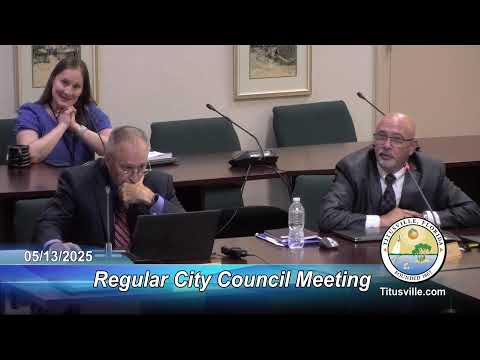
Titusville City Council voted 3‑2 to adopt an ordinance establishing a school‑zone speed enforcement program that authorizes automated speed detection systems in designated school zones and sets civil enforcement procedures.
Member Nelson moved to approve the ordinance and the council adopted it after a lengthy public hearing and extensive discussion about hours of operation, vendor reliability and technical issues. The final roll call was Mayor Andrew Connors — yes; Vice Mayor Cole — yes; Member Nelson — yes; Member Stokel — no; Member Muscoso — no.
Major Gonzalez presented the police department’s case, citing sustained speeding in multiple school zones and arguing the program is a “force multiplier” for traffic safety when officers cannot be posted at every site. The major described how systems operate: cameras or speed detection devices capture only vehicles exceeding a threshold (in this case 11 mph over the posted limit), the vendor forwards evidence and the department reviews each violation before issuing a licensed owner a civil notice. Gonzalez said vendors typically provide a 30‑day warning period and a 30‑day public‑awareness campaign is required by state statute.
Opponents and skeptical council members urged a more limited pilot — e.g., operating only during drop‑off and pick‑up — or alternatives such as rotating officer enforcement and dynamic radar feedback signs. Member Stokel voted no, saying she would only support enforcement limited to the 30‑minute before/after windows; Member Muscoso also opposed the ordinance as drafted. Supporters said running the cameras during the entire regular school day captures students arriving, departing and moving around campuses, and that data from local field studies showed high violation rates at many schools.
Council members asked for vendor contract terms that permit the city to terminate for convenience and for a robust public‑awareness/warning period before citations are issued. Staff said vendors vary; some contracts provide a 30‑day opt‑out or a warning window. The ordinance approved by council establishes the program and procedures; individual zones and vendor selection will appear at subsequent public hearings where council will have the chance to set which schools and the sequence of rollout.
Council members also asked staff to coordinate signage/FDOT work where school zones are on state roads; Member Nelson asked staff to request FDOT place school signage on Sycamore Street to address a private school there.
The ordinance vote follows similar programs elsewhere in Florida and reflects a wider debate over automated enforcement, technical reliability and civil‑versus‑criminal treatment of traffic violations.