Get Full Government Meeting Transcripts, Videos, & Alerts Forever!
Get email alerts on the Criminal Justice Task Force topic
No spam. Unsubscribe anytime.
Spokane-area leaders propose regional "Safe and Healthy Spokane" task force to address fentanyl, facilities and public safety
Summary
County commissioners heard a proposal to form a multi‑jurisdictional task force led by county, city and private partners to produce a time‑bound action plan on public safety, treatment and facilities, with a target report in spring 2026 and work envisioned to last about 18 months.
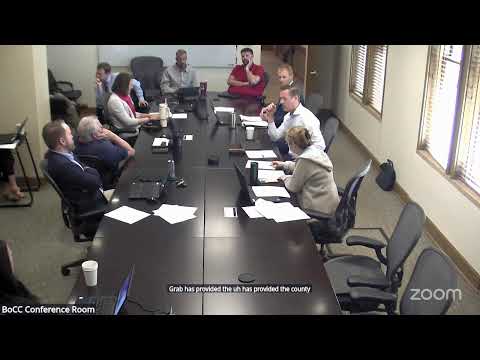
Spokane County commissioners heard a proposal May 13 to convene a regional "Safe and Healthy Spokane" task force, led by county and city partners alongside business and nonprofit funders, to develop an action plan addressing the fentanyl crisis, behavioral health needs and county detention facilities.
The initiative would create a multi‑jurisdictional planning team to select a broader task force of subject‑matter experts, commission a consultant housed with a local nonprofit foundation, hold public meetings, and deliver an “actionable” plan by spring 2026, proponents said. “We’re using the phrase deliberate urgency,” Commissioner Chris Short said, describing the dual need for careful planning and rapid progress.
Why it matters: local officials said the fentanyl crisis and aging detention and treatment facilities are driving public safety and health stress across cities and the county. The sponsors presented the proposal as a way to combine public, private and nonprofit resources to build community support for any future funding measures and to outline short‑term steps that “don’t require new funding.”
What was proposed: the planning team would include elected officials, business leaders and health‑care providers and would select task force members representing behavioral health, law enforcement, first responders, courts, finance and real estate. Private sector partners pledged to cover consultant costs and provide staffing support; the Spokane Area Business Foundation (GSI) was suggested as a host for the consultant. Commissioners described subcommittees — including a facilities subcommittee — to do detailed work on siting, cost modeling and operational implications.
Process and timeline: proponents said the task force would produce a final action plan by spring 2026 and that the time‑bound group would likely work about 18 months. Commissioners stressed the need to build financial models and to consider ballot timing: several said an even‑year ballot (2026) would produce higher turnout for any measure and that coordination with other regional ballot items would be necessary. Commissioner Cooney and others asked that financial scenarios and site feasibility be built into the task force’s work so the board would have realistic options if asked to place a measure before voters.
Dissent, constraints and next steps: commissioners raised questions about representation (for example, West Plains interests were noted as absent from the initial planning roster), the legal and procedural authority of a citizen task force (the group would make recommendations; the Board of County Commissioners remains the decision‑maker), and the time required for any Environmental Policy Framework or real‑property reviews if locations off the county campus are considered. The planning team and city councils were asked to review a jurisdictional letter; staff proposed bringing a signature version to the commissioners in about two weeks for formal signoff and asked commissioners to submit names for the planning team.
Ending: County and city staff will follow up to finalize the jurisdictional letter and convene the planning team; proponents said private partners are prepared to hire a facilitator so work can begin quickly once jurisdictions approve participation.