Get Full Government Meeting Transcripts, Videos, & Alerts Forever!
Get email alerts on the Ems Budget Operations topic
No spam. Unsubscribe anytime.
Fall River EMS reports revenue growth, adds ambulances and staff as council probes indirect cost allocations
Summary
Interim EMS Chief Beth Fonts told the council the department has expanded non-emergency contracts and doubled certain revenue streams; Finance Director Emily Erpke and councilors pressed for clarity on indirect cost calculations, capital needs and long-term financial policy.
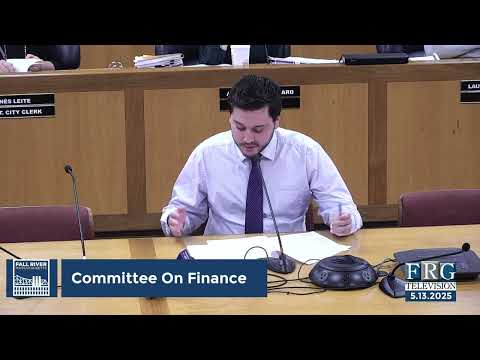
Fall River interim EMS Chief Beth Fonts told the City Council finance committee that the department has added non‑emergency transport contracts and expanded its fleet, growth that has driven a sizable increase in staffing and salary costs.
“we've doubled our profit from the previous year just with the South Coast contract,” Fonts said, describing non‑transport and interfacility contracts the department began in October and will expand in July with a new contract out of Charlton/North‑area hospital operations.
The council heard that EMS added multiple trucks and roughly 24 field positions in the most recent year to meet contract obligations and that total full‑time equivalents rose to about 106. Interim Director of Finance Emily Erpke said those hires — and how recently they were onboarded — help explain why salary costs jump between fiscal years.
Why this matters: Councilors asked whether EMS’s growing enterprise revenue should change how the city charges indirect costs back to EMS and other enterprise operations. Fonts described EMS capital needs — new trucks, routine apparatus rotation, and a possible building/space requirement — and said the department has used a stabilization fund and a bond for station repairs. Erpke said the city has a formal calculation used to allocate indirect costs but has not yet codified it in a written policy.
The council pressed for specifics on how indirects are determined and how collected enterprise revenue and new recurring contracts should change future allocations. Erpke said staff will work this summer to formalize agreements on indirects so the formula and timing are more predictable for next year’s budget.
Council members also asked about EMS contributions to fire‑station repairs. Fonts said EMS is paying debt service on a bond for upgrades to the Center Street fire station and that EMS is covering costs associated with its occupancy and common areas; she said showers and dormitory upgrades are also included to meet current standards and to allow for accommodating women firefighters if they are hired.
On fleet maintenance and operations, Fonts said the department has historically rotated apparatus on a replacement schedule and that the growing fleet may require additional maintenance-line staffing in future budgets. She described an in‑house EMT training program that supplies about three‑quarters of its graduates to the department as per‑diem hires who eventually convert to full time when openings exist.
The finance committee voted to refer the FY26 EMS budget materials to the full council for final action. The referral motion carried.