Get Full Government Meeting Transcripts, Videos, & Alerts Forever!
Get email alerts on the Ethics And Renters Rights topic
No spam. Unsubscribe anytime.
Seattle meeting erupts as public protests proposed rollbacks to city ethics rules tied to renter protections
Summary
Dozens of public commenters pressed the Seattle City Council on May 13 to oppose a proposed change to the city's ethics code they say would clear the way for council members with landlord interests to vote on renter-related legislation; the meeting was disrupted, recessed and public comment ultimately ended and the council continued business.
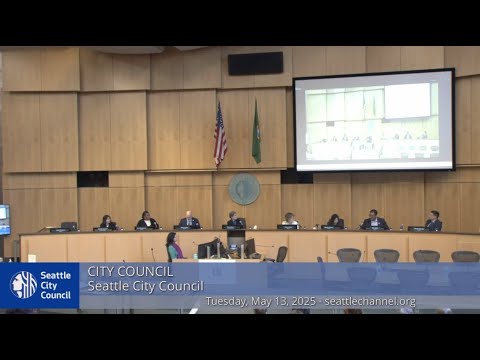
Dozens of people filled Seattle City Hall chambers on May 13 to oppose a proposed change to the Seattle ethics code that they said would enable council members with landlord interests to vote on renter-related laws.
The issue dominated the meeting's public-comment period: multiple speakers urged the council not to alter the city's ethics rules and warned that the change would pave the way to roll back renter protections such as a $10 cap on late fees and bans on winter and school-year evictions. Speakers disrupted the meeting repeatedly; Council President Sarah Nelson called for order, the council recessed for five minutes, and later ended in-person public comment and continued the meeting remotely.
Why it matters: Commenters said the ethics change is a first step toward undoing renter protections that they described as won by tenant organizing and past council efforts. Council members did not vote on any change to the ethics code at the meeting; instead the session became a flashpoint between protesters and council members over process and public access.
Public commenters repeatedly tied the proposed ethics change to threats to renter protections. Patrick Gibson told the council it was "an assault on renters and by extension workers," and other speakers warned of higher evictions and homelessness if tenant protections are weakened. Violet Lavatay, identifying herself as executive director of a tenant-rights organization, called a Councilmember's bill "a step backwards" and said it "tears down public protection" by opening the door for greater influence by wealthy interests.
Council response and process actions - Council President Sarah Nelson moved to continue the in-person public-comment period; the full council voted to continue public comment (6 in favor, 1 opposed, 1 abstention). Nelson later said that if disruptions continued she would stop public comment. After renewed disruptions the council terminated in-person public comment at about 3:33 p.m. and reconvened remotely to finish other agenda items.
What was not decided: No ordinance to change the ethics code was adopted or rejected during the meeting. Multiple public speakers called for council members to withdraw the proposed change; others said elected officials who vote to weaken the code should be voted out.
Voices in the room and on the microphone reflected sharp disagreement. Shama Sawant, speaking in public comment, said, "Any Democrat who votes in favor of repealing the ethics law should be immediately thrown out of office." Other callers and in-person speakers framed the dispute as a conflict between corporate landlords and tenant advocates; callers also alleged corporate landlord profits and rising eviction rates (those figures were stated by commenters and are presented as their claims).
Meeting context and next steps The council did not take legislative action on the ethics proposal at this session. Speakers pressed council members to publicly oppose or withdraw the bill; council members and staff acknowledged the high public interest and the meeting's disruption, and the council proceeded to adopt unrelated items remotely after ending in-person comment. Any change to the code would require formal legislation and a future council vote.
Ending note: The public comment phase on May 13 included 7 remote and 21 in-person speakers registered at the start of the session; the council temporarily permitted extended comment before suspending in-person remarks after repeated disruptions.