Get Full Government Meeting Transcripts, Videos, & Alerts Forever!
Get email alerts on the Energy Liap topic
No spam. Unsubscribe anytime.
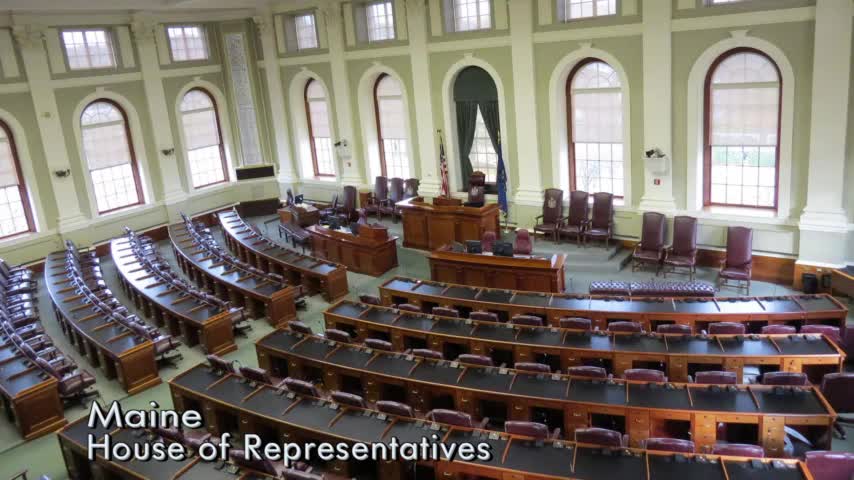
House advances one-time funding for low-income electric assistance after heated debate
Summary
The Maine House voted to accept a committeereport to provide one-time funding for the Low Income Assistance Program after members debated the causes of rising electric costs, including net energy billing.
The Maine House of Representatives on April 24 advanced a bill to provide one-time funding for the Low Income Assistance Program, accepting the majority committee report as amended after floor debate and a roll-call request.
Lawmakers said the payment is intended to bolster assistance for low-income ratepayers facing rising electricity costs. "In Maine, on average, the low income rate payers pay approximately 8% of their household income just for electricity, which is double the 4% maximum recommended by consumer experts," said Representative Sacks (Freeport), who moved acceptance of the majority report as amended.
Supporters said the appropriation would relieve households enrolled in LIAP and shore up existing relief programs. Representative Foster (Dexter) said the bill would "alleviate some of the expense of other rate payers who have to pick up these funds for the LIAP program." Representative Dribson (Winter Harbor) also urged members to support the motion.
Opponents cautioned the measure was a short-term fix. Representative Vardell said the state's energy policy had failed and called the bill a "band aid." Debate also touched on net energy billing; Representative Underwood (Presque Isle) suggested net energy billing was the primary driver of higher household energy burdens, while Representative Geiger (Rockland) replied that net energy billing accounts for roughly 6% of recent cost increases.
After debate and a roll-call, the clerk announced, "20 having voted affirmative and 26 in the negative. The motion prevails." The chair then ordered the bill read for first reading and sent on toward further consideration and to the Senate as required for concurrence.
The House record shows the measure will proceed under the normal legislative process; specific appropriation amounts and the bill number were not specified during the floor remarks recorded in the transcript.