Get Full Government Meeting Transcripts, Videos, & Alerts Forever!
Get email alerts on the Climate Policy topic
No spam. Unsubscribe anytime.
Empower New Jersey urges Morristown to pass municipal resolution supporting Climate Superfund Act
Summary
A representative of Empower New Jersey urged the Morristown Town Council to adopt a resolution backing the Climate Superfund Act, saying the bill would create state grants funded by large fossil-fuel corporations to help municipalities pay climate-related costs.
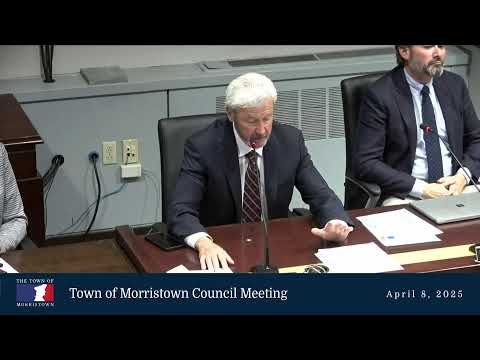
Ken Dalsky, a member of the Empower New Jersey board, urged the Morristown Town Council on April 8 to pass a municipal resolution supporting the Climate Superfund Act, a state bill he said would require major fossil-fuel corporations to help pay for climate-change damages in New Jersey.
Dalsky told the council that the bill is modeled on similar laws in New York and Vermont and that it “would provide a source of funding to help offset the financial burdens of climate change on all New Jersey towns, residents, and businesses by making the largest fossil fuel corporations pay for the damages caused by climate change in New Jersey.” He said the state could receive between $10 billion and $20 billion if the act is enacted, and that grants could cover infrastructure resiliency, flood protection, stormwater upgrades, home buyouts and other climate-related costs.
The speaker said the bill already passed environment committee hearings in both the New Jersey Senate and Assembly but had not yet reached other committees or a full-floor vote. He said Senator Joseph McKeon (identified in his remarks as the prime sponsor) told supporters that municipal resolutions would be helpful in demonstrating local support.
Dalsky asked the council to “simply pass a resolution” in support; he said he had sent a model resolution and supporting materials to the mayor and council in advance of the meeting. Council members said they had received the packet and reviewed it; several expressed general support for considering the request, but no motion or formal council action was taken at the April 8 meeting.
The matter was presented during the public-comment portion of the meeting; the council did not place a resolution on the agenda or vote on it that night.