Get Full Government Meeting Transcripts, Videos, & Alerts Forever!
Get email alerts on the Sanitation Bulk Pickup topic
No spam. Unsubscribe anytime.
Kenilworth launches one-year pilot limiting bulk pickup to five items per household
Summary
The borough described a pilot bulk-pickup program, clarified recycling rules and collection limits, and said staff will revisit the policy after the pilot year.
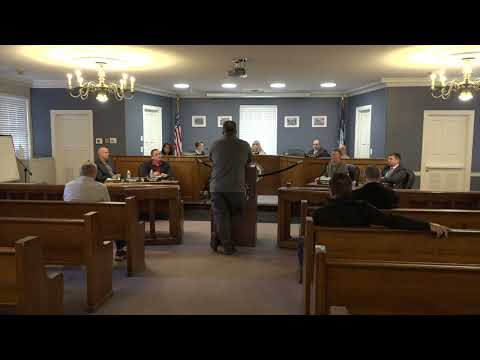
Kenilworth Borough Council and Department of Public Works officials described a one-year pilot program that limits curbside bulk pickup to a maximum of five items per household and clarified how recycling and construction debris will be handled.
Council members and DPW staff said the pilot is intended to test workload, safety and route timing before the borough adopts a longer-term policy. The council discussed the pilot’s schedule, exceptions and follow-up review.
DPW reported recent collection volumes as background: 225 tons of municipal solid waste (cost $18,015), 46.46 tons of commingled recycling (cost $1,984), and 9 tons of vegetative waste (cost $1,165). A DPW staff member, Greg, told the council the pickup flyer lists the schedule and clarifies that bulk pickup days are Fridays, with Saturday collection used when crews cannot finish Friday’s route.
Greg said the program will allow a maximum of five household bulk items per pickup and that recycling placed in plastic bags continues to cause problems at the borough’s recycling facility. "The flyer has a schedule, and it's a maximum of 5 items for household materials," Greg said.
Council members emphasized the pilot nature of the program. A council member said, "This 5 bulk item is only guaranteed for this year. This is a pilot program right now, and we wanna see how smoothly or how rough it goes picking up 5 bags per household." Officials said the borough will revisit the limit after the pilot year and may expand or reduce the allowance depending on operational experience.
Council discussion addressed several common questions and clarifications raised by residents: items placed inside a standard kitchen-size garbage can are not counted as bulk; construction materials and certain carpet types are treated as construction waste under state rules and not as standard bulk; and if a household places more than five items, crews will exercise discretion and may take the heaviest or most accessible five. The council noted a practical second opportunity for collection if sanitation crews are also collecting regular garbage from the same address, effectively allowing up to 10 items in some situations when collection timing aligns.
Officials and council members also raised safety concerns after staff reported an instance in which a 55-gallon trash bag of carpeting was too heavy for two workers to handle safely. Council members said one goal of the ordinance changes is to reduce work-related injuries by encouraging households to keep individual containers manageable in weight.
The council asked DPW to continue public outreach about the pilot. Staff noted the borough had promoted signups but that only about 1,000 residents had signed up so far; the borough’s population figure was discussed but not confirmed in the meeting. Council members encouraged residents to call DPW with questions and to follow the published flyer and schedule.
Ending: Council members directed staff to monitor the pilot’s operational impacts and return with data and recommendations after the one-year trial. The council did not take a formal vote to adopt a permanent rule during the meeting.