Get Full Government Meeting Transcripts, Videos, & Alerts Forever!
Get email alerts on the Behavioral Health topic
No spam. Unsubscribe anytime.
Senate approves bill reforming ADAMH board contracts, data sharing and recovery-housing penalties
Summary
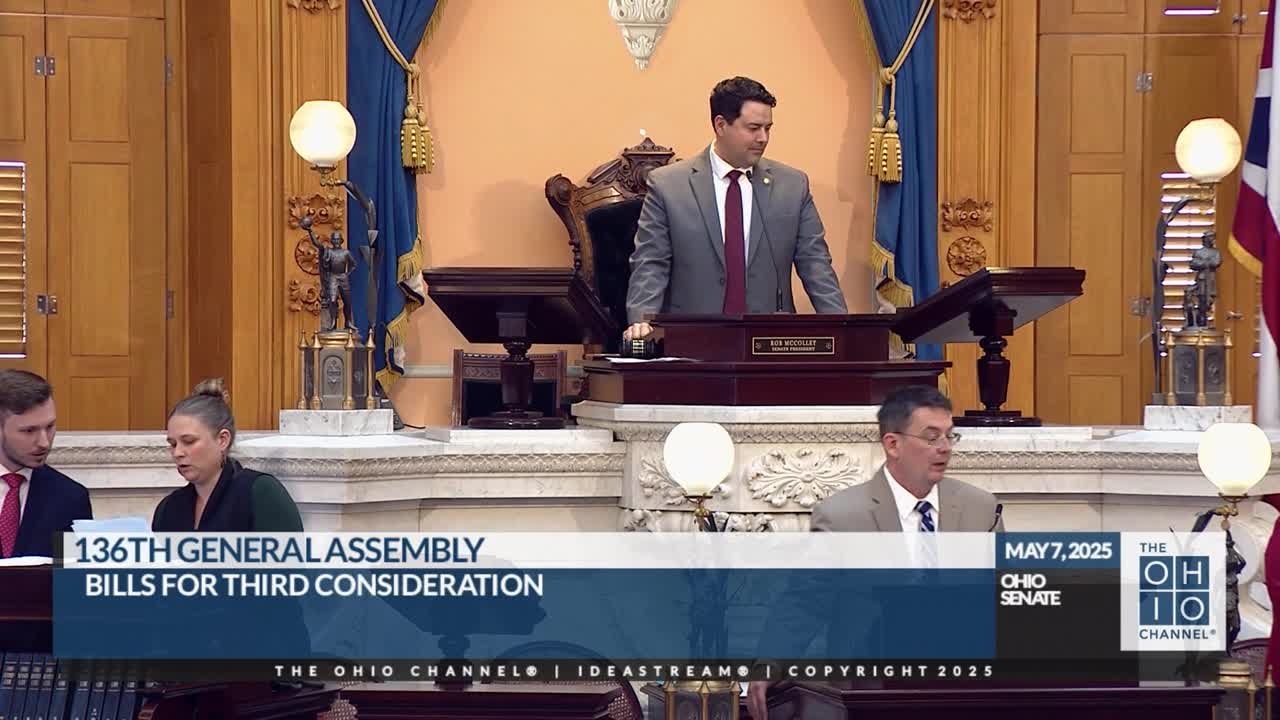
The Ohio Senate voted unanimously to pass Senate Bill 138, a package of changes that shortens contract-notice timelines for local alcohol, drug and mental health (ADAMH) boards, requires a state-local data-sharing plan and creates criminal penalties for uncertified recovery housing operators.
Senator Johnson urged colleagues to approve Senate Bill 138, saying the measure "is the culmination of several years of work, research and compromise," and the Senate voted 33-0 to pass the bill.
The bill changes three core areas of how Ohio’s alcohol, drug and mental health (ADAMH) boards operate with providers. It shortens the statutory notice period when either party does not intend to renew a contract from 120 days to at least 60 days; requires the Department of Mental Health and Addiction Services (referred to in floor remarks as OMAS) to work with ADAMH boards on a data-sharing and integration plan; and makes operating or advertising an uncertified recovery housing residence a first-degree misdemeanor.
Supporters said the shorter notice period will let local boards react more quickly to service needs and give providers clearer, time-bound processes for renegotiation; they also described the data requirement as essential for directing resources. "Data is the lifeblood of the ADAMH boards," Senator Johnson said, arguing that better data and clearer contracting will improve service continuity.
Senator Weinstein, speaking in support, said the ADAMH boards are "deeply rooted in our communities" and coordinate local services so people "get the right care when they need it from the right resource." He called the bill a strengthening of Ohio’s behavioral health system and urged a yes vote.
The bill was described on the floor as incorporating work from earlier measures, including Senate Bill 105 from a prior General Assembly and provisions already placed in the main operating budget. Sponsors said a six-month runway following the bill’s effective date is included to allow boards and providers time to adjust to new contracting processes.
Floor remarks stressed concern about exploitative recovery-housing operators who were said to set up without notifying local boards; the added misdemeanor penalty was framed as enforcement "teeth" for those bad actors. Supporters noted the legislation passed the Senate Addiction and Community Revitalization Committee unanimously and faced no opponent testimony there.
With a roll-call tally given on the floor, the Senate passed the bill 33 yeas, 0 nays and the measure was entitled.