Get Full Government Meeting Transcripts, Videos, & Alerts Forever!
Get email alerts on the Workforce Development topic
No spam. Unsubscribe anytime.
Merced County workforce board reports jobs growth, flags federal funding and labor-market risks
Summary
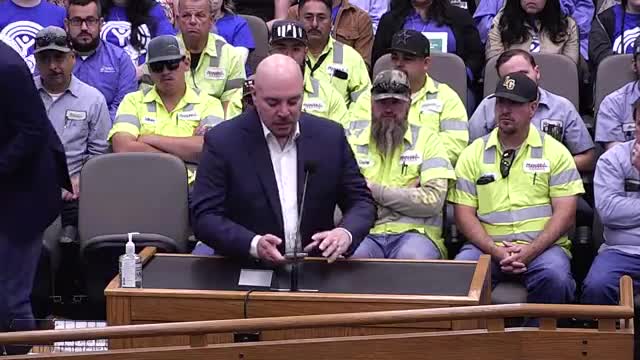
Merced County Workforce Development Board Director Eric Serrato presented the board’s annual report to the Merced County Board of Supervisors, describing recent job growth alongside persistent unemployment and possible funding threats.
Merced County Workforce Development Board Director Eric Serrato presented the board’s annual report to the Merced County Board of Supervisors, describing recent job growth alongside persistent unemployment and possible funding threats.
Serrato told the board, "We are a county of about 300,000 residents, but more importantly for me, 124,000 workers," and summarized trends in sector growth, unemployment and program outcomes that underlie the board’s priorities.
The report matters because Merced County’s economy depends heavily on a small labor pool, seasonal agricultural work and public-sector employers; shifts in state or federal funding and national trade or technology trends could disproportionately affect local workers.
Serrato said the county’s unemployment rate sat at 11.3% and noted long-term seasonality: "our unemployment rate is always the highest in February and the lowest in September." He highlighted recent sector shifts: overall jobs grew 3.9% in the past year; manufacturing expanded 13.1% and agriculture grew 6.2%, while transportation and warehousing declined—transportation accounted for about 3% of jobs and public sector jobs about 17% of employment. Serrato attributed part of the transportation decline (9.1% in the sector) to a local dislocation at the SafeMart Center.
Serrato and his staff reviewed program outcomes funded under the Workforce Innovation and Opportunity Act (WIOA). He said the county’s WIOA-funded services served several hundred adults and dislocated workers (597 reported), with 150 receiving scholarships for training; enrollments skewed male (66%), and average ages were about 31 for adult customers and 34 for dislocated workers. The Merced County Office of Education–run young adult program served 215 individuals, with 67 receiving vocational training. Youth internship placements paid about $2,710,000 in wages and produced roughly 146,000 hours of public-sector service.
The board heard performance comparisons cited by Serrato from an external analysis by FutureWorks: the county’s job centers served more than 2,200 people and placed about 67% of participants into employment within six months; Serrato said those placed earned about $38,000 (figure given in presentation) and that collective earnings totaled about $57,000,000.
Serrato identified strengths—manufacturing growth and relatively stable local government employment—and several risks. He warned of potential impacts from tariffs on import/export flows and from national labor-market shifts tied to automation and artificial intelligence. "Jobs in Merced County are much less vulnerable to A. I.," he said, noting that many local positions are essential and not easily automated. He also flagged a mismatch between the number of recent college graduates from UC Merced and the number of local jobs requiring bachelor’s or master’s degrees, creating competition for mid-skill roles.
On funding, Serrato described the board’s diversified revenue mix. He said the workforce board’s budget grew from about $9.5 million in 2020 to roughly $19.6 million in five years, and that the federal share of funding fell from 59% to about 29% over that period. He also warned about a presidential executive order discussed in the presentation that proposed a roughly 35% cut to the Department of Labor budget in an early administration outline, a proposal Serrato said has raised concern in the local workforce community.
Looking ahead, Serrato outlined planned actions rather than formal decisions: a new framework to serve young adults beginning in July; opening three new job centers across the year including a flagship center slated to open at the Merced Mall in November; a continued focus on North Valley Thrive and advanced manufacturing; hiring a communications firm to improve outreach; and efforts to diversify funding by pursuing philanthropic and earned-revenue models.
Supervisor McDaniel praised the board’s partnerships among private sector, government and labor, saying, "This is where government gets it right." Serrato closed by recognizing long-serving office assistant Patricia Henson, who is retiring after 28 years.
No formal motions or votes on these items were recorded during the report; the presentation served to inform the Board of Supervisors and to prompt follow-up and planning by staff and partners.