Get Full Government Meeting Transcripts, Videos, & Alerts Forever!
Get email alerts on the Airport Infrastructure topic
No spam. Unsubscribe anytime.
Wasilla airport committee reviews budget, staffing and $17 million Taxiway Kilo expansion tied to runway plans
Summary
City airport staff told the Airport Advisory Committee on April 17 that a proposed half‑time maintenance position, ongoing perimeter‑fence repairs awaiting FAA grant paperwork, and a major Taxiway Kilo hangar/tie‑down project backed by federal funding are primary items in the city budget and capital plan.
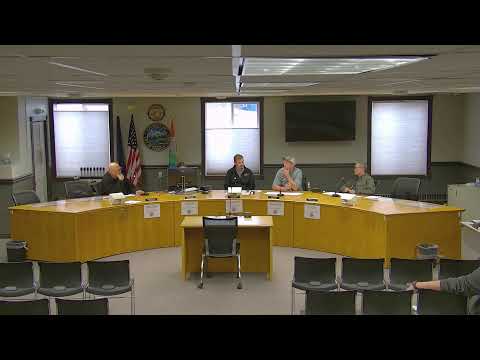
The Wasilla Airport Advisory Committee on April 17 heard staff updates on budget requests and operations, and a detailed briefing on Taxiway Kilo — a proposed commercial hangar and tie‑down development tied into longer‑term runway extension plans and federal grant funding.
The committee’s discussion centered on three near‑term budget items and several capital moves that officials said would support larger future runway work: (1) a proposed half‑time position split 50/50 between roads and airports; (2) perimeter‑fence repairs that staff say are eligible for FAA grant funding but are on hold pending FAA grant paperwork; and (3) Taxiway Kilo, a roughly $17 million development the city is pitching for federal Airport Improvement Program (AIP) support and that officials say would add lease lots and hangars on fill built during earlier airport work.
“ What we are asking for is a half time position split between airports and roads,” said Mr. Shaw, airport staff, describing a position intended to provide dedicated equipment operation and maintenance support for both divisions. Staff said the split would formalize current arrangements and help the city sustain snow removal, pavement work and apron maintenance as projects ramp up.
On perimeter fencing, staff reported extensive spring brushing and clearing of fence lines, noting more than 1,000 feet of frost‑jacked fence must be replaced. “And we’re waiting for them to fix their grants, process,” Mr. Shaw said, referring to FAA grant paperwork that staff said is delaying award of the low bid for the replacement contract.
Taxiway Kilo: hangars, utility work and owner match
Staff presented an 11x17 plan drawing and said Taxiway Kilo would convert an east‑side fill plateau into roughly seven commercial lease lots (each about 200 feet by 218 feet) with apron access. Staff said the FAA indicated it could fund about $13.5 million of the federal‑eligible work if the city supplies an owner’s match estimated at a little over $4 million; the total project was described in staff materials as about $17 million.
Under the proposed cost split, FAA funds would cover the apron and approach surfaces while the city would provide the gravel access strip, sewer and some site work. Staff said utilities would include water, gas and electric supplied to the lots; sewer would be a local septic/leach‑field connection paid for by the city. Staff described the site as a “premier Wasilla commercial hangar site” with design standards for cohesive architecture.
Staff said the project’s federal funding case had strengthened after recent FAA guidance and congressional advocacy; they also said the categorical exclusion process for permitting has been manageable so far. The committee asked about data and internet service to the site; staff said the city plans to install extra conduit with electrical work and will coordinate with local providers and Starlink options as needed.
Runway planning, property purchases and grants
Committee members were told staff continue to advance runway extension planning. Staff reported excavation of about 60,000 cubic yards from a borrow area called Hamburger Hill and said the material can be reused for the runway extension. Council approval has already been given for purchases of three properties owned by the Gardners that sit in the runway safety area; staff said the family would be allowed to remain on the property for the summer as part of the acquisition agreement.
Staff also said the city has expended most of a $5,000,000 state grant that supported property acquisitions and has requested additional council appropriations to continue purchases. Separately, staff recounted a congressional outreach trip and a $33,000,000 congressional budget request that city representatives discussed in Washington as part of the longer‑term runway extension advocacy.
Operations, summer work and tenant demand
Staff described spring and summer maintenance priorities: clearing brush along the fence, regrading the STOL area, repainting a corrected compass rose before June, and conducting cultural‑resource surveys needed for future permits. Staff warned leaseholders to avoid nonaviation activities that could jeopardize FAA grant eligibility and said airport staff will be making periodic compliance checks.
On tenant demand, staff and a front‑desk colleague, Ashley, said the airport has a significant waiting list for lease lots and tie‑downs. “I don’t know about the tie downs. Yeah. But the lease lots are about 75,” Ashley said. Staff estimated an average lease lot brings about $1,200 a year; at 75 lease lots that equates to about $90,000 in annual lease revenue under current rates. Committee members discussed raising rates as neighboring airports have done; staff said rate changes may hinge on a forthcoming title‑16 code update and the lease renewal cycle.
No formal committee votes were recorded on budget items at the meeting; staff said the city council will conduct the next public hearings and budget sessions starting the following week.
Why it matters
Committee members and staff framed the projects as incremental steps that would expand hangar capacity and commercial service while also positioning the airport for a future 5,000‑plus‑foot runway extension. If federal AIP funding and property acquisitions proceed as planned, staff said the taxiway/hangar development could accelerate demand and support the larger runway project.
Next steps and public process
Staff said final design and permitting steps remain, including a sound study and public‑involvement elements required by FAA grant processes. The capital‑improvement plan and airport budget items will be discussed at city council budget meetings scheduled the week after this advisory committee meeting.