Get Full Government Meeting Transcripts, Videos, & Alerts Forever!
Get email alerts on the Municipal Finance topic
No spam. Unsubscribe anytime.
Council reviews sewer and water budgets; staff warn of aging pipes, rising call‑outs and EPA grant timeline
Summary
At a committee of the whole on the FY 2026 budget, city staff described aging sewer and water infrastructure, rising emergency call‑outs, staff retirements and a $5.8 million EPA grant for a treatment-plant project; council debated operator-training promotion paths, union hiring rules, overtime forecasting and when to resume detailed CIP review.
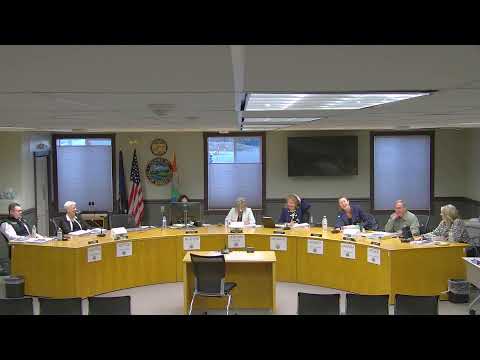
The Wasilla City Council met in committee of the whole to continue FY 2026 departmental budget presentations, focusing on sewer and water enterprise funds. Staff warned that aging infrastructure, higher emergency callouts and staffing turnover are driving maintenance needs and budget pressures, and they briefed the council on a $5.8 million EPA grant tied to a wastewater treatment plant project.
Eric (staff) opened the sewer presentation by adding new operational metrics: about 25.5 miles of force-main sewer line, roughly 2 miles of gravity sewer that the city has never inspected by camera, multiple customer billing types and a current sewer customer base the presentation listed at about 924 with a forecasted near-term increase. Eric said the city is forecasting roughly 4,700 sewer-centric work orders for the coming fiscal year and that better tracking has increased apparent workload in recent years.
Council members pressed staff on staffing and succession. Eric and Cassie (finance/staff) said longtime treatment-plant operator Lance Kopsik is retiring after roughly 25 years of service; a “shadow” hire, Katie Langston, has worked alongside him and will assume operations. Staff also said the water/wastewater supervisor, John Becker, has picked a retirement date and the budget includes a shadow position for that transition. Council members asked about the operator‑in‑training program, promotion paths to wastewater technician 1 and 2, required state licensing timeframes and limits set by union agreements. Staff said the union (referred to as “302”) requires the city to consider internal candidates before hiring externally and has a hiring‑hall process that affects timing.
Staff and council discussed large variances in overtime and regular wages. Cassie said some increases reflect the addition of shadow positions and step increases; Eric added that the number of emergency callouts has risen (staff cited roughly 100 callouts in recent fiscal years and an upward trend) and that frozen lift stations, after‑hour pump trips and other emergencies contribute to overtime. The Department of Environmental Conservation (DEC) effluent discharge permit fee was noted as a recurring cost that recently rose; staff said DEC billing increased permit charges to about $10,000 per year.
On grants and capital: staff confirmed the city received a U.S. Environmental Protection Agency (EPA) award of about $5.8 million for a water/wastewater treatment project; staff said the grant has performance deadlines and the city is seeking an extension to complete construction. Eric said the grant was backdated by EPA to when the application was filed and that staff is working on required paperwork and reporting.
Staff described an asset‑mapping project for water infrastructure: the city now counts roughly 15 miles of water main (not the previously reported “high forties”) and about 573 mapped fire hydrants; approximately 40% of mains are more than 40 years old. Staff said the mapping data will be required to calculate life‑cycle costs if the city pursues a formal rate study and possible rate increases.
Other operational items highlighted: plans to adopt a more user‑friendly Consumer Confidence Report for water quality (required by regulation), the need to replace aging pressure‑washer and lab testing equipment at the treatment facility, and new camera and SCADA expenses for remote monitoring and security.
A point of budget process discussion: staff asked the council to appropriate $150,000 from an existing technology‑replacement fund (the presentation identified an available fund balance of about $752,000) and to confirm process for spending those funds. Several council members asked for clearer schedules and background documents for capital projects and requested a dedicated follow‑up to review the CIP; staff and council agreed to continue detailed capital‑project discussion at follow-up meetings in the budget calendar.
Procedural actions during the meeting included the council’s motion to enter and later exit committee of the whole so that council and staff could discuss departmental budget details. No final appropriations were approved for the discussed capital projects at the meeting; the council set follow‑up sessions to continue CIP review and to consider amendments and adoption under the council’s budget schedule.