Get Full Government Meeting Transcripts, Videos, & Alerts Forever!
Get email alerts on the Indigenous Perspectives topic
No spam. Unsubscribe anytime.
Native scholars at Missoula panel urge rethinking 'discovery' language and celebratory events for Lewis and Clark and Columbus anniversaries
Summary
At a Montana Committee for the Humanities panel in Missoula, indigenous scholars said popular narratives that cast Lewis and Clark and Columbus as benign 'discoverers' obscure invasion, sovereignty loss and continuing harms. Panelists urged historians and event organizers to include Native perspectives and avoid 'discovery' framing.
Missoula — Indigenous scholars and community historians at a Montana Committee for the Humanities panel in Missoula urged a reexamination of how Lewis and Clark and the Columbus quincentenary are commemorated, saying conventional language of "discovery" and celebratory programming too often erases Native sovereignty and ongoing harms.
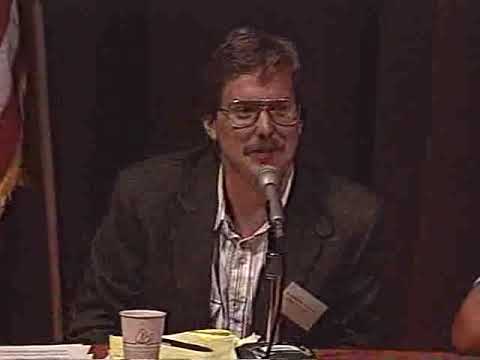
Jeannie Eder, a member of the Dakota Sioux Nation who told the audience she was completing doctoral work at Washington State University and teaches American history at Western Montana College in Dillon, said indigenous perspectives are frequently marginalized in academic settings. "We were indeed invaded, that we are still sovereign nations, and that we have sovereign rights," Eder said, arguing that classroom treatments too often skip what happened to Native peoples after the Louisiana Purchase.
The panel placed those remarks in historical and contemporary context. Thompson "Tom" Smith, a consultant with the Flathead Culture Committee completing a doctoral dissertation at Yale University, said that the journals and modern secondary literature often emphasize antiquarian details instead of the expedition's role in advancing U.S. authority. "This term's got to go. It was not discovery," Smith said, criticizing the habit of describing Lewis and Clark as having "discovered" plants, animals or peoples who already had long histories in the region.
Smith read a passage recorded from Pend Oreille elder Pete Beaverhead to underscore a Native oral perspective: "Right then, when the white men were to come across the ocean for the first time, our land had already been sold by them to their government... The white man crossed and landed. They stuck the pole and flag in the ground, claiming the land." Smith said such recollections link Lewis and Clark with an ongoing pattern of land claims and loss.
Panelists identified several recurring problems in public history and commemoration: translation barriers during early encounters (sometimes involving "six languages and back again," Smith said), the mythologizing of individual figures such as Sacagawea, and a simplified moral framing that divides Indigenous people into "good" and "bad" categories while obscuring broader political dynamics of resistance and invasion.
Eder and Smith also discussed how Indigenous communities approach anniversary events differently. Eder said some Native groups in Montana plan October 12 events that emphasize peace and shared cultural practices, while others refuse to recognize the day. Margaret Kingsland and other program reviewers noted that proposals from Native organizations for Montana's state centennial tended to focus on present- and future-oriented projects rather than nostalgic past celebrations, a contrast panelists highlighted as instructive for Lewis and Clark commemorations.
Speakers also emphasized cultural detail and internal diversity: Eder described women's ceremonial and economic roles in many Plains societies and said those roles are frequently misunderstood or omitted in histories written by men. Smith said oral archives on the Flathead Reservation contain many memories of nineteenth-century changes — horses, epidemics, and missionaries — but that there is not a single, clear oral account universally identified as "the" Lewis and Clark encounter.
Moderator Walter Fleming, chair of the Montana Committee for the Humanities, opened the session and invited audience participation during the panel rather than waiting until the end. Audience questions prompted discussion of whether Lewis and Clark commemorations could shift emphasis to contemporary issues of sovereignty and cultural continuity; panelists were skeptical that mainstream events would shift without deliberate changes in programming and funding.
The panel did not propose formal actions. Instead speakers urged historians, event planners and educators to: avoid the word "discovery" when referring to Indigenous peoples and cultures; include Native voices and elders in planning and presentation; contextualize Lewis and Clark within broader patterns of U.S. expansion and treaty-making; and recognize that commemorations are political choices with present-day consequences.
Organizers and participants said they hope anniversaries provide opportunities to broaden public understanding, but they cautioned that without deliberate inclusion and care, events will reproduce familiar myths rather than address the concerns raised by Native communities.