Get Full Government Meeting Transcripts, Videos, & Alerts Forever!
Get email alerts on the Career And Technical Education Welding topic
No spam. Unsubscribe anytime.
Pearland High welding program wins grand champion at Houston Livestock Show and Rodeo; seniors report multiple job offers
Summary
Pearland High School’s welding program won the grand champion title at the Houston Livestock Show and Rodeo. On the district’s Building Blocks podcast, students described a six-month project cycle, industry mentorship, donated equipment and an upcoming signing day where many students expect to accept job offers or apprenticeships.
Pearland High School’s welding program won the grand champion prize in the industrial craft competition at the Houston Livestock Show and Rodeo, and program seniors said they have received multiple job offers and apprenticeship opportunities ahead of a district signing day next week.
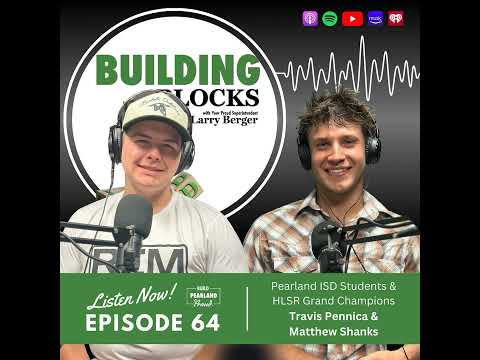
That victory and the students’ reported job prospects were the focus of an episode of Pearland ISD’s Building Blocks podcast, hosted by Superintendent Berger, who introduced graduating students Matthew Shanks and Travis Benica and highlighted the career-education pathway the program provides.
The program competed in the Houston Livestock Show and Rodeo’s industrial craft competition, where teams receive raw materials and drawings and must fabricate the project on their own. “They basically give you drawings, and they give you the materials, and you just put it together,” one student described on the podcast. This year’s assignment was a large horizontal barbecue pit that the students said weighed about three tons; the team said it worked on the project at the school over roughly six months.
Why it matters: district officials and students argued the competition models industry practice — from a bill of materials and inventory checks to safety spotters for forklifts, quality-control reviews and time-management tracking — and that those features help graduates move directly into the workforce. Superintendent Berger framed the episode as an example of how CTE (career and technical education) “is making a difference” for students preparing for careers outside a four-year college path.
Program and competition details: students said industry mentors served as safety and quality-control auditors through the build, and that the team maintained spreadsheets to track time and simulated costs. “There needs to be a spotter for the forklift,” a student said, describing standard shop safety practices the competition required. The district’s welding teacher, Walker Rose, was credited repeatedly by the students as the program mentor and primary instructor; students described Rose as central to their technical learning and to preparing the team for competition judging.
Community and industry support: students and the host described several donations and community partnerships that supported the program. The class has received donated machinery in recent years — a lathe, a mill and a horizontal bandsaw — and a donor identified on the podcast as RCM provided a trailer used by the build-off team. Students said industry volunteers donated time to act as safety mentors and quality-control reviewers during the fabrication process.
Workforce outcomes and training offers: the students said the district’s BCPC event (an industry interview forum) led to interview offers and recruiter contact. On the podcast, the students said each had multiple offers and that district organizers scheduled a signing day the following Tuesday for students to accept or finalize employment or training agreements. One student said companies offered paid training and courses (for example, a free pipe-fitting course tied to employer hiring), and the podcast included students’ descriptions of pipeline work pay rates and union opportunities discussed during industry conversations. Those compensation examples were presented as students’ reports of what employers described during interviews, not as district-verified payroll commitments.
Competitions and continuing programs: beyond the Houston Livestock Show and Rodeo, students noted participation in the Texas High School Welding Series and other regional competitions. The program fields both individual competitors and a build-off team; students named teammates who will attend state competitions in May. Students said prizes can include welding machines, toolboxes and other equipment intended to support further career development.
What did not change: no formal district board action or contract award was announced on the podcast. The episode described student achievement, community donations and anticipated hiring outcomes; it did not include a district vote or an expenditure approval. The podcast is an informational outreach piece rather than an official board meeting record.
Looking ahead: students and the superintendent encouraged fellow students to “stick to it” and to seek mentors and teammates. The podcast hosts said the signing day will provide a public moment for seniors to accept job or apprenticeship offers, and students described the program as giving them direct entry options into trades or industry training after graduation.