Get Full Government Meeting Transcripts, Videos, & Alerts Forever!
Get email alerts on the Deposition Brady Rule15 topic
No spam. Unsubscribe anytime.
Appeals court hears dispute over trial judge's order allowing deposition of state's witness for Brady review
Summary
The Tennessee appellate court on oral argument heard competing views over a trial court order that allowed the defendant to depose the state's chief witness, Christopher Martinez, to pursue alleged Brady material ahead of trial.
The Tennessee appellate court on oral argument heard competing views over a trial court order that allowed the defendant to depose the state's chief witness, Christopher Martinez, to pursue alleged Brady material ahead of trial.
The issue matters because the court must decide whether the trial judge exceeded the limits of Tennessee Rule of Criminal Procedure 15 and whether a pretrial deposition aimed at uncovering allegedly withheld Brady or Giglio material is permissible when the trial court did not make findings that the witness would be unavailable or that "exceptional circumstances" existed.
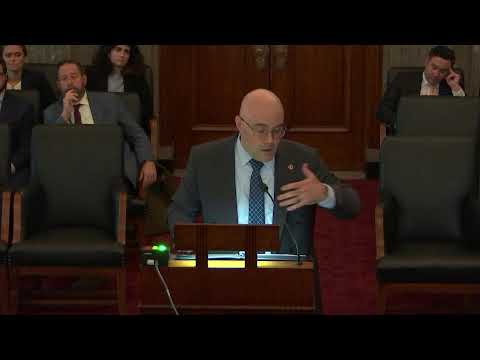
State appellate counsel Will Lundy told the court that "the trial court abused its discretion when it granted the defendant's motion to depose mister Martinez," arguing the court's written order made no reference to Rule 15 and made no findings required by that rule. Lundy said Rule 15 permits a deposition "for one purpose and one purpose only, and that is to preserve a witness's testimony for trial," and that the defendant conceded the deposition here was not to preserve testimony but to pursue Brady-related discovery.
Defense counsel Ben Rose responded that the deposition order addressed a separate problem: the state had produced a very large file of documents and, in Rose's words, had "warehoused a bunch of documents and not point out where those are potentially exculpatory." Rose described this as a corporate white-collar matter involving "10,000 or more documents" and said the defense sought "secondary exculpatory information or documents that Christopher Martinez has" and that the court's order gave the defense the ability to seek documents and Martinez's deposition to locate that material. Rose acknowledged there is no Tennessee case squarely holding that a court may order such a deposition for Brady purposes and said the issue "is a matter of first impression in the state."
Judges on the panel pressed both sides about statutory and procedural authority. One judge observed the trial court's written order was ‘‘one page ' and did not make the finding’’ that the state was withholding evidence; Lundy and the panel emphasized that the advisory comment to Rule 15 provides depositions in criminal cases are "not meant to function as discovery devices" and are "meant to be tightly confined to those exceptional cases where the interest of justice require[s] the taking for the preservation of testimony for use at trial and not for discovery." Lundy pointed to Rector v. Johnson (5th Cir.) and argued the state generally has no obligation to point the defense to exculpatory materials that are effectively concealed within a large production.
Rose countered that some federal decisions and secondary authorities allow pretrial steps in exceptional, document-heavy matters so trial courts can prevent a defendant's only post-trial remedy under Brady from being the practical result. He said the trial court also ordered Martinez to produce documents and that, combined with depositions scheduled in other jurisdictions (Rose said a possible deposition date in Arizona was being pursued), could moot this appeal.
Both sides agreed the trial court's written order was terse. Lundy and other panel members repeatedly noted the record, as available to the panel, contained no factual showing that Martinez would be unavailable for trial or that exceptional circumstances existed to justify a Rule 15 deposition; Lundy said "there's absolutely no evidence to support any of that." Rose said the trial court had viewed the case as "unique" and intended to address how voluminous disclosure intersected with Brady obligations.
The appellate panel asked practical questions about alternatives, including subpoenas (Rule 17) and whether the state, if it truly did not possess particular documents, could be required to produce them. The state argued it cannot be compelled to produce what it does not possess and that the better course, if the materials exist only with a nonstate witness, would be subpoena or other procedures rather than a Rule 15 deposition used as discovery.
The court recessed and took no immediate ruling at the argument; the appeal presents a procedural question about the limits of pretrial discovery depositions under Tennessee criminal procedure rules and the interplay with Brady and Giglio obligations.