Get Full Government Meeting Transcripts, Videos, & Alerts Forever!
Get email alerts on the Homelessness Policy topic
No spam. Unsubscribe anytime.
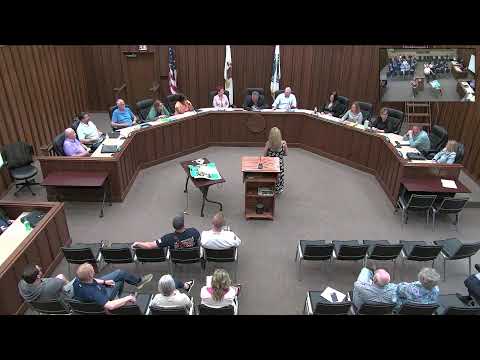
Council opens broad discussion of proposed unhoused camping ordinance, community advocates warn against criminalization
Summary
City councilors discussed a draft ordinance addressing camping and personal property on public property; community members and councilors urged care to avoid criminalizing homelessness and suggested alternatives including court‑ordered services, sleep pods and community service options.
The Jacksonville City Council held an extended discussion about a proposed ordinance to regulate camping and storage of personal property on public property and invited input from community advocates, law enforcement and residents.
Mayor Andy Ezzard introduced the item, noting an increase in visible homelessness and that Jacksonville Main Street had helped draft an ordinance similar to neighboring jurisdictions. He emphasized the need for collective community response and invited field practitioners and advocates to comment.
Several council members expressed support for giving police tools to address public‑space camping and personal property, while others warned fines could be ineffective because people experiencing homelessness lack means to pay them. Alderman (unnamed) asked whether there were alternatives to fines; council discussion pointed to manpower and enforcement limitations and concerns about simply pushing people to other neighborhoods.
Community advocates Jada and Jade described longer‑term service approaches they are working on and suggested alternatives such as sleep pods with lockers to provide safe, short‑term shelter and a proposal (cited from another jurisdiction) to require multiple chances to accept services before a court‑ordered service requirement is considered. Jada and Jade framed the ordinance as separate from service provision but said both were needed.
Resident speakers, including Rob Thomas, described personal experience with homelessness and urged the council not to criminalize people who lack housing or resources; Thomas warned that displacing people from the downtown square would push them into neighborhoods and create new problems.
Council members and the chief of police discussed community‑service alternatives (for example, assigning community service hours in exchange for shelter) and the insurance and logistics such programs would require. Several councilors asked the police chief for input and acknowledged enforcement limitations and the need to coordinate services and nonprofits.
No ordinance vote was taken; the mayor described the item as continued discussion and assigned council members homework to consult with stakeholders and bring further refinements. Council indicated a willingness to continue the conversation and to consider non‑criminal alternatives and operational details before advancing an ordinance.