Get Full Government Meeting Transcripts, Videos, & Alerts Forever!
Get email alerts on the Affordable Housing topic
No spam. Unsubscribe anytime.
Council Backs Tax‑abatement Support for Garden Court Low‑income Housing Application
Summary
Marshall County gave a conditional show of support for a tax abatement to help a developer secure Low Income Housing Tax Credits for a 32–40 unit project called Garden Court; council’s support is contingent on project approvals and would not cost the county unless the project proceeds.
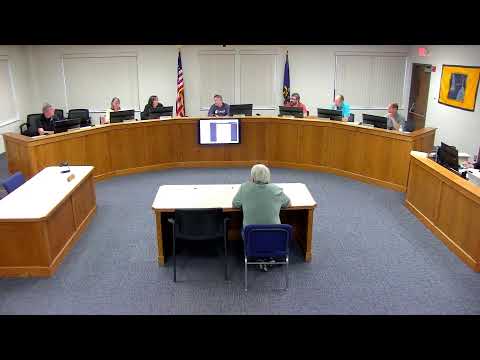
The Marshall County Council voted May 13 to support a county tax‑abatement for Garden Court Inc., a proposed low‑income housing project, as part of the developer’s application for competitive Low Income Housing Tax Credits administered by the Indiana Housing and Community Development Authority (IHCDA).
Greg Hildebrand of the Marshall County Economic Development Corporation introduced the request and said the tax abatement is a form of local government support that helps the application score points in a highly competitive state process. Kevin Berger of Easterday Construction explained the project would seek tax credits in July and currently is under option to the owner; he said the site control arrangement includes a $500 monthly option payment while the developer pursues funding.
Why this matters: Garden Court would bring between 32 and 40 rental units targeted at households whose incomes fall between roughly 30% and 80% of the area median, Berger said. Developers build with tax credits and investor equity so projects can offer lower rents; if awarded, the tax credits typically involve investor ownership for at least 10 years and additional compliance periods that often extend affordability to 30 years.
Council members noted the site’s modest current tax yield — one speaker cited about $81 per year in current taxes — and said the county would not forfeit existing collections unless the project proceeds and a formal abatement ordinance is granted. Several councilors framed the measure as low cost with potential long‑term benefits, including new housing supply and local employment during construction.
Formal action: the council approved a motion to “support the request for a county tax abatement going forward for Garden Court Inc.” Motion was made by a council member and seconded; the council’s recorded voice vote was “Aye” and the motion carried.
Next steps and conditions: developers said they may be annexed into Plymouth for utilities after the project progresses; county support is a representation of local willingness to consider a future abatement ordinance if the project secures state tax credits and transfers ownership to the applicant. Developers also plan soil borings and environmental testing; Berger said the site has had prior fill and a former fuel depot nearby that was remediated to a non‑residential standard, raising some site investigation work.
The council emphasized that the support is conditioned on state approval and later formal council action if the project advances and ownership transfers.